

This two-week workshop encouraged students to explore identity through digital media and portraiture. Using iPads, they created six self-portraits and analysed their work, reflecting on how identity can be expressed through art. They also analysed how past artists used symbols, clothing, and technical elements to communicate identity, power, and status. By blending personal and cultural narratives, students gained insight into their own self-expression while preparing for future inclusive, culturally sensitive classrooms.
Text: Sara Rylander, Umeå University, Sweden.
Cover photo: Figure 1. Assigment – “Self-Portrait as Landscape”. Artist: Linnea Andersen, digital artwork, 2024.
Inspired by the Greenlandic/Danish Sustainable Portraits project (Berliner & Enghoff, 2019) and building on the insights and methodologies presented in the educational material Who are you? Here I am! On portraits and identity (Sjödin Landon et al., 2018), a two week workshop was conducted where students were given various assignments. In this article, I will discuss some of these assignments.
Self-Portrait as Landscape
One exercise, Self-Portrait as Landscape, invited students to envision themselves as natural environments, drawing connections between their internal worlds and depicting their inner landscapes. Linnea Andersens’ diverse nature beautifully captures the complexity of the human emotional landscape. Could it perhaps symbolize an emotional intensity and personal struggles, but also the sense of movement and unpredictability that comes with navigating these emotions? Is it possible that the surfers in this imagery symbolize the human capacity to ride the waves of life’s challenges, highlighting the possibility of finding strength and grace in turbulent times? Her portrait serves as a poignant reflection of personal growth, resilience, and the power of self-expression in the face of adversity.
Clothing and Apparel
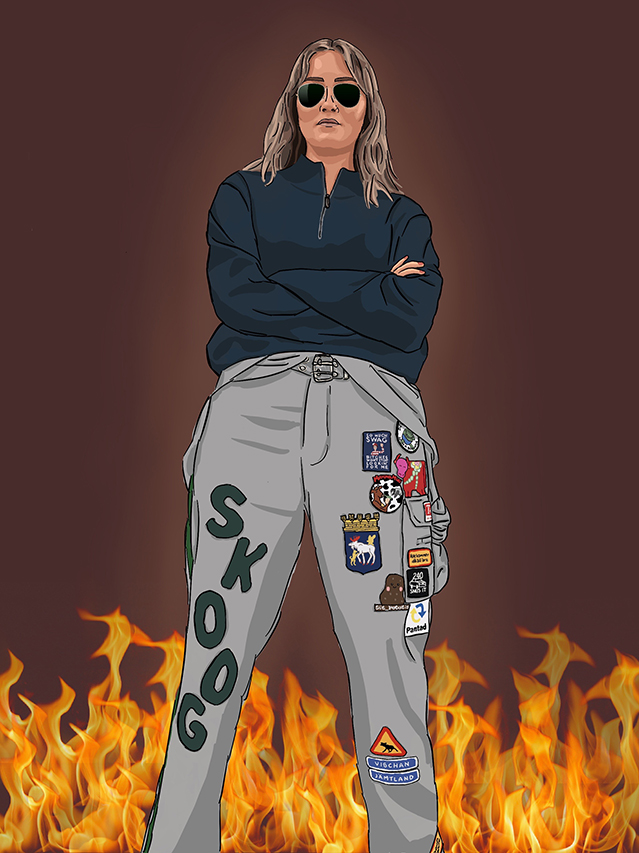
In the Sustainable Portraiture project, students delved into these themes by reflecting on their personal and cultural identities. For example, one student, Ida Skoog, reflected on how her clothing in a portrait was tied to both her identity as a student and the deeper personal meanings embedded in the garment: “I realized that the clothes I was wearing were connected to my identity, showing that I am a student, but also revealing personal attributes”. (Figure 2: Clothing and Apparel, Ida Skoog). This reflection on clothing as a marker of identityties into the AEA’s focus on understanding the cultural and social dimensions of self-representation.
Borrowed Identity
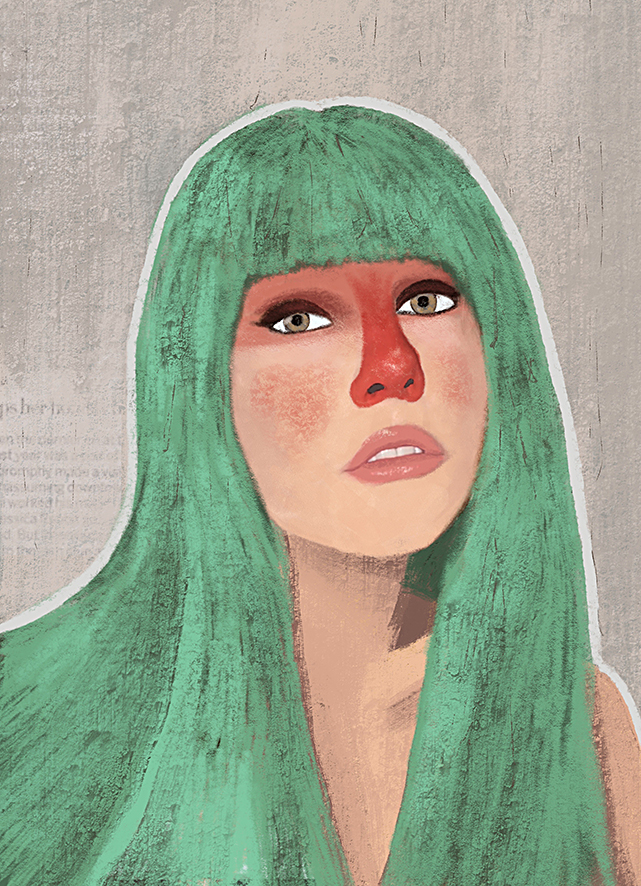
Stina Mäki’s Borrowed Identity self-portrait (Figure 3.) creatively explores how identity can be shaped through imitation and influence. By analysing an existing portrait and recreating it in her own style, Stina experimented with how identity can be “borrowed” and reinterpreted through another’s lens.
Cultural Identity
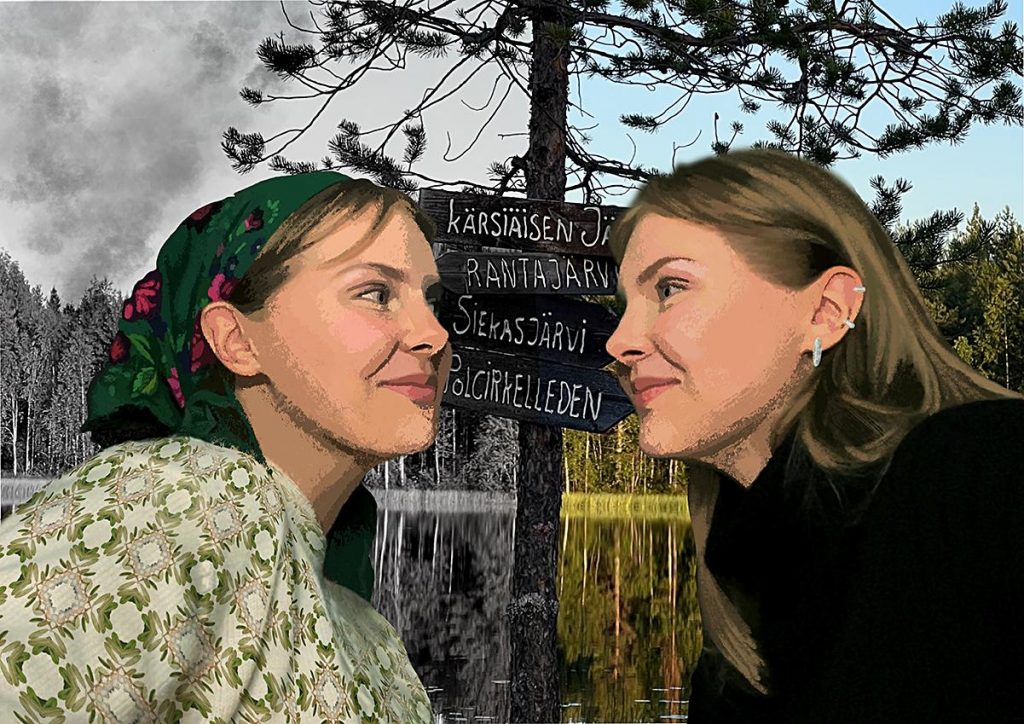
Another assignment required students to create a Cultural Self-portrait, reflecting on their heritage and how it influences their identity. One student, Stina Mäki, explored her Tornedalian roots and the historical suppression of the Meänkieli language: “I have kept my surname, and I am proud of it. I am proud of what I have inherited from my culture and my family, and I try to use and develop it. Forward march”.
(Figure 3: Cultural Identity, Stina Mäki). This assignment creates an opportunity to highlight cultural resilience and the reclamation of identity, especially for individuals from marginalized communities. The project also prompted discussions around identity and belonging. Several students expressed frustration with the challenge of creating a cultural self-portrait, particularly when they felt disconnected from a specific cultural identity. This struggle sparked meaningful discussions, which in turn fostered a deeper understanding of the complexities surrounding cultural identity and representation.
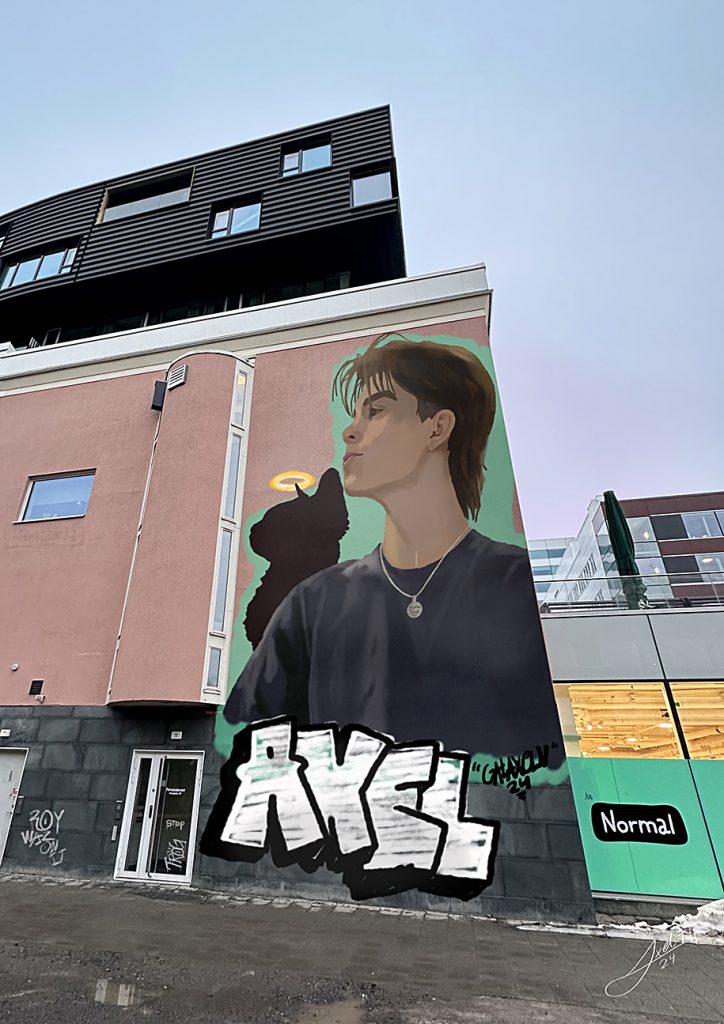
For example, Axel Togstad’s self-portrait reflected a more expansive view of identity, where cultural connections are not limited to heritage or ethnicity but extend to personal passions and subcultures. Axel, who identifies strongly with the street art and graffiti scene, used his self-portrait to express this connection. His piece integrates graffiti motifs, vibrant colours, and urban elements, symbolizing his identity not through traditional cultural markers but through the creative practices and communities that shape him (Figure 5: Cultural Identity, Axel Togstad).
This approach opened up the conversation to a broader understanding of identity, emphasizing that cultural expression is not always tied to traditional or ancestral backgrounds. Instead, identity can also be shaped by the spaces we move in, the art we create, and the communities we belong to. It reinforced the idea that identity is fluid and multifaceted, encompassing both traditional cultural roots and contemporary, personal interests. This expanded view not only enriched the students’ understanding of their own identities but also highlighted the diverse ways in which people can connect to culture and community.
Conclusion
Throughout the project, students engaged in reflective discussions about identity, belonging, and cultural representation. These exercises helped them not only understand their own identities but also develop the skills to foster inclusive, culturally sensitive environments in their future classrooms. By studying both personal and cultural narratives through art, students explored the multifaceted nature of self-expression. This process allowed them to experiment with different techniques, reflect on their cultural and personal backgrounds, and gain insights into how these perspectives shape their artistic choices and can be integrated into their teaching practices.
References:
Berliner, P., & Enghoff, T. (2019). Collaboration, dialogue and trust: Art
and social resilience in Kalaallit Nunaat/Greenland. Siunissaq
Sjödin Landon, H., & Kateb, A. (2018). Vem är du? Här är jag! Om
porträtt och identitet. [Who are you? Here I am! On portraits
and identity]. Nationalmuseum.