
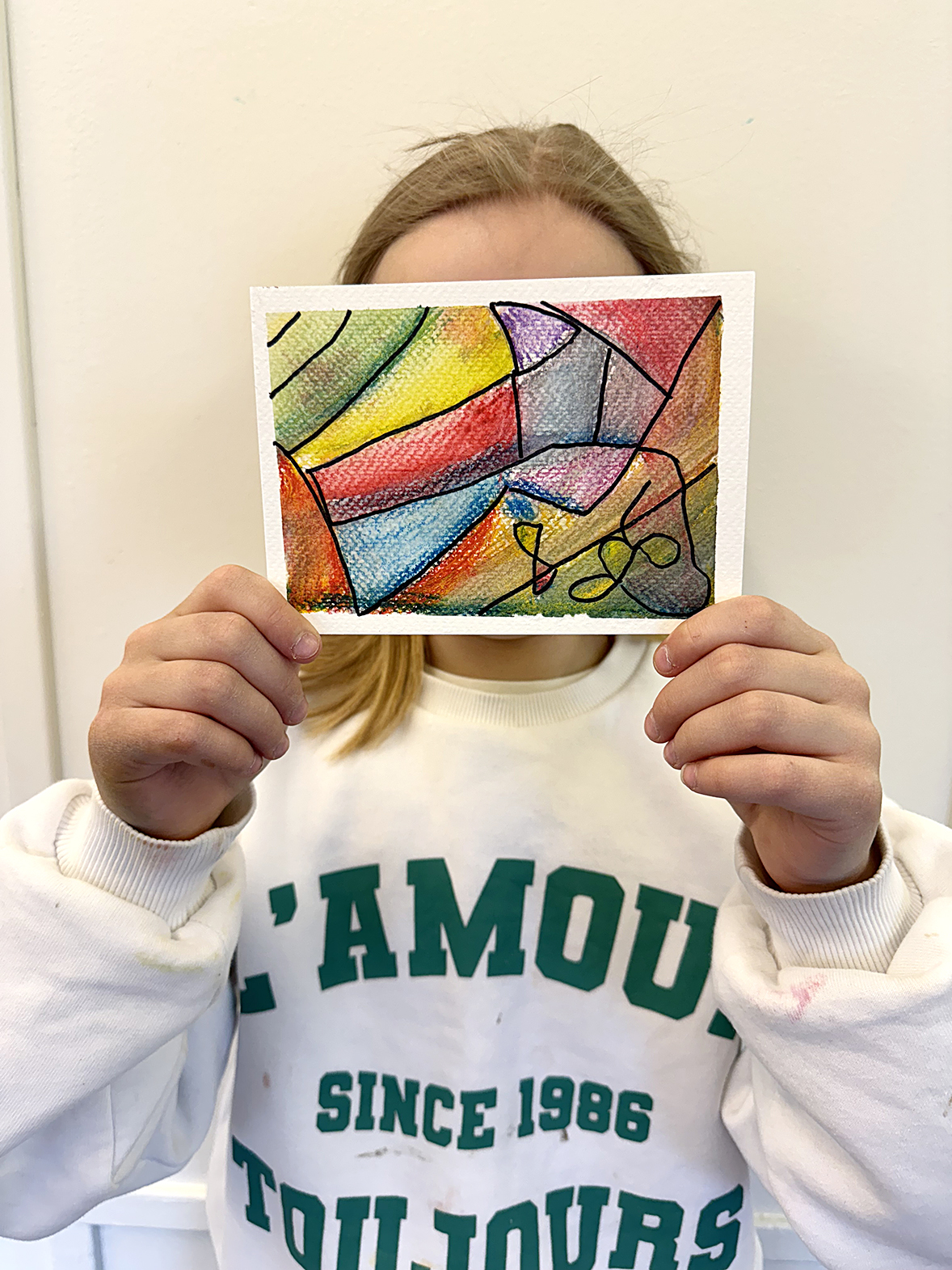
To get an insider perspective on young people’s thoughts about being an islander in the Arctic region, we carried out a workshop in a local school where the students were asked about their thoughts and experiences from their life on the island. The aim was to give the participants a joint experience in visual art and express their perspectives on sociocultural and eco-cultural issues. The drawings address the actual life, emotions and interactions of young islanders in the Arctic region.
Text: Karin Stoll, Wenche Sørmo and Mette Gårdvik, Nord University, Norway
Cover photo: Figure 3. This is how I see my landscape. Photo: Mette Gårdvik, 2024.
Summary
The Workshop team consisted of Karin Stoll, Wenche Sørmo and Mette Gårdvik from Nord University, Faculty of Education and Arts. The workshop was carried out in spring 2024 as part of the New Genre Arctic Art Education project (Sustainable Portraits) and participants were 30 pupils from 1st to 7th grade from the School on the Islands of Onøy/Lurøy. As part of the Sustainable Portraits Project, drawings were exchanged as postcard greetings with other participating schools in Sweden and Finland.
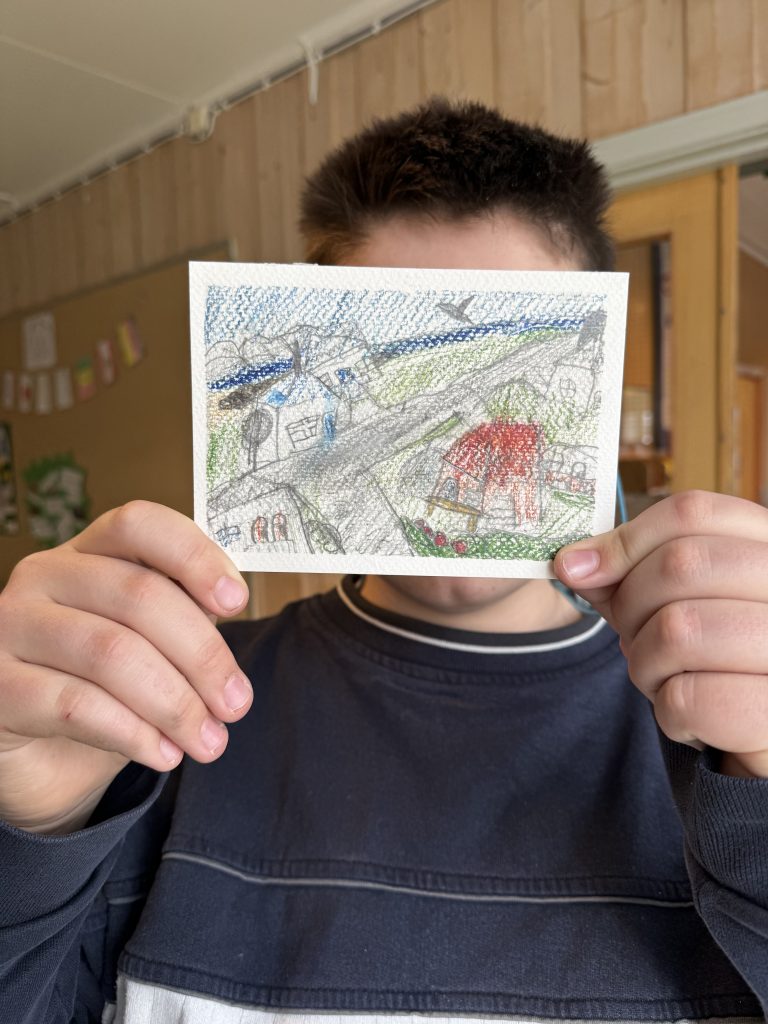
“Arctic youth face unique challenges and opportunities due to factors such as climate change, cultural preservation, economic development, and environmental sustainability. They play a crucial role in shaping the future of their communities and addressing issues related to Arctic conservation, Indigenous rights, and sustainable development” (WWF, u.d.).
The islands are located on the Helgeland coastline in Northern Norway. Visiting the island, you will be met by the fresh smell of salty seawater, white shell sand beaches and friendly people greeting you, even if they do not know you. The landscape is characterised by high mountains, islets, skerries, beaches and old farmhouses and is a habitat for many species of sea birds. The connection between the ocean and the land has been the foundation for the coastal culture. Archaeological findings show traces of settlements more the 10,000 years back in time. For a long time, fisheries and farming were the main way of living. But today, we observe the growth of industries like fish farming, power plants and tourism. The departure of young people to the mainland and the immigration of foreign workforce affects the local communities.
In the teaching project, the reflective use of drawing in learning processes has had a central place. Drawing is one of human’s many languages. Drawing is about leaving traces and is an important process for communicating, visualizing, reflecting, explaining, describing and observing (Frisch 2011). Eisner (2003) emphasizes expressive benefits in drawing work since it allows students to explore and create meaning. Using aquarelle pencil drawings, the students were challenged to express their feelings and thoughts about living on their island and given a sense of inclusion. Through discussions about their visual expressions, the pupils interacted with and reflected on their local ecocultural and sociocultural environment.
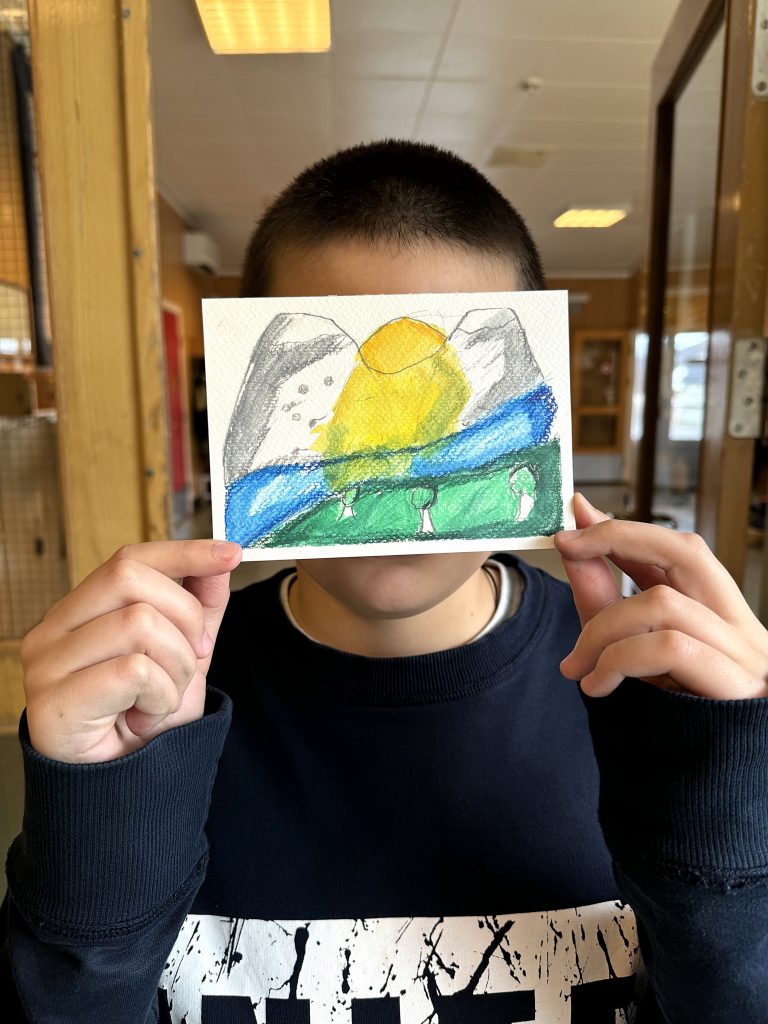
The artworks visualise the students’ strong identities, cultural pride and connectedness to their local nature and cultural heritage.
References
Eisner, E. W. (2003). The Arts and the Creation of Mind. Language Arts, 80(5), 340–344. http://www.jstor.org/stable/41483337.
Frisch, N. S. (2011). Ways of talking about drawing practices. Sociocultural views: Gombrichand visually controlled drawing. FormAkademisk,4(2), 26–37. https://doi.org/10.7577/formakademisk.199.
WWF (u.d.). Artic Youth. https://www.arcticwwf.org/our-priorities/arctic-youth/