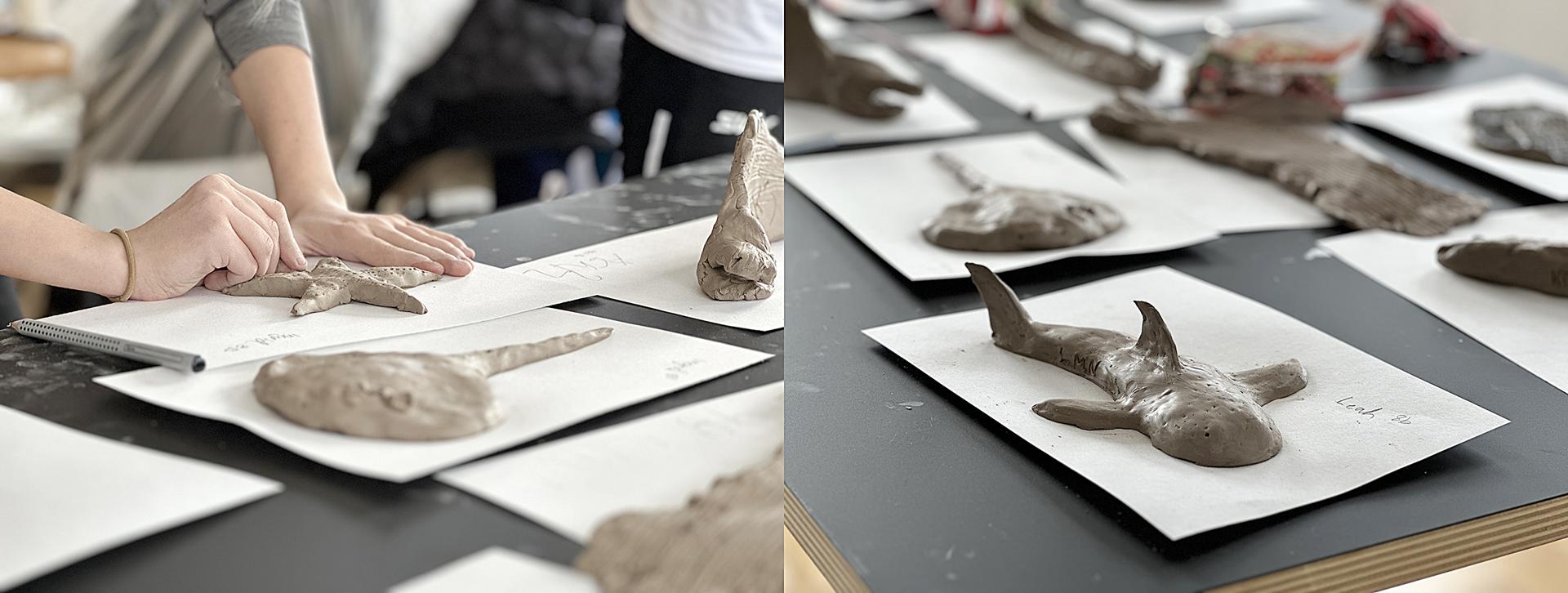
The workshop introduced Year 8 pupils from Karasjok to working with clay and making small sculptures. The main purpose was to teach them about ecosystems and how all living things are connected. The pupils used the Karasjok River as inspiration to create clay pieces that show what lives or thrives because of the river.
Text: Dylan Steigemeier and Sara Rylander, Umeå University, Sweden
Cover photo: Figure 1. Clay sculptures getting ready to dry. Photos: Sara Rylander, 2024.
Info
Karasjok, April 2024
Clay work, 2 hours
Year 8 pupils
Team:
Dylan Steigemeier
Sara Rylander
Lotta Lundstedt
Anna Tiselius
Umeå University
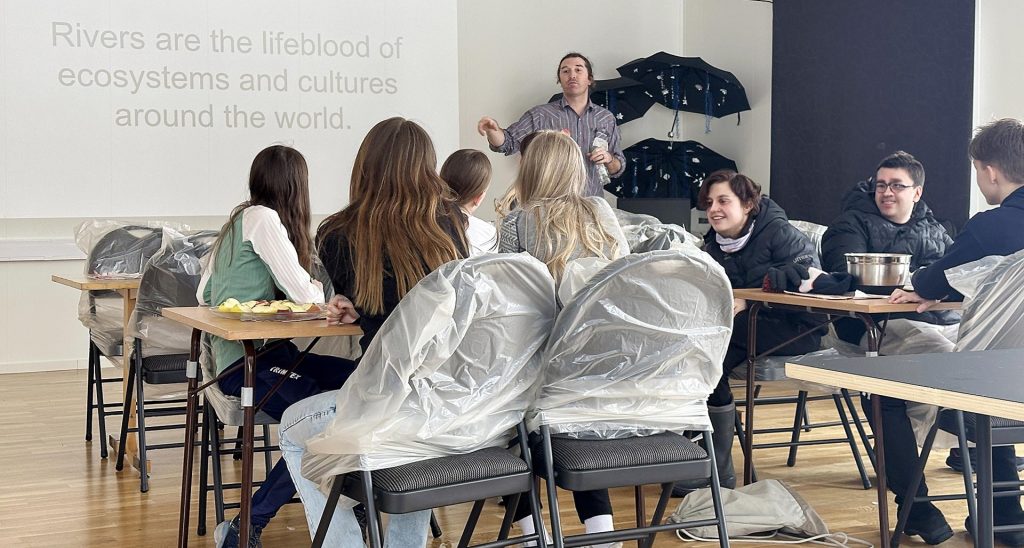
The theme of the workshop was ecosystems and the interconnectedness of all living things. Using the local Karasjok River as a starting point, pupils were asked to create something in clay that is sustained or flourishes from the Karasjok River. Pupils were introduced to environmental paradigms of anthropocentric, or human-centred, and ecocentric, which asserts that all living things are an integral part of an interconnected system. Ecocentrism, or the idea that all living things are a connected system and nature should be valued for nature’s sake, was the pillar of the lesson.
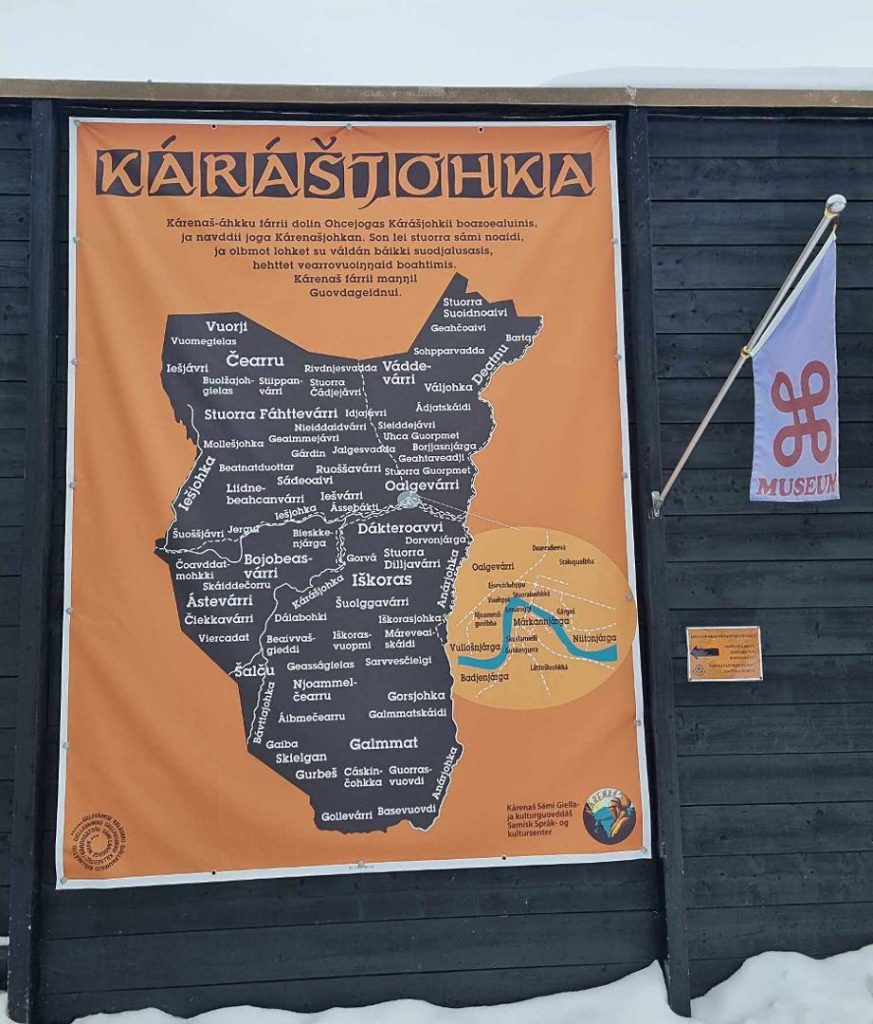
Rivers are the lifeblood of ecosystems and communities around the world. The workshop strived to connect pupils to important natural resources in their Arctic community. New Genre Arctic Art Education was incorporated into the lesson by focusing on the Karasjok River. Having the students think about what the Karasjok means to life and the community were used to explore the idea of interconnectedness. How did their river (Karasjok River) connect life and community? A discussion about the Sámi language was used to introduce ecoculture. Sámi place names often denote what the geographical or physical place looks like. Sámi language was used to note how culture and ecosystems are intertwined and connected.
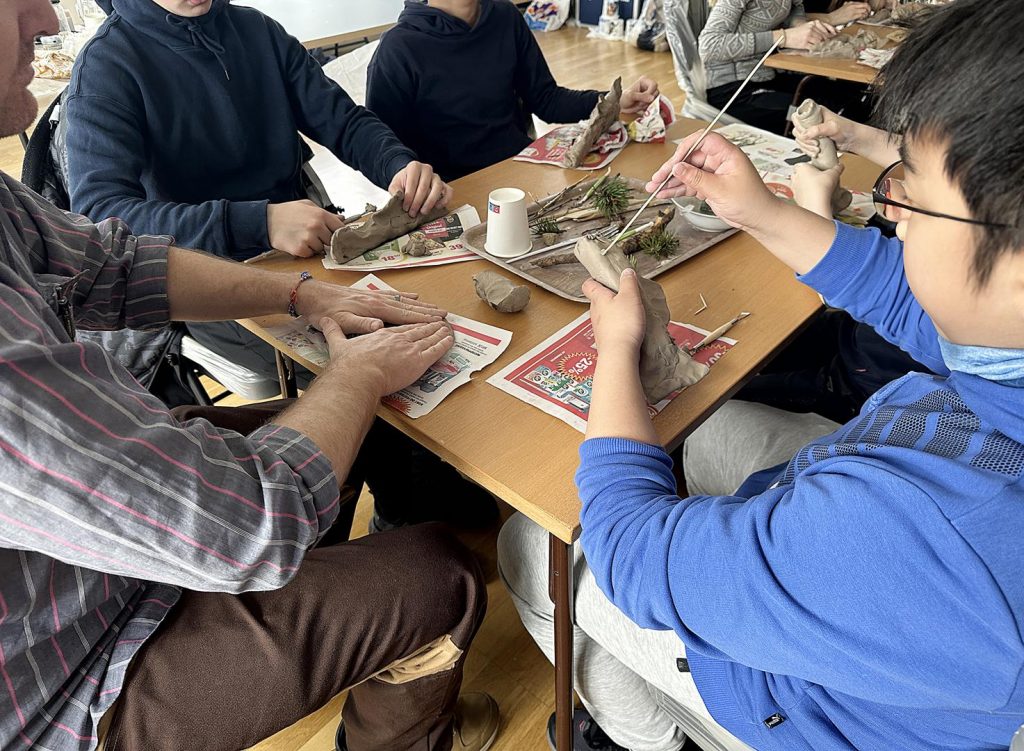
This workshop aimed to help pupils appreciate a significant natural resource in their Arctic community by incorporating New Genre Arctic Art Education focused on the Karasjok River. Discussions about what the river means to life and the community helped explore this interconnectedness. We also introduced the concept of ecoculture through the Sámi language, explaining how Sámi place names often describe the physical appearance of a location. This shows how culture and ecosystems are linked.
During the workshop, we spent time discussing what activities the pupils do near or on the river in different seasons. Although it was challenging to keep everyone focused, and clay is tough to work with initially, the pupils eventually made sculptures they were proud of. They had fun sculpting and learned basic techniques like rolling the clay and making shapes, which will be useful for more complex projects in the future. Some pupils felt overwhelmed at first when asked to start their projects right away.
Feedback from the pupils was very positive. They were thrilled to hear their sculptures would be displayed at the Arctic Congress in Bodø, Norway, in May 2024 and that their finished pieces would be fired and returned to them later. Overall, the workshop was enjoyable and effectively introduced the pupils to the concept of ecocentrism and the interconnectedness of all living things. By understanding that all things are connected, hopefully students learn that actions they take can have positive and negative effects on their environments and communities.