For the researchers, artists, and teachers from the participating Karasjok activities serves as a platform for the development of new genre Arctic art education (AAE). For the university students, it is an international course that begins with distance learning and culminates in on-site fieldwork as art education practice. In addition to the participating universities, local cross-sectoral partners contribute their expertise to support the academic collaboration. This adaptable event, tailored to situations and community needs, is expected to be held annually in different locations across the Arctic and northern regions.
Text: Timo Jokela, University of Lapland, Finland
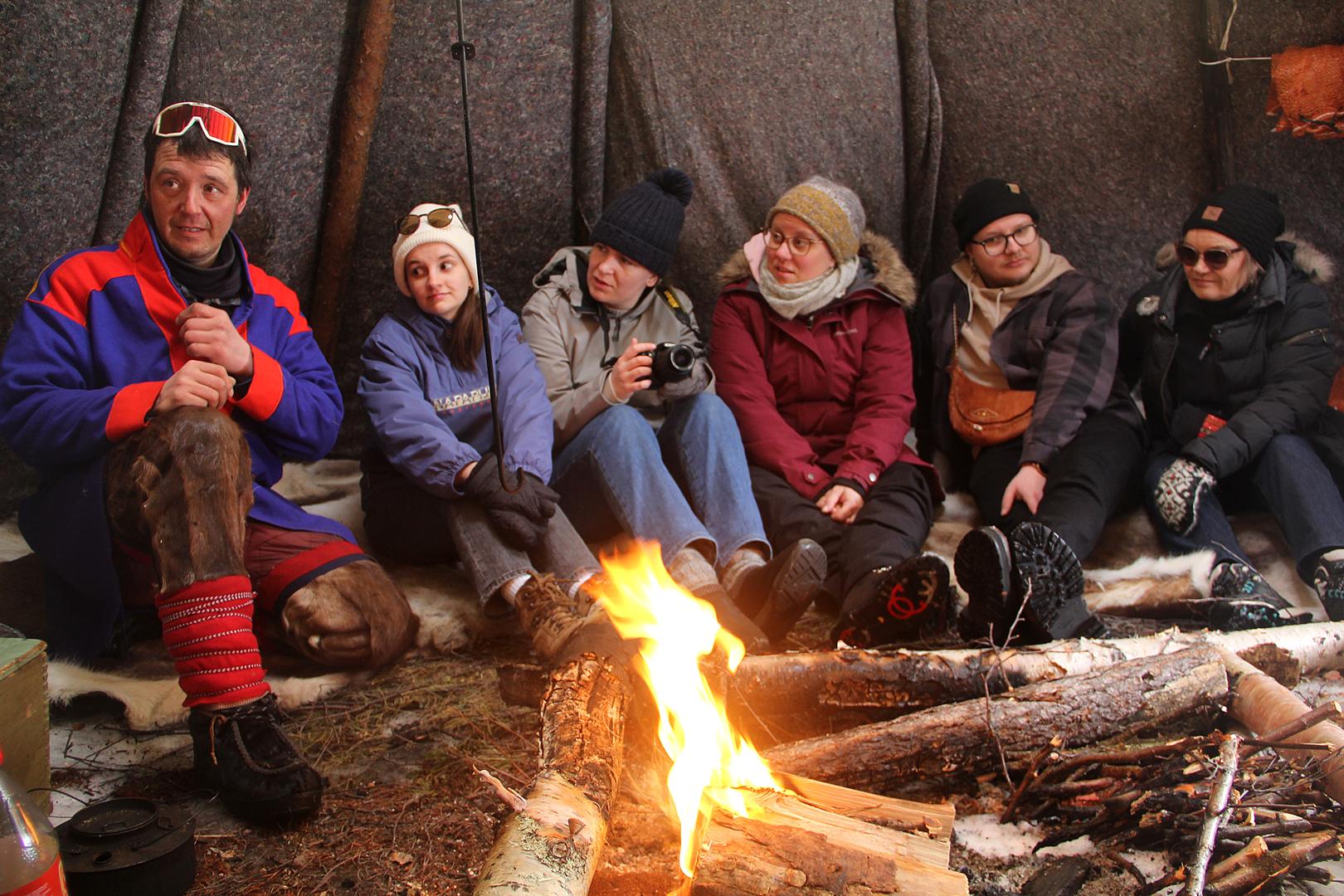
Cover photo: Figure 1. In encounters such as museum visits, Sámi parliament gatherings, and visits to the lávvu, the ecological-cultural dimensions and plurality of life in Karajoki were explored. Photo: Timo Jokela, 2024.
Info
In Karasjok, in the Sámi region of Norway, the key local partners for the AAE were the Sámi Centre for Contemporary Art (Sámi Dáiddaguovddáš) and the Karasjok School. Besides the University of Lapland, the event was also supported by Umeå University in Sweden, Nord University in Norway, and the University of Greenland. External partners included the multidisciplinary arts association Piste from Rovaniemi and the artist and social psychology association Siunissag from Greenland. The Karasjok course was made possible through funding by the Nordic Council of Ministers and the University of the Arctic’s research and education network fund, supported by the Danish Ministry of Higher Education and Science
The central goal of the activities is Karasjok was integrate diverse and creative working methods of contemporary art with the tradition of Northern knowledge and skills in a sustainable manner in the spirit of AAE. At first, an online planning meeting was arranged between partners and coordinators to make detailed plans to realize and facilitate the course and workshop in Karasjok. The local Sámi Centre for Contemporary Art (Sámi Dáiddaguovddáš) and the Karasjok School were involved in the planning, and university students were selected for the courses.
Students receive introductory reading materials to prepare for the challenges and possibilities of art education in the Arctic communities, including the perspectives and voices of children and youth as well as artists and others in the local communities. The development and implementation of digital online educational methods and learning were central at this stage to get the workshop started and enhance communal and collaborative learning. In the online course, not only was information shared, but art-based methods aimed at inspiring social collaboration were developed, applying community art education practices to digital online learning. Student teams, with the help of supervisors, planned the contacts for the field workshop for local school pupils and the community for the Karasjok pilot.
Students and supervisors gathered in Rovaniemi and travelled by minibus to visit Sámi Museum Siida in Inari first and then Karasjok. The workshop was arranged so that teachers from each university and local stakeholders worked as teams with students. They also met local people that are living in close contact with nature and Sámi culture, politics, and art.
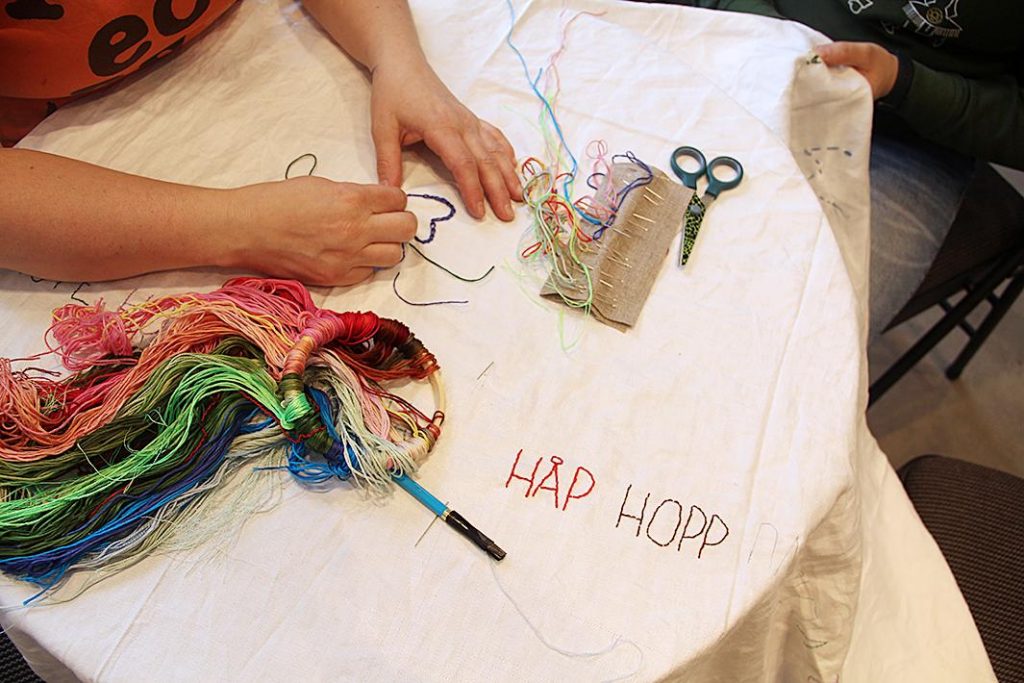
The people of Karasjok suggested that the workshop’s theme be the river, to be approached in accordance with the AAE agenda through contemporary Arctic art, integrating visual arts, design, crafts, and digital work in the spirit of Arctic art. This created a communal and performative activity that began with a visit to the Sámi Contemporary Art Centre’s exhibition and continued with a collective group painting workshop focused on experiences of the river. At the same time, work was done with materials closely linked to Sámi culture, such as colorful yarns and reindeer antler carvings.
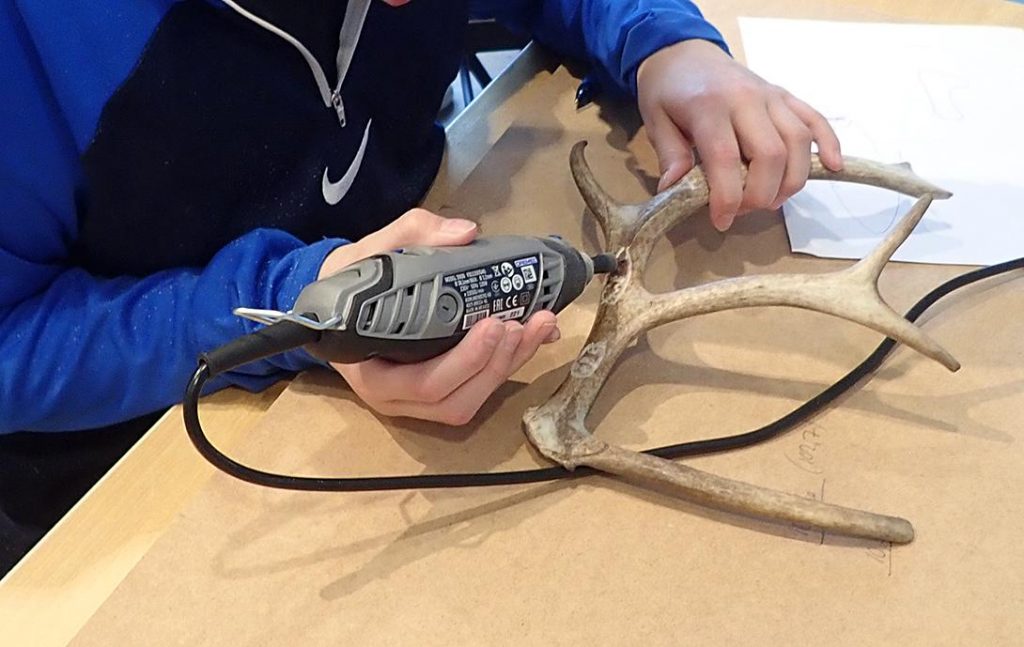
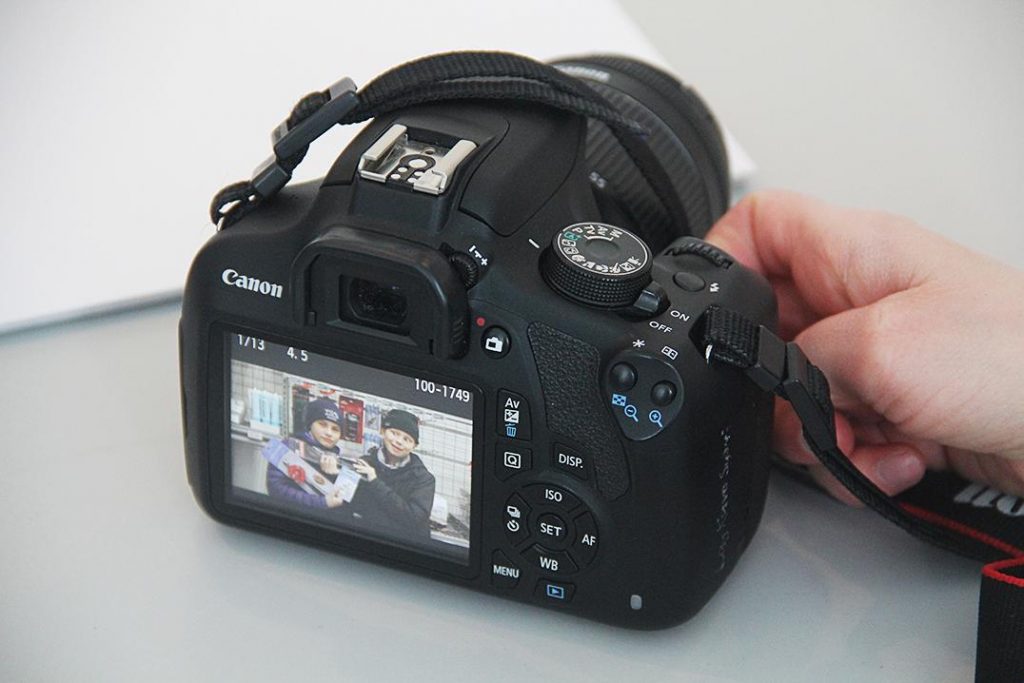
Northern eco-culture, Northern knowledge, and new materialism are central starting points in AAE thinking. But based on situational learning, it respects the experiences and perspectives of all participants. In the digital photography workshop, pupils shared their own perceptions of Karasjok and the places they considered important to the river – this way, the ‘urbanizing Arctic’ was also given a chance to emerge through the young people’s ‘environmental portrait’ photos.
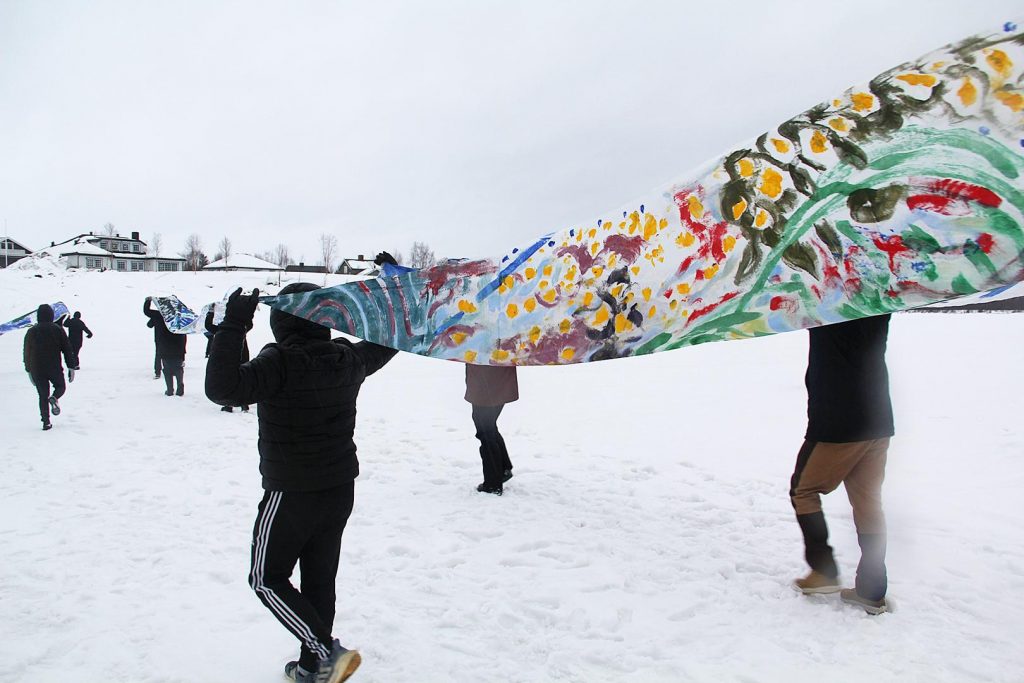
Finally, the artistic work extended from indoor spaces to the outdoors, with long paintings on fabric becoming the centerpiece of a performance on the ice of the Karasjok River. The events offered local residents the opportunity to experience contemporary art methods and participate in creating works and pop-up exhibitions resulting from the events.