
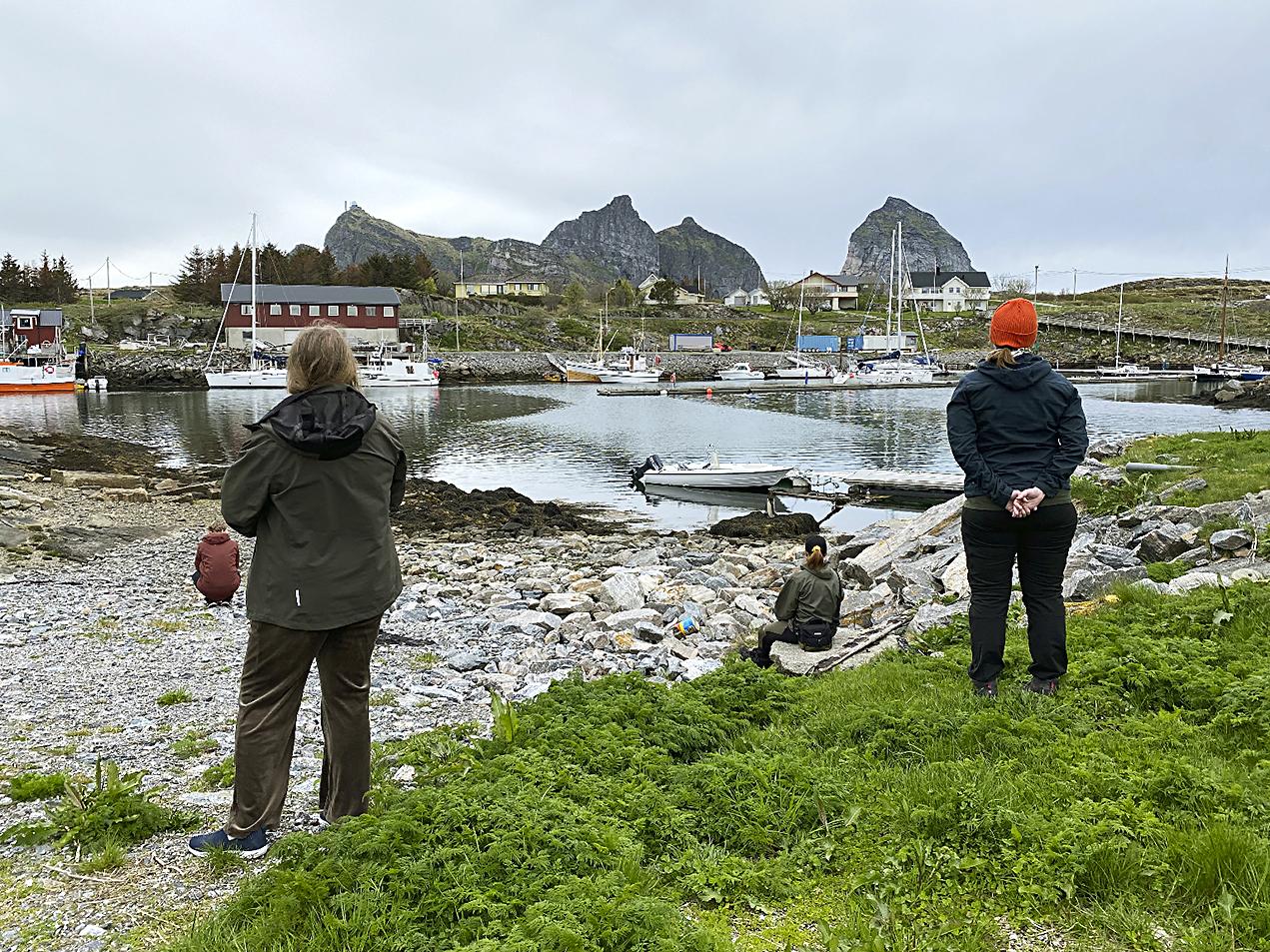
With the aim of sustainability, Living in the Landscape (LiLa) summer school in 2022 fostered a posthumanistic approach to art-based landscape research. The art-based activities were introduced in online seminars and implemented during the hybrid fieldwork week in Norway and Scotland. The posthumanistic methodologies were carried out with reflections on material culture, shared dinners, and co-knowing with other-than-human landscapes. The art-based activities created new knowledge, as the landscape was studied as an active partner through a new materialistic approach. Processes of co-knowing strengthened relations with other participants and deepened an understanding of local ecocultures.
Text: Emmi Kairenius
Cover photo: Figure 1. Listening and sensing the landscape during the warm up of co-knowing -assignment. Photo: Emmi Kairenius, 2022.
Info
Living in the Landscape Summer School 2022 workshop team Emmi Kairenius and Liisa Ahola (planning of the art-based activities). Participants: Researchers, Master’s, and doctoral students from the University of Lapland in Finland, Nord University in Norway, Umeå University in Sweden, and University of West of Scotland. Online seminars in March 2022, Fieldschool in Norway and Scotland in May 2022. Exhibition in gallery Kilo, Rovaniemi in November–December 2022.
LiLa developed ecologically, socially, and culturally sustainable practices through posthuman methodologies. The paradigm shift from humanism to posthumanism generated art-based activities that offered a new approach to art-based landscape research. Activities were directed to create a deeper understanding of local ecocultures, which can also be described as intertwining local ecosystems and culture (Pretty, 2011). In LiLa’s context, landscape is understood socio-culturally, and the knowledge created through art-based landscape research is presented through artworks and visual essays. Combining current affairs related to northern ecocultures with fine art expression is also discussed as new genre Arctic art that brings artistic methods and materials into political debate (Jokela et al., 2021).
The art-based activities were introduced and implemented in online seminars and accomplished during the fieldwork week. The first activity, An Object Task, guided participants to introduce themselves through an object from their daily lives. The activity was based on the taskscape defined by Ingold (1993), and it was created to reflect the material culture and the term. The online task brought participants together as they shared stories and memories about their culture hidden in daily activities and tools.
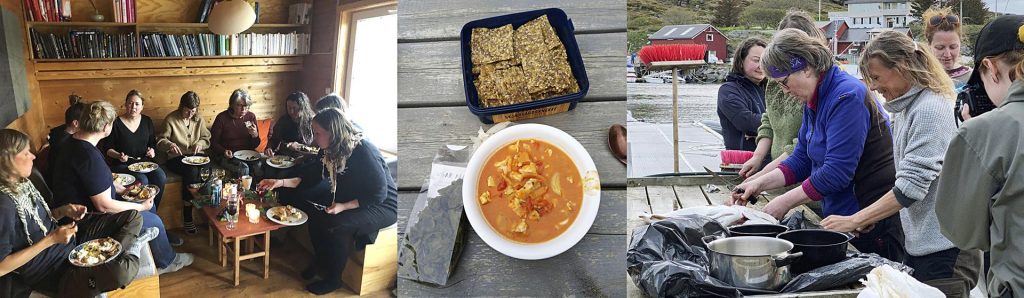
The second activity, Around a Common Table, invited participants to share dinners. Each country team prepared a meal reflecting cultural traditions and nature connectedness. The assignment brought up stories about activities (such as mushroom picking and fishing) that are linked to living in nature. Such traditions are typically strong in Indigenous and northern cultures and knowledge systems that evolved together with local ecosystems and seasonal changes (Huhmarniemi et al., 2021, p. 5–7). Sharing a meal that lifts local food traditions could also be a way of fostering cultural revitalisation. In Traena, we enjoyed a vegan version of the traditional Swedish dish palt, demonstrating an example of renewing traditions more sustainably.
The third activity, Co-knowing, invited the participants to challenge the processes of knowledge formation. The idea behind co-knowing was to broaden the understanding of community from human-centred to posthumanistic by studying the ways of other-than-human entities. The gathered information was shifted into artistic expression, and the result was presented either as spontaneous happenings during the fieldwork week or exhibited as final artworks in the summer school exhibition. The co-knowing task was guided in Træna with an introduction where the participants worked in pairs in the spirit of the game called Follow the Leader. The leader started exploring the landscape guided by their senses, and the other one started to follow and study the leader’s ways of perception.
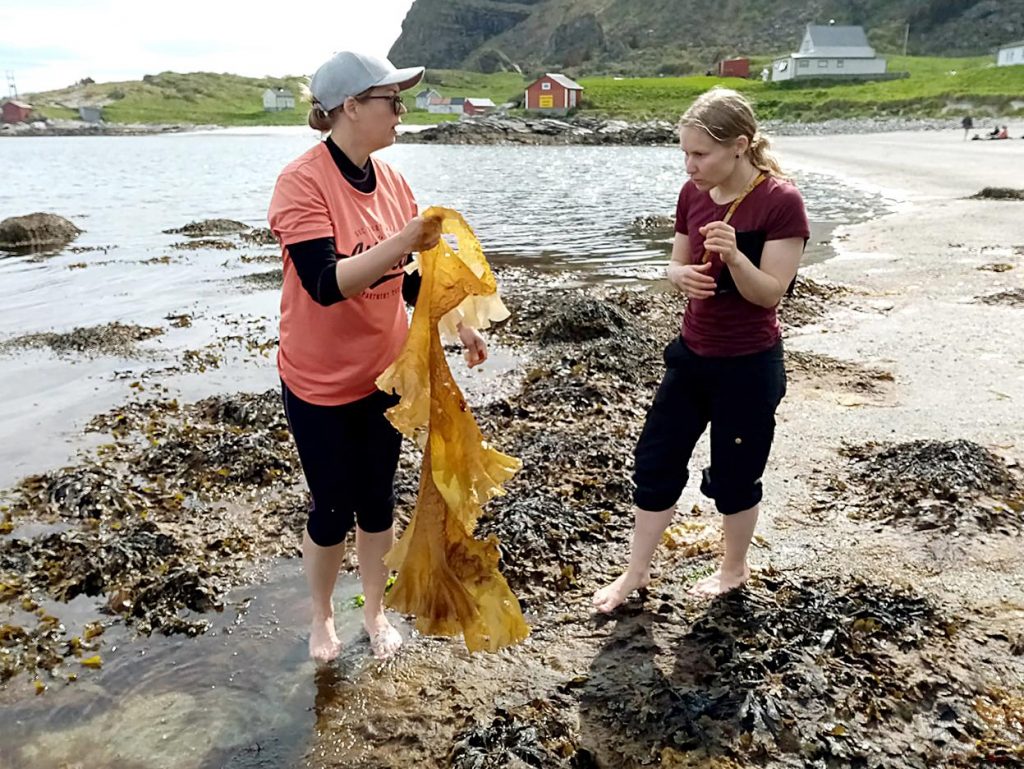
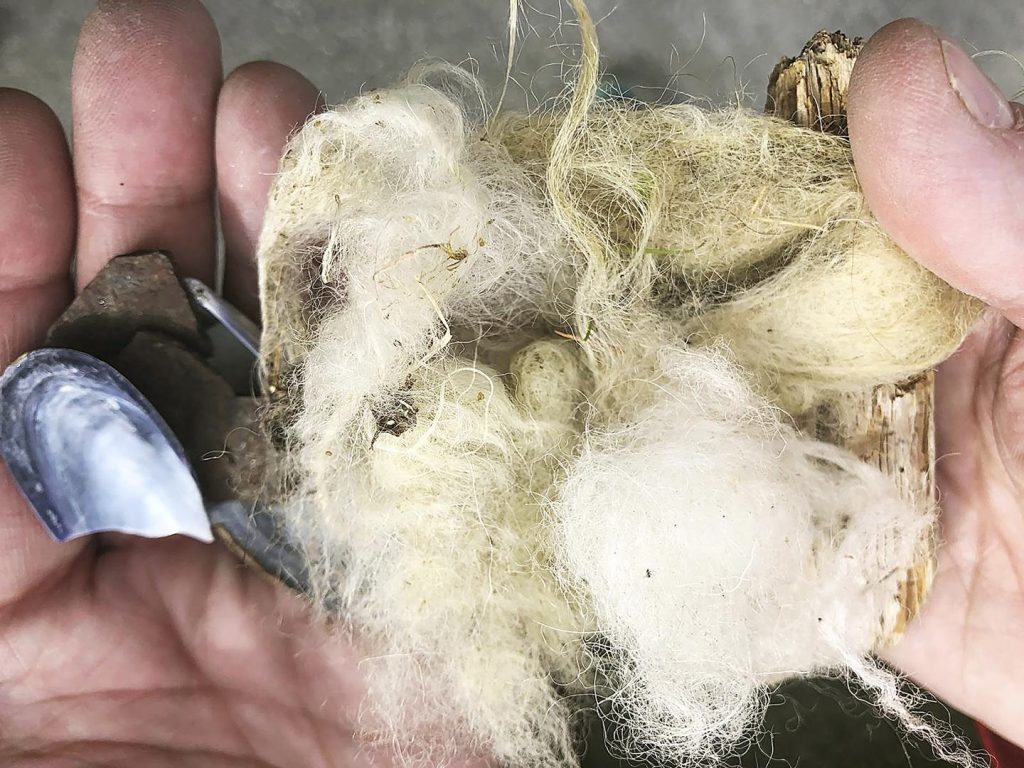
Co-knowing deepened relations with local ecocultures as well as with other participants. Paying close attention to other-than-human landscapes created situations where the material environment was explored and understood bodily. Algae, stones, wood pieces, and found wool were topics that generated discussion, yet active partners of intra-action that guided artistic processes. As participants summarised the co-knowing task, ’We carried each other in our pockets’, meaning that we carried each other’s ideas and ways of perceiving and studying the landscape with us, even from distances. Co-knowing with landscapes created interaction and intra-action between the participants, but it also raised ethical questions about involving other species for our own purposes.
The posthumanistic approach to art-based landscape research required participants to be open to the unpredictable processes of co-knowing. The methods resulted in new knowledge and concrete acts for sustainability, which were presented as artworks, visual essays, art-based acts, and discussions during the summer school.
References
Huhmarniemi, M., Jokela, T., Hiltunen, M. (2021). Paradigm shifts in northern art, community and environment studies for art education. Social Sciences & Humanities Open, 4(1), 100181. https://doi.org/10.1016/j.ssaho.2021.100181
Ingold, T. (1993). The temporality of the landscape. World Archaeology, 25(2), 152–174. https://doi.org/10.1080/00438243.1993.9980235
Jokela, T., Huhmarniemi, M., Beer, R., Soloviova, A. (2021). Mapping New Genre Arctic Art. In L. Heininen, H. Exner-Pirot, J. Barnes (Eds.), Arctic Yearbook 2021: Defining and Mapping the Arctic: Sovereignties, Policies and Perceptions (pp. 497–512). Arctic Portal. https://arcticyearbook.com
Pretty, J. (2011). Interdisciplinary progress in approaches to address social-ecological and ecocultural systems. Environmental Conservation, 38(2), 127–139. https://doi.org/10.1017/ s0376892910000937