This workshop introduced year 8 pupils from Karasjok to working with collaborative embroidery and painting in watercolours. The main purpose was to explore identity through craft. The pupils used their history and themselves as inspiration to create power cards and contribute to the collaborative embroidery.
Text: Lotta Lundstedt, Umeå University, Sweden
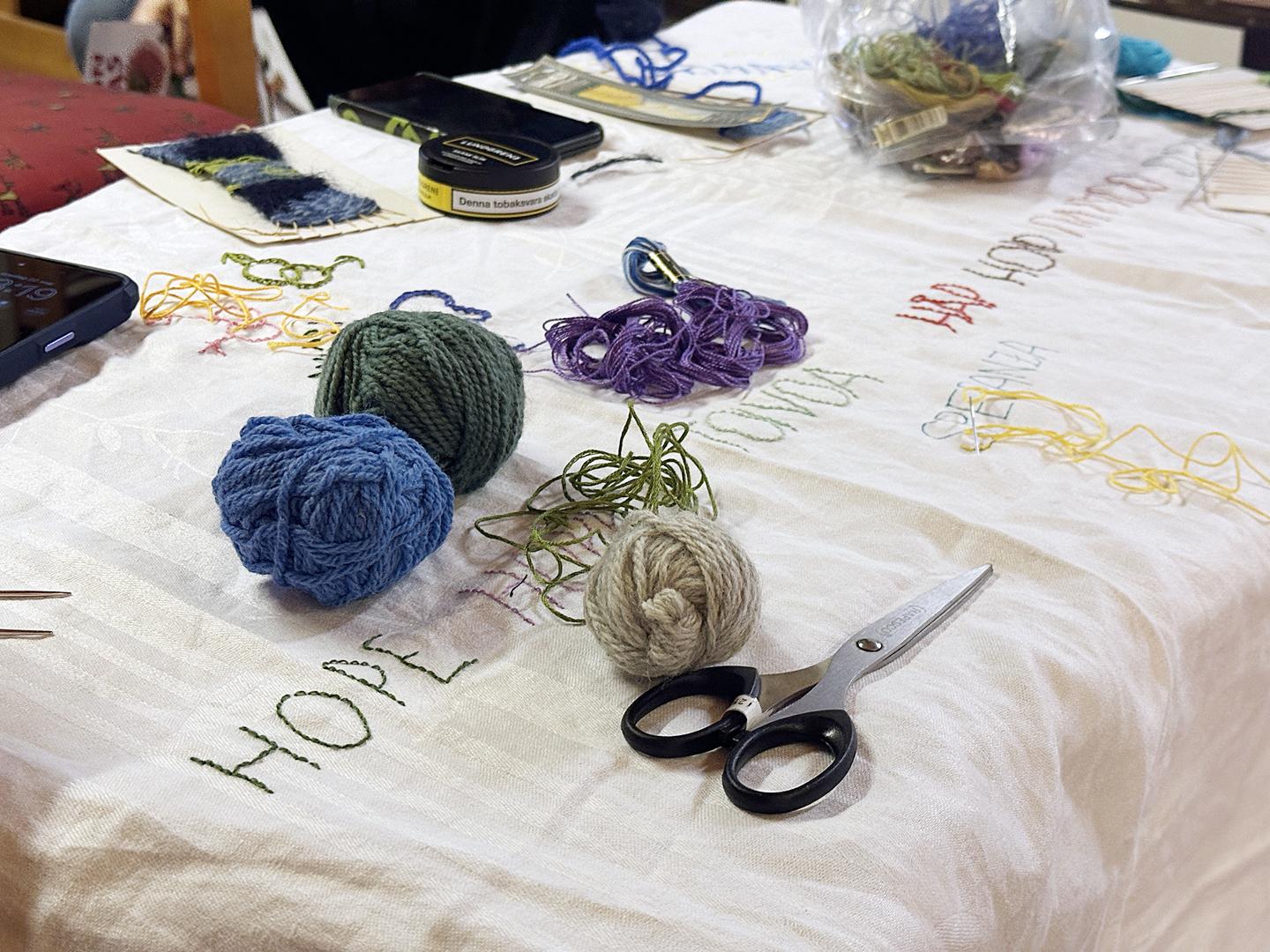
Cover photo: Figure 1. Collaborative tablecloth from embroidery workshop. Photo: Sara Rylander, 2024.
Info
Karasjok, April 2024.
Watercolour & collaborative embroidery,
2 hours. Year 8 pupils
Team: Anna Tiselius, Dylan Steigemeier,
Sara Rylander and Lotta Lundstedt.
Umeå University
The overarching theme of the Embroidery workshop was “hope”, a concept chosen to inspire pupils to reflect on their environment and envision new possibilities for the future. One of the workshops centred around an embroidered tablecloth designed to invite participants to sit together around a table, create and share their thoughts and dreams. Embroidery, as a medium, was cho sen for its slow, deliberate nature, requiring both time and patience—a stark contrast to the often fast-paced, digital environment in which many young people operate today. At the heart of the cloth, the word “hope” was embroidered in various languages, serving as a powerful symbol of inclusivity and unity. This central motif emphasized that, regardless of cultural background or origin, the concept of hope is universally understood and shared. It also reinforced the workshop’s aim to build bridges between diverse individuals, fostering a sense of community and belonging among the pupils.
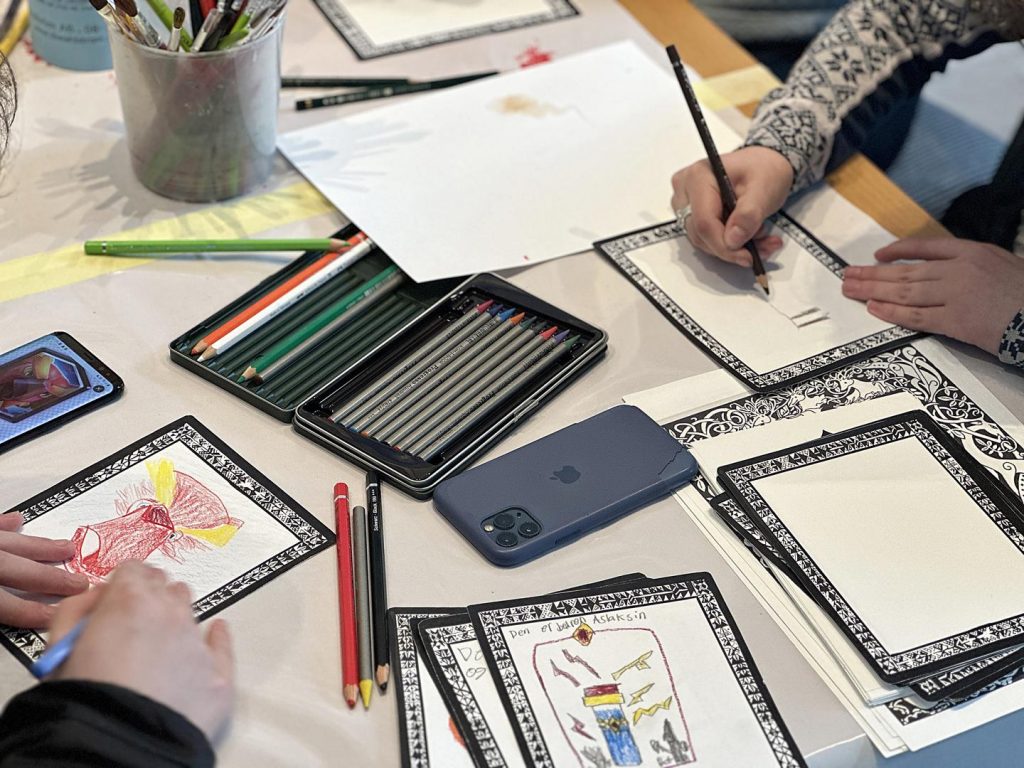
In the Power Card workshop, the pupils drew inspiration from their personal histories and identities to create “power cards”—artworks reflecting their strengths, values, and dreams. These cards were sometimes inspired by games played on mobile phones and video games, linking the creative process to the children’s own digital world. By blending personal symbols, meaningful words, and imagery, the pupils expressed their unique stories and aspirations. This activity encouraged them to explore their backgrounds and share their experiences, fostering a sense of empowerment and connection. The power cards ultimately became a bridge between their real and virtual lives.
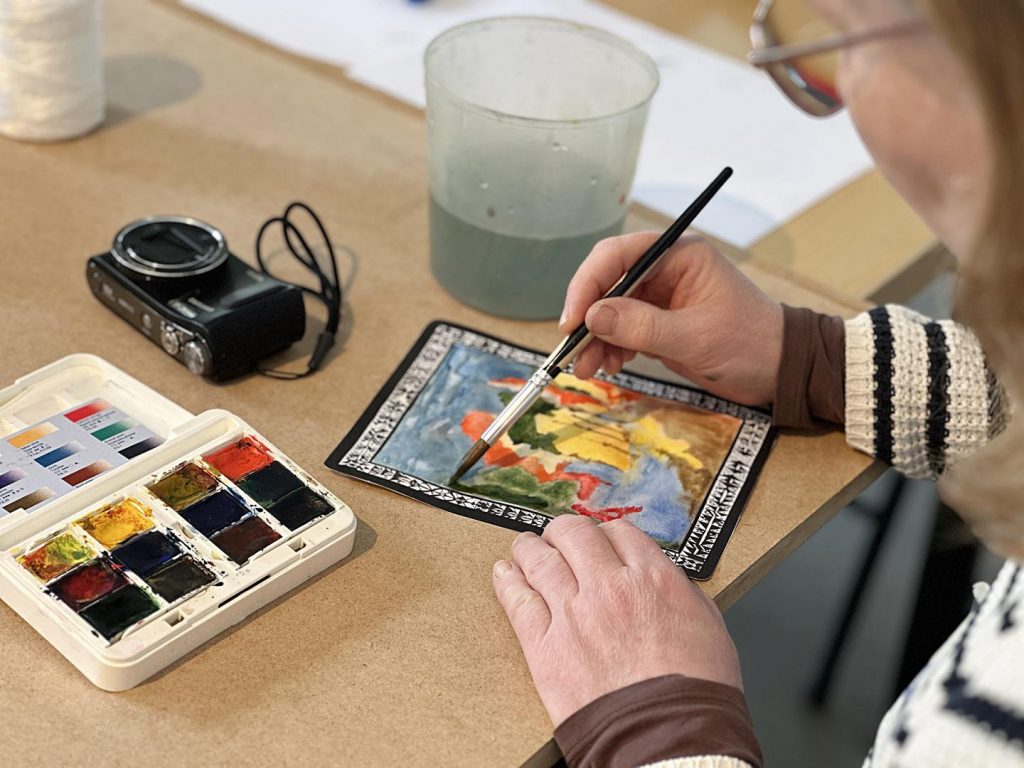
Power cards created by some of the pupils featured motifs of animals and nature, deeply rooted in their connection to place and indigenous perspectives. These elements reflected the pupils’ cultural heritage and reverence for the land, where nature is seen as a living entity with which they coexist. By incorporating images of local wildlife and natural landscapes, the cards embodied the pupils’ understanding of their environment as a source of strength, wisdom, and identity.