
Text: Aki Lintumäki, South-Eastern Finland University of Applied Sciences / University of Lapland, Finland
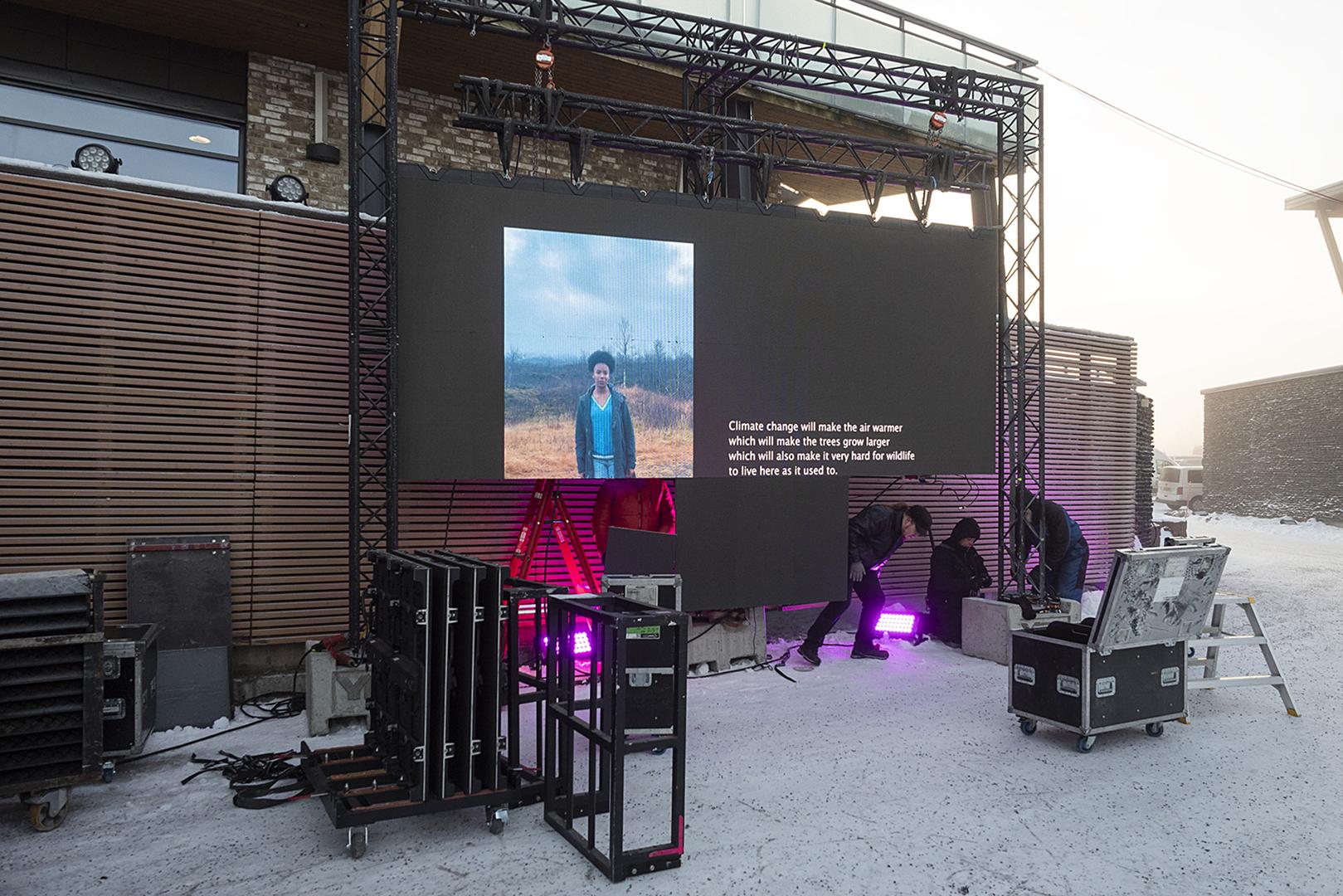
Cover photo: Figure 1. We wanted the video artwork to be prominently displayed at the Aurora future event. Photo: Aki Lintumäki, 2022.
Young people’s opinions on climate change attracted a lot of interest from the audience of the Aurora Future Event. Several people wanted to discuss the issue. They thought that art was a good way to take a stand on climate change. When the photos of the young people lit up the dark evening, I felt that I had done something meaningful. Art can be activism. Art can really change the world.
Info
The University of Lapland’s doctoral researchers and artists Aki Lintumäki and Korinna Korsström facilitated the art-based process which was a starting point for the larger research project called On the Frontline of the Climate Crisis coordinated by the Youth Research and Development Centre Juvenia of South-Eastern Finland University of Applied Sciences and the University of Lapland. The project started in 2022 and will continue until the end of 2025. The project is funded by the Kone Foundation, and it is carried out in Lapland, Eastern Finland, and the Tampere region.
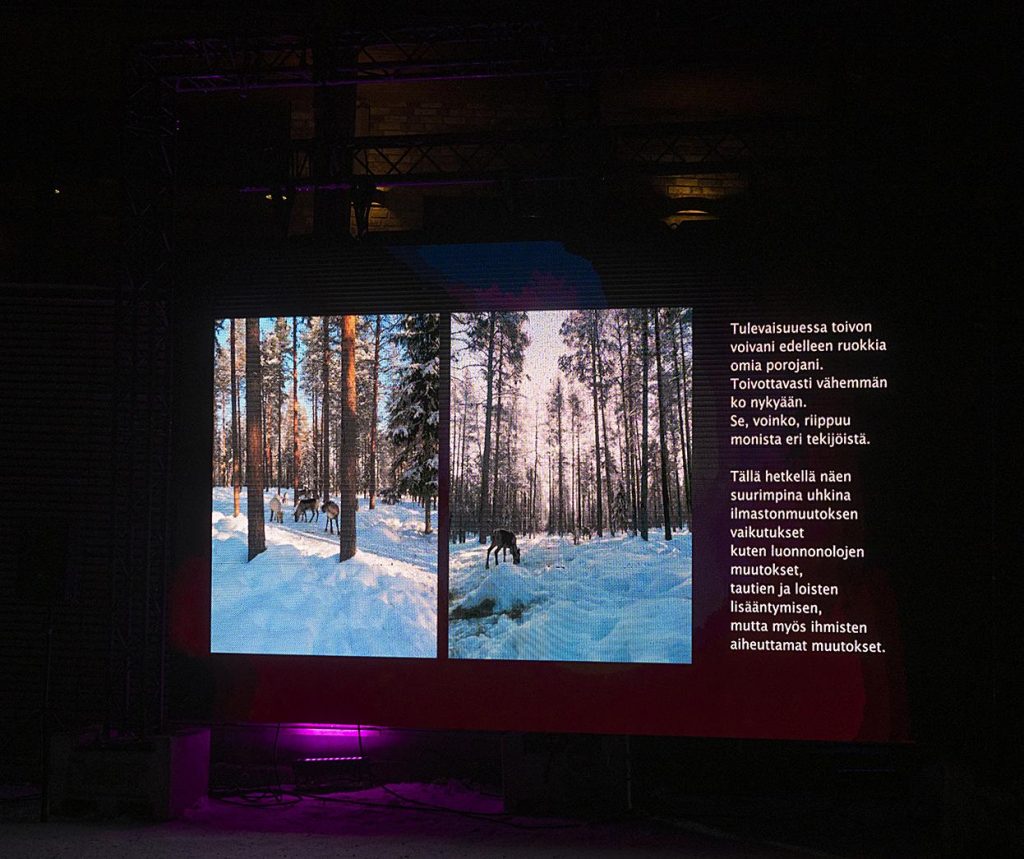
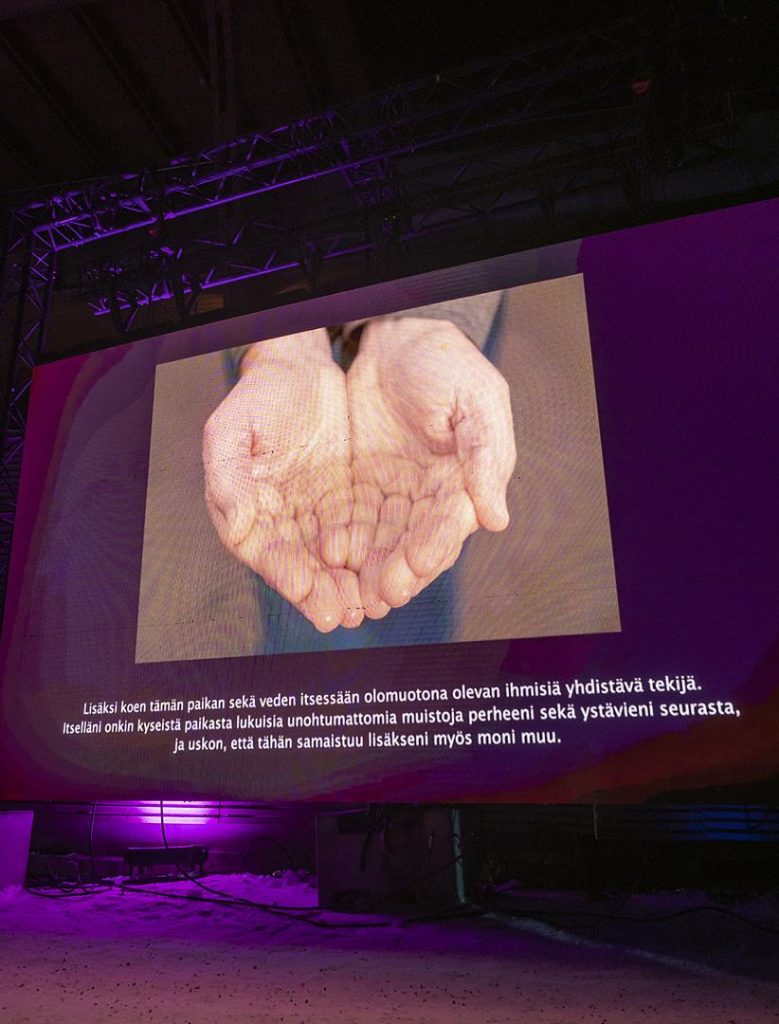
This art-based action research process was carried out in the Arctic and Eastern Finland in 2022. The study aimed to develop an art-based model for young people to express their thoughts on climate change and to promote their social inclusion in the future (Lintumäki 2023). Twenty-two young people participated in the art-based process. We produced a video artwork called Minun paikkani – Mu báiki – My Place, which presents participants’ feelings about their favourite places. The video artwork included photos, videos, and texts received from young people. It was s published at the Aurora Future Event in Levi Fell, Finland on 18 November 2022. Visit Levi and the Finnish national broadcaster YLE produced Aurora. The themes of the event were equality and climate change (Figure 1).
Our team worked within the framework of the New Genre Arctic Art, which emphasizes sustainable development, northern cultural knowledge, and the integrity of art, design, and crafts to promote cultural resilience (Huhmarniemi & Jokela 2020a).
We applied the participatory photography method in the process. The method has been widely used around the world to improve the lives of communities and individuals. Participatory photography helps the artist or researcher understand the community. It can also socially empower individuals.
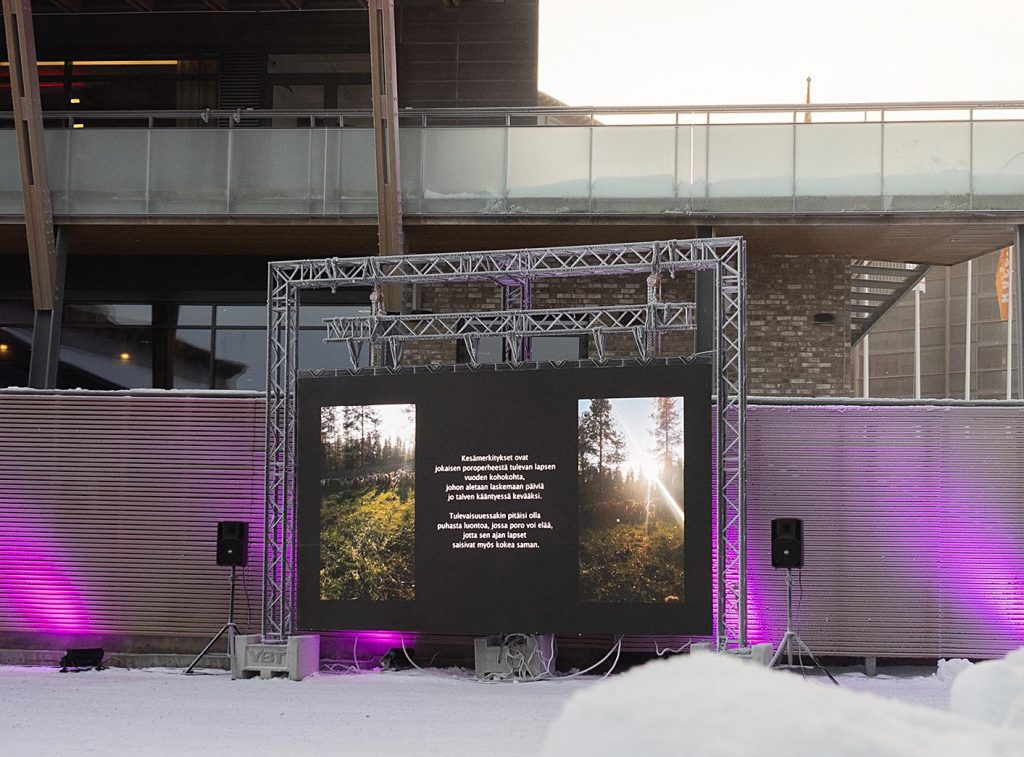
We connected the idea of a place-based approach to artistic work. This helped the young people to address a broader phenomenon. They felt great love and appreciation for their favourite places. Especially young people in the Arctic saw their favorite places through the lenses of their own cultures and traditions (Figure 2 and 3). These places symbolize safety for them and losing them threatens their sense of security. Therefore, most of the young people were very concerned about climate change.
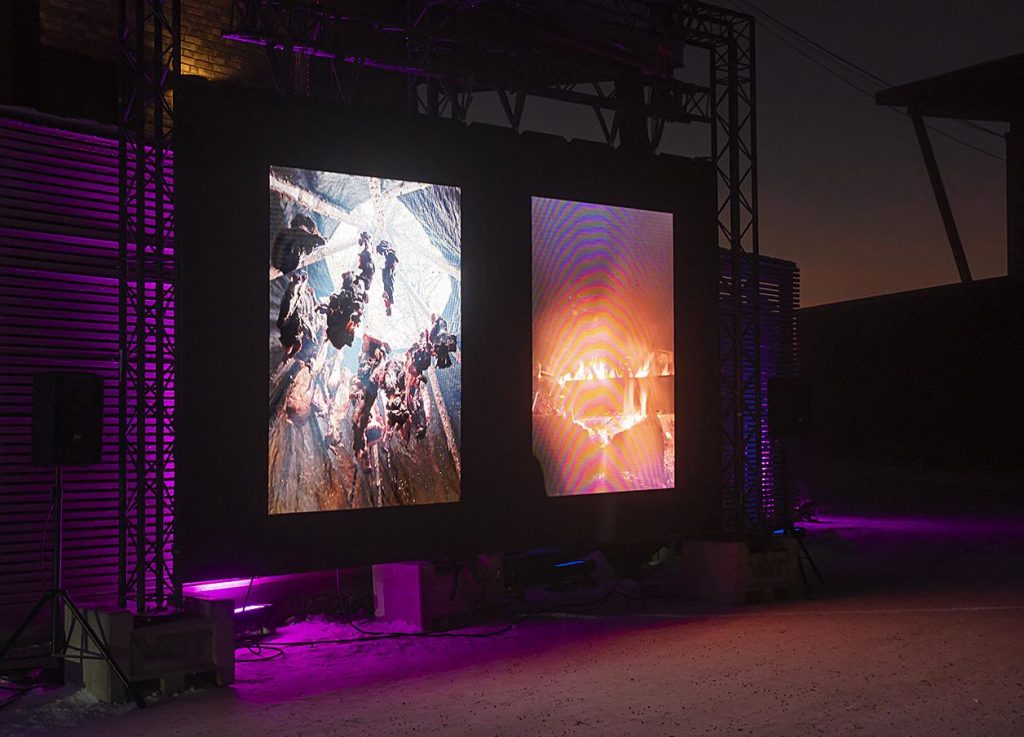
We conducted the artistic process in the au- tumn 2022 in Finnish and Norwegian Lapland and Eastern Finland. The process was facilitated partly live and remotely. After the data collection, we dramatize the video artwork. The video artwork was edited, and sound designed by videographer Inka Holck. We set up the video artwork on a four meter wide LED screen the day before the Aurora Future event started. The artwork was positioned so that all visitors attending the event could see it (Figure 4).
The audience described the video artwork as “interesting” and “touching.” It was seen as a good way for young people to take a stand on climate change. The video artwork was also seen as an excellent way to promote the inclusion of young people. Young people’s voices were heard and respected. It was clear that the young people felt the same way from the reflective interviews I conducted at the end of the artistic process. They said they had learned
new ways to express themselves (Figure 5).
After the interviews, I concluded that such empowering arts-based processes can promote the social inclusion of young people. Art can help build a more sustainable future in the North.
References
Huhmarniemi, M., & Jokela, T. (2020a). Arctic arts with pride: Discourses on Arctic arts, culture and sustainability. Sustainability, 12(2), 604. https://doi.org/10.3390/su12020604
Lintumäki, A. (2023). My place: Building young people’s future using art-based action in the north. In G. Coutts & T. Jokela (Eds.), Relate North: Possible futures (s. 50–73). InSEA Publications. https://doi.org/10.24981/2023-RNPF