The project Crafting Connections – A Fungal Approach explores fungi as both a metaphor and a method for collective learning and making. Inspired by Let’s Become Fungal (Ostendorf-Rodríguez, 2023), the project uses mycelium not only as a biological system but also as a way of thinking and teaching — one that grows through connection, curiosity, and care rather than hierarchy.
Based in Umeå, Sweden, and part of Lessons of the Land, the project brought together participants aged 9 to 72 to create shared spaces for learning and making. A series of workshops was held by Lotta Lundstedt and Sara Rylander, Umeå University during September and October 2025.
Text: Lotta Lundstedt & Sara Rylander
Cover Photo: Lotta Lundstedt 2025
Summary
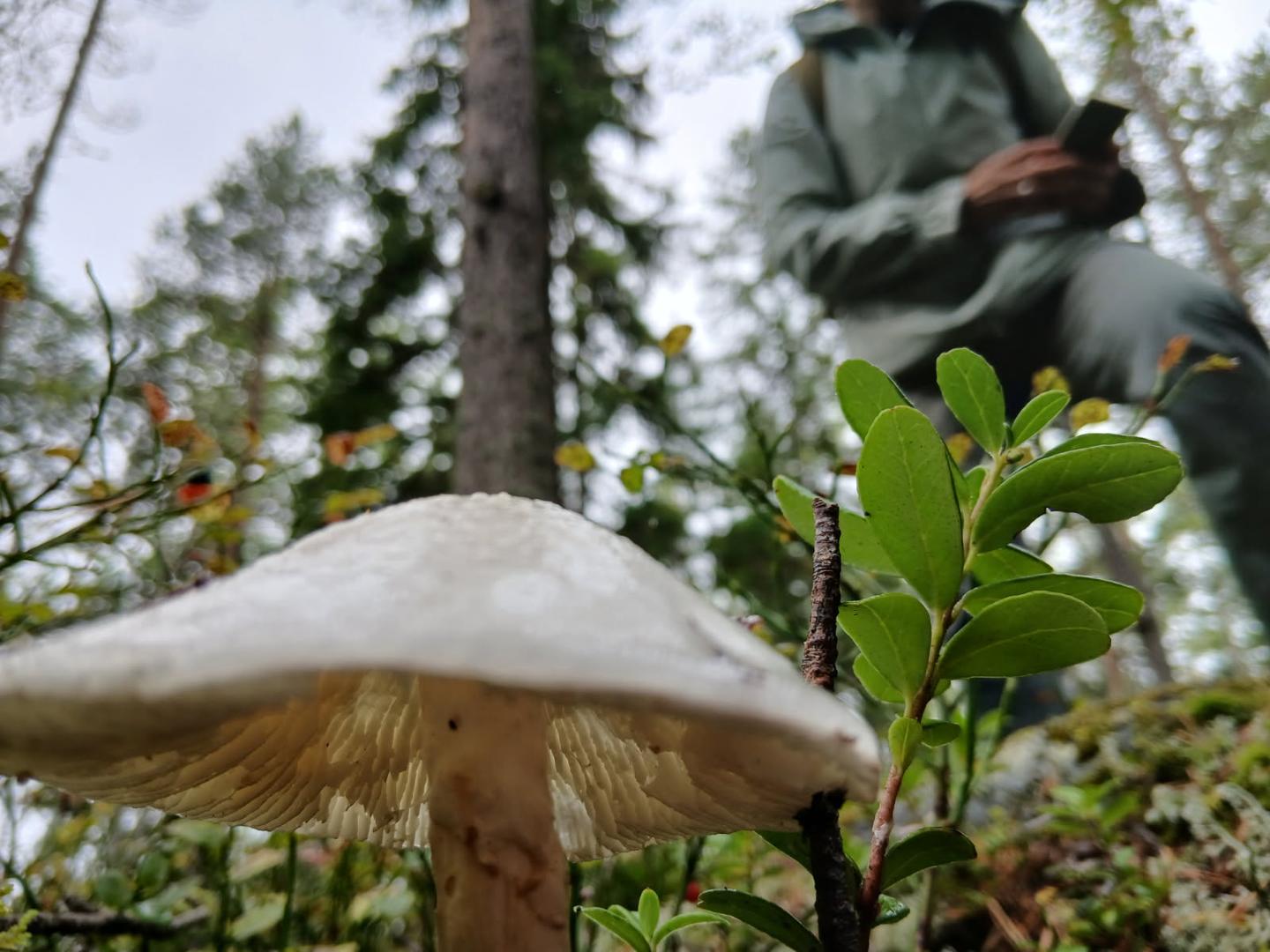
Across five gatherings, the group explored fungi through observation, conversation, and making. The first workshop took place outdoors in the forest, where participants shared a meal around the fire and exchanged experiences and knowledge about both the place and the fungi. They also collected mushrooms and later observed them through microscopes, discovering details invisible to the naked eye.
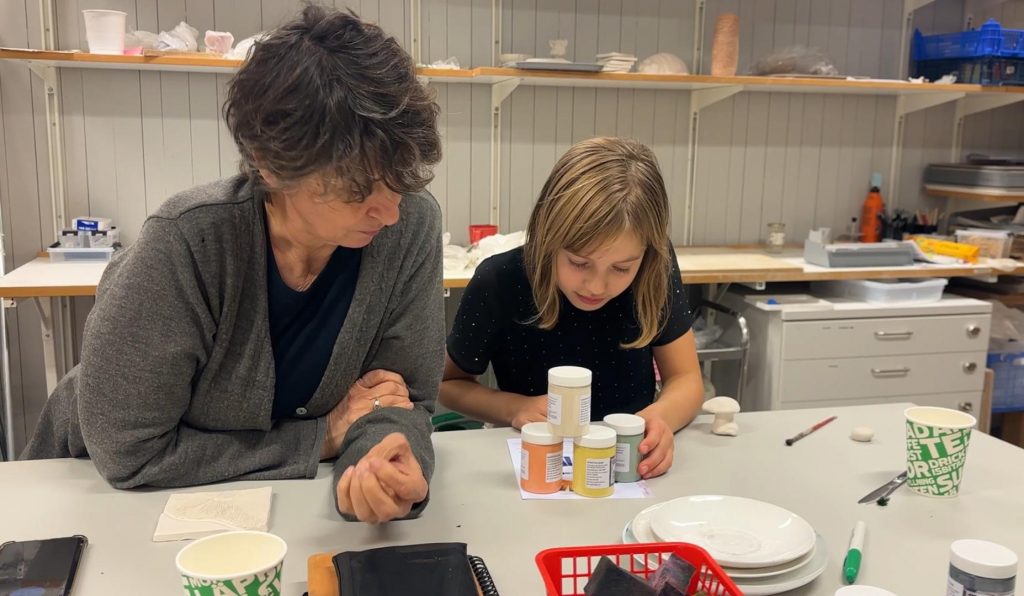
In the following sessions, the group worked with clay and glaze to create ceramic and wooden forms inspired by fungi — exploring texture, color, and organic growth patterns. Participants also experimented with natural dyes derived from fungi and shared the sensory experience of tasting mushroom tea. Each meeting began with a shared meal that invited conversation and trust, allowing the process to unfold openly, without pressure or predetermined outcomes.
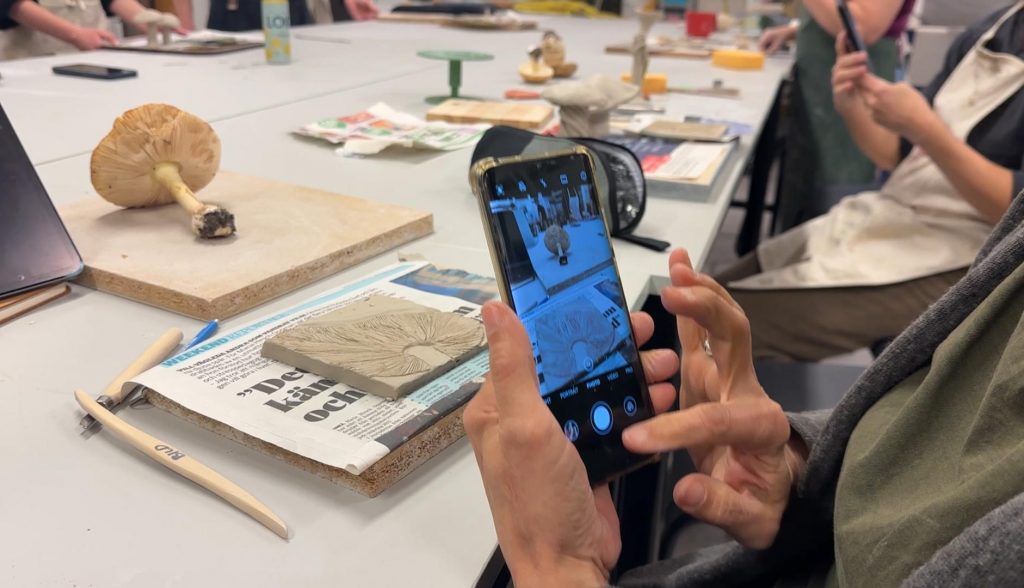
Everyone took part on equal terms, allowing knowledge to spread like the invisible threads of mycelium — branching, connecting, and finding its own direction. What emerged was a self-organizing process driven by curiosity and care, where participants needed to let go of certain assumptions about learning, leadership, and knowledge — much like fungi decompose old structures so that new life can emerge. This resonates with the idea of fungal capacity (Ostendorf-Rodríguez, 2023, p. 86), where learning is described as something that grows collectively from within rather than being imposed from above. It envisions artistic and educational spaces as living networks—both refuge and infrastructure—where imagination, learning, and unlearning can take root and regenerate.
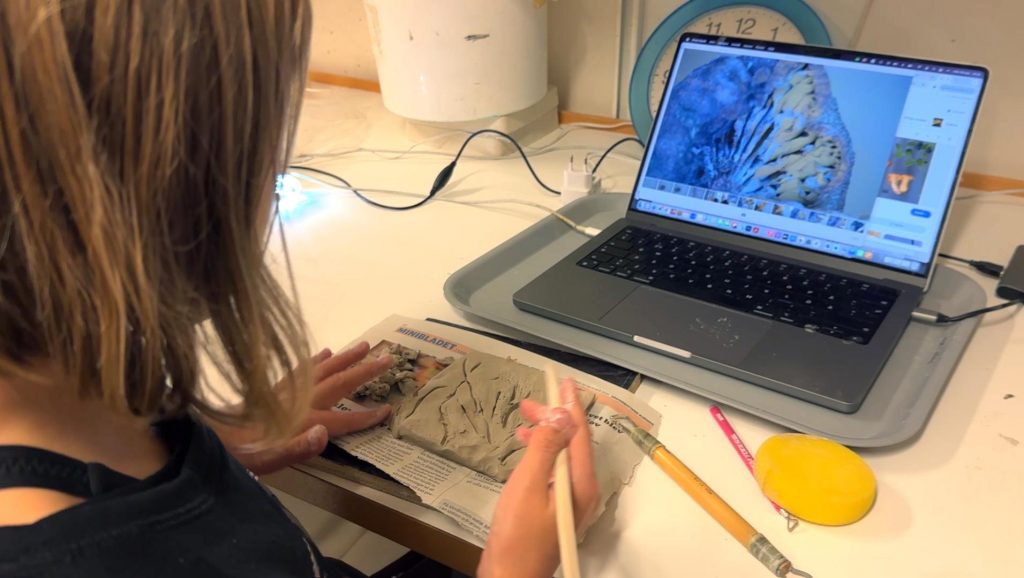
Reflections from participants revealed a sense of ease, openness, and togetherness.
“It was nice that there was no pressure.”
“We trusted the knowledge within the group — everyone had to contribute.”
“The food started conversations; you talked to people you didn’t know.”
The group also expressed how curiosity and a sense of magic remained alive when there was no “expert” present. During the final reflection, participants wished for more sessions, describing the experience as something that could continue to grow — like a living network.
Through Crafting Connections – A Fungal Approach, crafting became a way of connecting humans, materials, and place. The project highlights how shared making and collective processes can foster connection — between people, materials, and the environment — through curiosity, care, and time.