
Text: Suvi Autio & Niko Väistö
Summary
“If you can dream it, you can do it” workshop consisted of making video art together with local students from Inusullivik school, Narsaq. In the workshop, we explored the participants’ future images and local ecocultures through writing, conversations, filming and recording. During the workshop, we provided a glimpse of what it is like to work in a team creating a video piece.
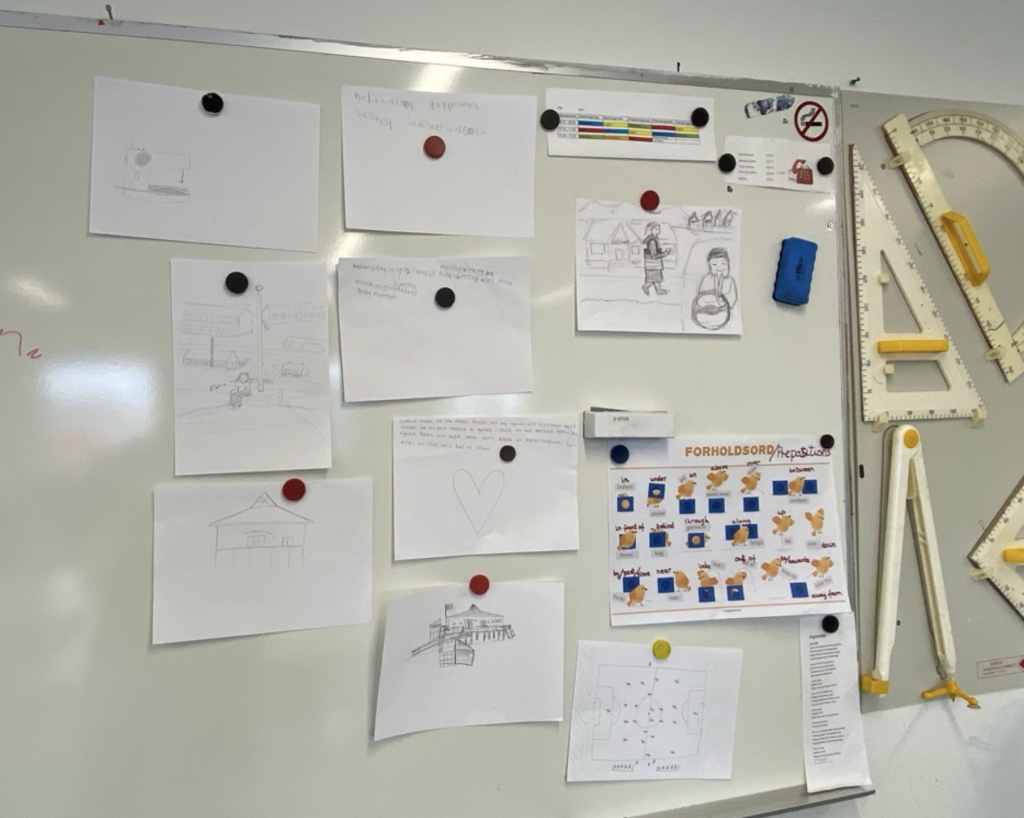
The videos created during the workshop were shown in an art exhibition held in the local Youth club Qaqqavaarsuk.
Audiovisual video art can be approached from several perspectives. At AAE, our approach involves collaborating with young students in Inusullivik who are improving their grades or continuing their compulsory education. We worked together with these students to archive, test, and challenge their relationship to the land, place, and future. Audiovisual videoart making is used to reflect self-images, voices and actions to formulate this relationship.
In general, audiovisual storytelling can be divided into two categories: fictional and non-fictional. In short definitions, we can describe them so that fiction is to create a new scripted actuality, and non-fiction is to treat actuality creatively. Non-fiction, more broadly known as documentary storytelling, was our approach in working with Inusullivik students.
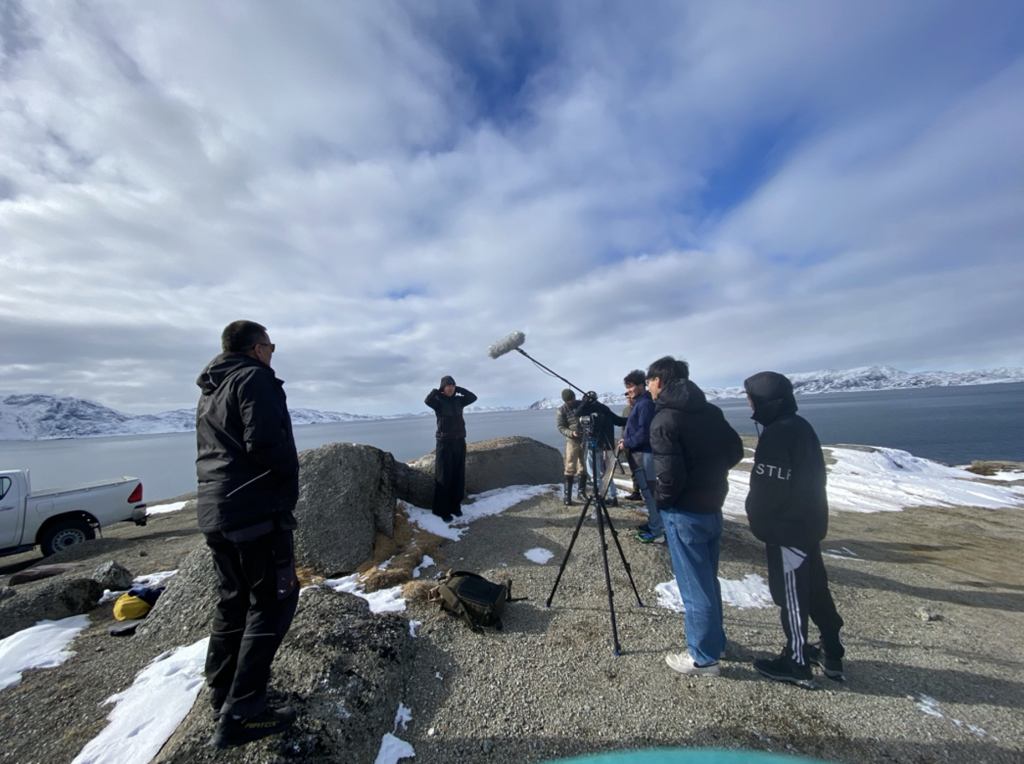
These self-images created through film are intended to help students see themselves as part of the environment in the past, present, and future. We did not provide specific definitions of the environment because we wanted students to define it themselves. According to the principles of AAE, we did not want students to stay indoors by preference, but we also did not specify that they should be outside. Our tasks guided students to reflect on their relationships with Narsaq and its surrounding areas. The idea was to allow students to see themselves as actors connected to the environment.
Mining company shoudn´t take a lot of rocks from here. They should be accused of stealing rocks. Tugtupite is ok, but leave the rest./ Ujaqqanik maangaanniik tigiseqqusaanngillat taamaallaat Tugtupite-nik aallersinnaapput sinnerilu attoqqusaanngilaat. Eqqartuusaasinnaallutillu.
workshop participant’s thoughts on local mining plans
Audiovisual media art, as an art form, combines technical skills with imaginative craftsmanship. In the workshop, we provided technical tools and support to inspire students. We encouraged them not to limit their thinking to technical possibilities but to focus more on their imagination and reflection.
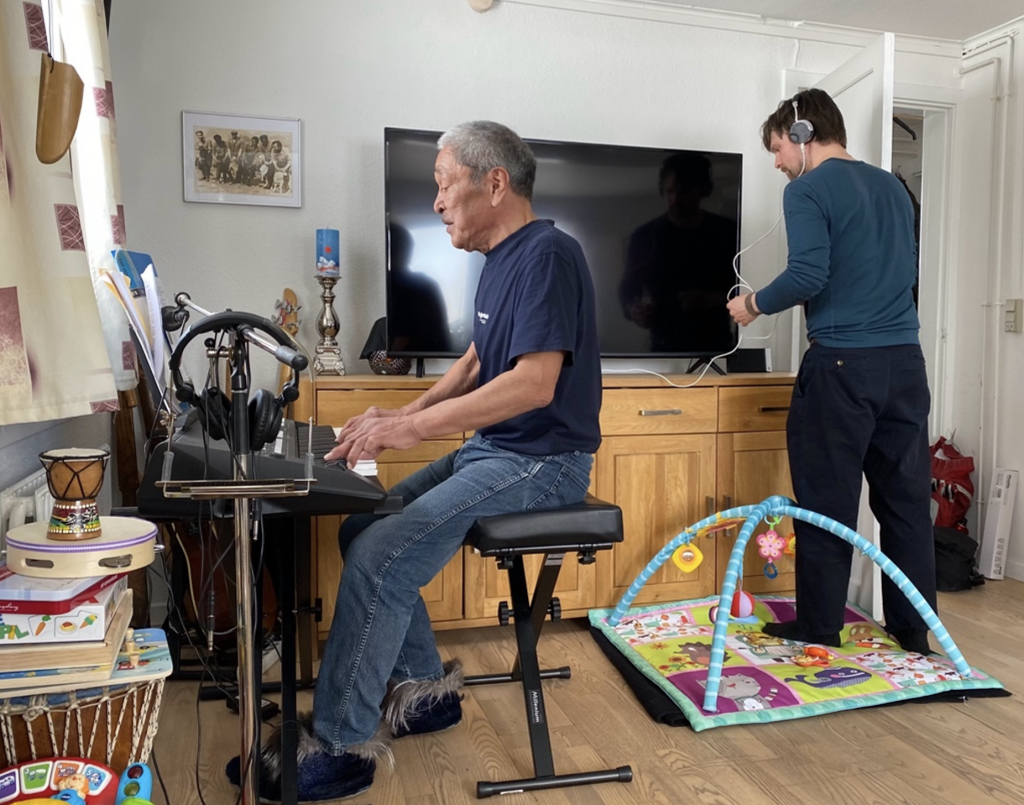
We created exercises where students took turns being in front of and behind the camera. By experiencing different roles, they worked together to develop mutual and shared perspectives on the environment. In this collaborative setting, one student was in front of the camera, being themselves, another was creating the image, and a third was recording the sound. As a result, students produced their own non-fiction 5.5-minute short film that we screened in the final exhibition.
Separate things that are dangerous like mines. Rules and controlling are important-suna tamarmmi ulorianarami soorllu una uanissaq aamma una suna pinngariteqarpa
workshop participant’s thoughts on local mining plans