Pupils from the 3rd, 4th, 5th, and 6th grades at Vikajärvi School (20), along with their teacher, Jussi Korpi, participated in the workshop, creating four short films in Spring 2024. The project was carried out by the University of Lapland and involved art education students Aino Jäälinoja, Aleksi Ignatius, Sade Lylykoski, Arctic art and design student Ni Lin, and university lecturer Annamari Manninen.
Text: Sade Lylykoski, University of Lapland, Finland
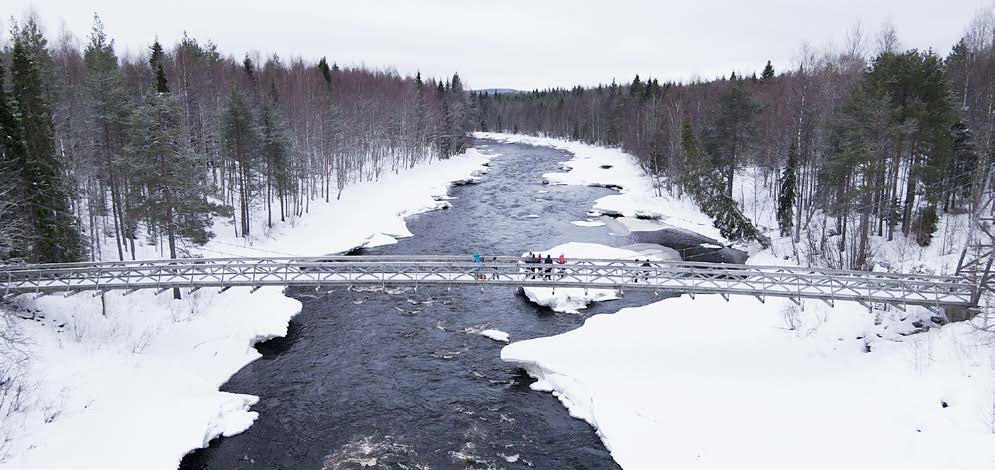
Cover photo: Screenshot from drone video by Ni Lin, 2024.
Summary
The aim was to plan and implement a workshop for elementary school students where they could create video art by filming, photographing, and recording audio to depict their local environment and lifestyle to share with the other participants. We worked with 3rd through 6th grade pupils at Vikajärvi school in Rovaniemi, Finland, to turn their ice fishing trip in the local lake into collaborative video artworks.
The project is part of the larger Sustainability Portraits initiative, where various universities and schools collaborate through subprojects. The overall goal was to expand communal and inclusive art education, as well as to increase participants’ positive recognition of the local identities and sustainability in the local culture and environment. The focus of the initiative is on young people, which is why school collaborations are a crucial component of the project. All the schools participating in the project are located in an Arctic environment, and the northern location is a common factor that unites all the participants in this project.
The preliminary theme of the workshop was the environment and sustainability, particularly in the Arctic environment. Before starting the workshop, our project group decided with the school teacher that the theme of the workshop would be water. The primary goal was for the pupils to gain a deeper understanding of their environment, video art, technical skills, and project work in general in connection to their local identities.
We examined the topic from various perspectives and presented many forms and meanings of water to the students of the Vikajärvi School from an Arctic viewpoint. Our goal was to foster discussion and encourage the pupils to develop their relationship with the Arctic environment and nature, as well as to promote a positive sense of their living environment by asking them to present it, to ‘portrait’ it, in an artwork for the other project participants and the audience. Additionally, the pupils would learn how to use filming equipment and understand what project work can be like. Ultimately, our main objective was to create video art pieces in groups with the students.
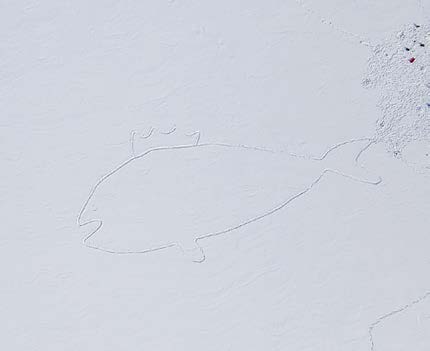
After the planning phase, when we began working concretely with the pupils, our activities initially consisted mainly of advising and guiding them as they planned their own video projects. Using storyboards, we gained an overview of the types of videos the student groups wanted to create, and we could start considering potential filming locations. We decided that our main filming locations would be Vikajärvi Lake (Figure 2) and the Vikaköngäs rapids (Cover photo).
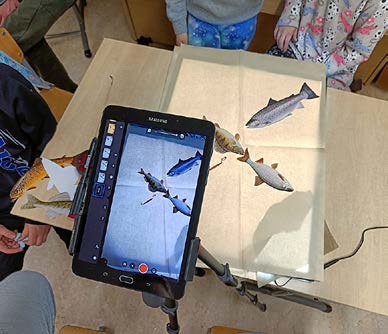
Filming took two days. We were at the lake the first day and at the rapids the second day. Our group’s work mainly involved advising the students on filming, recording, and using the equipment. We had cameras, GoPro cameras, various microphones, and a drone at our dis-posal from the university. In addition to filming the environment and recording sounds, we also had a day for creating stop motion animation at the school to add variety to our video pieces (see Figure 3), especially for depicting fish underwater as part of the stories.
As the work progressed, we encountered challenges with time management and planning. We had to reschedule a couple of times to ensure we could film everything needed, and there were moments when we realized that more detailed planning would have been beneficial in certain areas. Despite these issues, we ultimately completed the video projects. We received mostly positive feedback about the workshop. Although some pupils experienced minor frustrations along the way in the group work, overall we heard good experiences from them. The pupils enjoyed participating in the project, which brought new elements to their school days. They were particularly excited to see the finished works. The pupils also influenced the editing by giving their comments on the first versions of the cutting. For future development, such a project should involve much more thorough planning regarding time management and contingency plans. The concept of contemporary abstract video art presented at the start seemed distant for the 9- to 12-year-olds’ expression. Thus, their films followed more traditional narrative forms, which led us to add the animation in the making process to be able to execute the children’s original storylines. The pupils were happy with the result, as their artwork was probably also delightful and relatable for their peer audience in the corresponding Norwegian school. The aim of Arctic art education was reached: to make the participants’ voices visible through the artwork. The short films were presented in the Sustainability Portraits exhibitions at the Bodö Arctic Conference and Rovaniemi Relate North conference later in 2024.