The OOC (2023–2025) collaborates with forest restoration efforts in Junkerdal National Park and serves as an educational platform. Artists Birgitta Linhart, Laila Ingvaldsen, Maria Huhmarniemi, Esa-Pekka Isomursu, Tommi Yläjoki and Johannes Pekkonen, collective Mette Gårdvik–Karin Stoll–Wenche Sørmo, artist-curator Anja Kath Lande and national part manager Johan Rova participate in it. Institutional collaborators are the Adde Zetterquist art gallery, (Mid Nordland National Park Board, Nordland National Park Centre, Norwegian Institute of Nature Research, the Norwegian University of Life Sciences, the University of Lapland, Nord University, and the ASAD network. Art exhibitions tour in the Adde Zetterquist Art Gallery, Havremagasinet and University of Lapland. Project is funded by the Nordic Culture Fund.
Text: Maria Huhmarniemi, University of Lapland, Finland
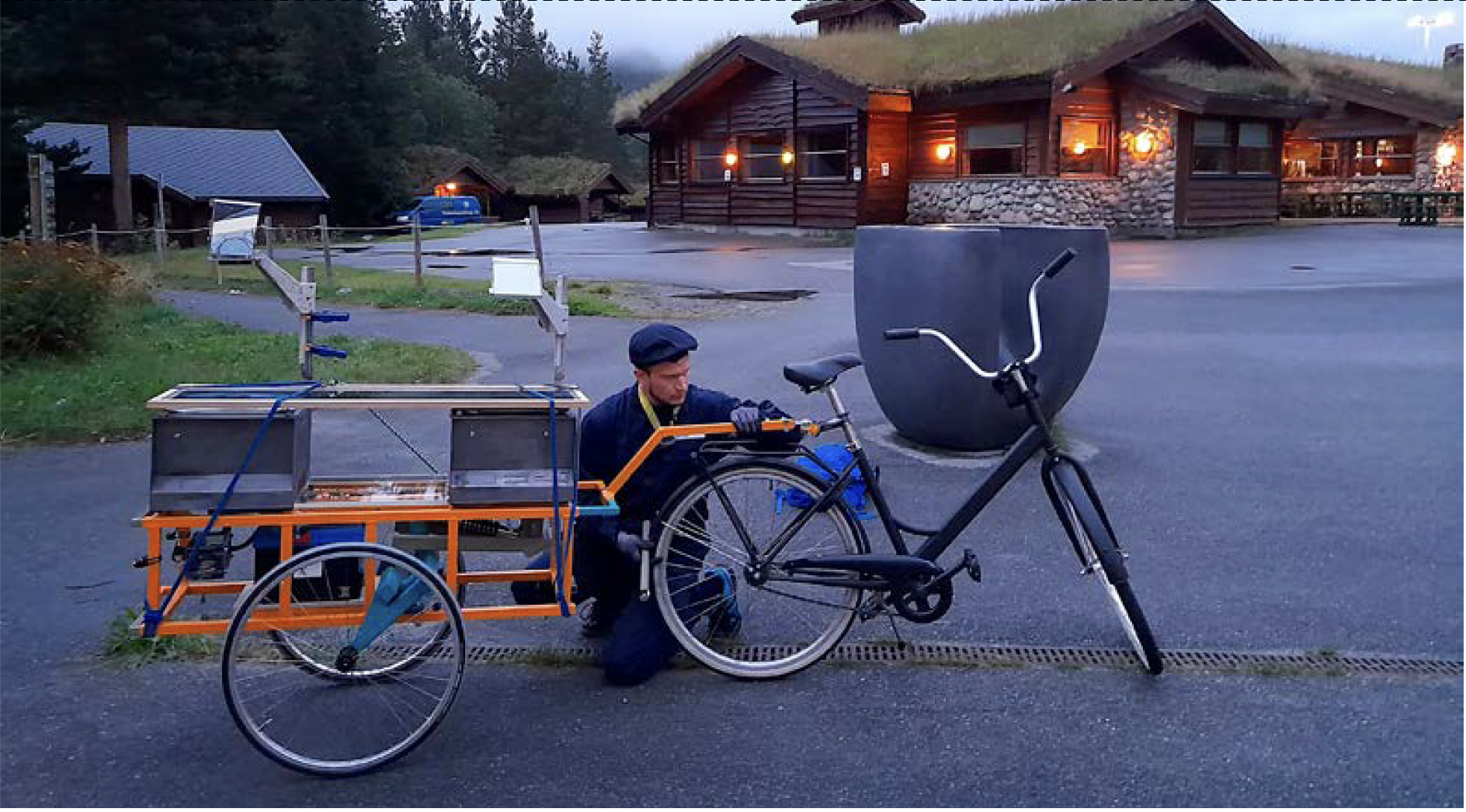
Cover photo: A device by Tommi Yläjoki was used for a performance to initiate reflection on forest restoration. Photo by Maria Huhmarniemi, 2023.
Summary
The Observation of Change reflects and communicates ecological restoration that helps nature to become more natural: decolonise birch forests from planted spruce trees. Artists engage in residencies in the national park and work with park managers to explore ecological restoration, raising questions about environmental ethics and the human role. The project includes art workshops for school pupils, further enhancing its educational aspect.
In Norway and other parts of Europe, planting spruce trees has disrupted ecosystems, contributing to biodiversity loss. In Nordland’s Junkerdal Nature Reserve, Northern Norway, native mountain birch forests are threatened by the spread of spruce trees, initially planted from the 1920s to the 1960s to promote forestry. These spruces take space from native species. Restoration efforts are underway to recover birch forests, including logging and tree veteranisation in 2018–2021. The long-term biodiversity research aims to identify effective restoration methods.
The artistic response Observation of Change (OOC) is a Nordic collaboration that harnesses the power of art and art education interventions to reflect on the ethics of ecological restoration and communicate biodiversity research. This approach allows participants to document nature, conceptualise environmental changes, and broaden their understanding of conservation in the Arctic. The project, with its several artistic productions serves as an example of art’s inspiring role in addressing environmental issues.
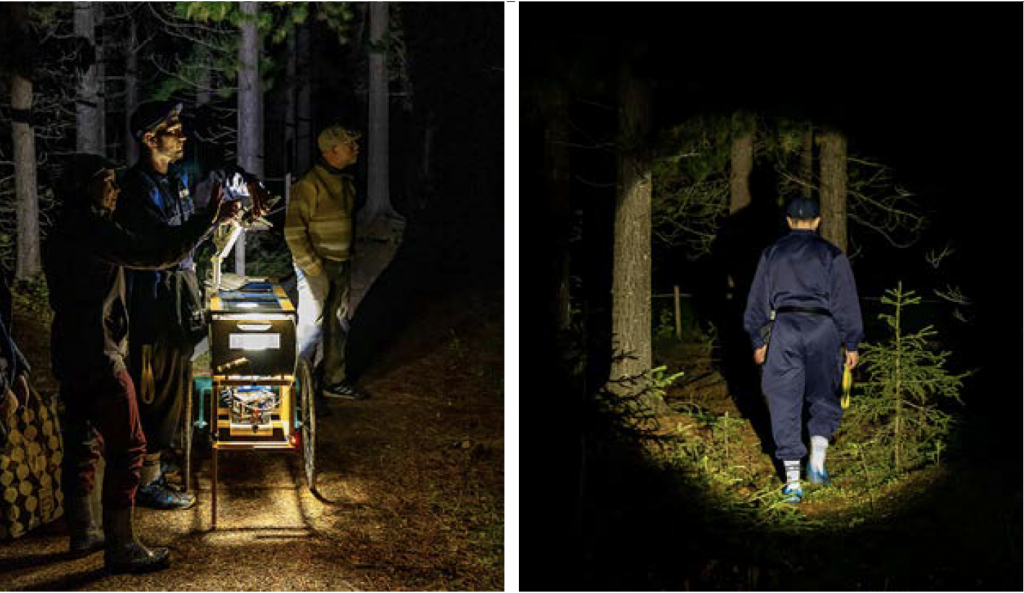
During the first OOC residency at National Park, a participatory performance facilitated by Tommi Yläjoki took place in the Arboretum of the National Park Centre. Participants had the opportunity to engage with light art and explore the themes of ongoing nature restoration within the nature reserve. Through
light, attendees could observe the space, feel the atmosphere, and contemplate the ever-changing nature. The performance led participants to consider generations of trees, humans, and science as human interventions in a more-than-human nature. This performance followed a pedagogical turn in art, using performative public art to evoke reflection on forest restoration and forest science.
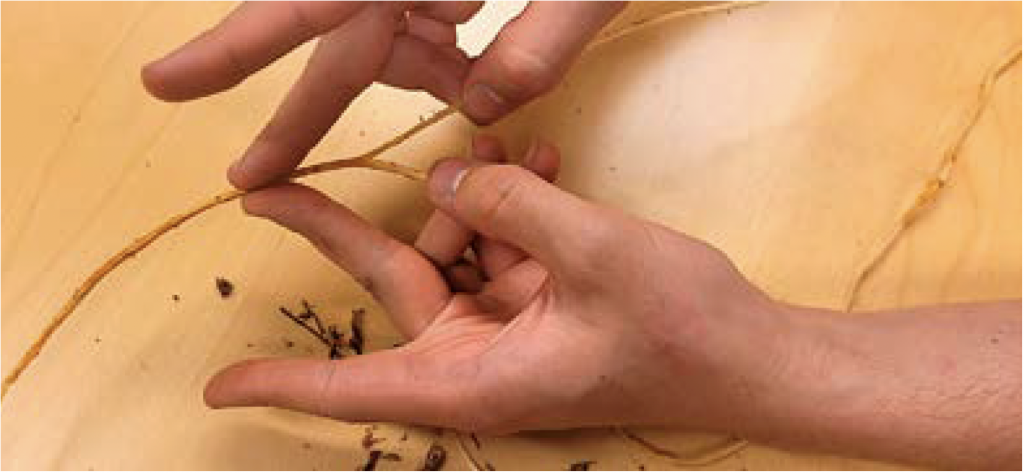
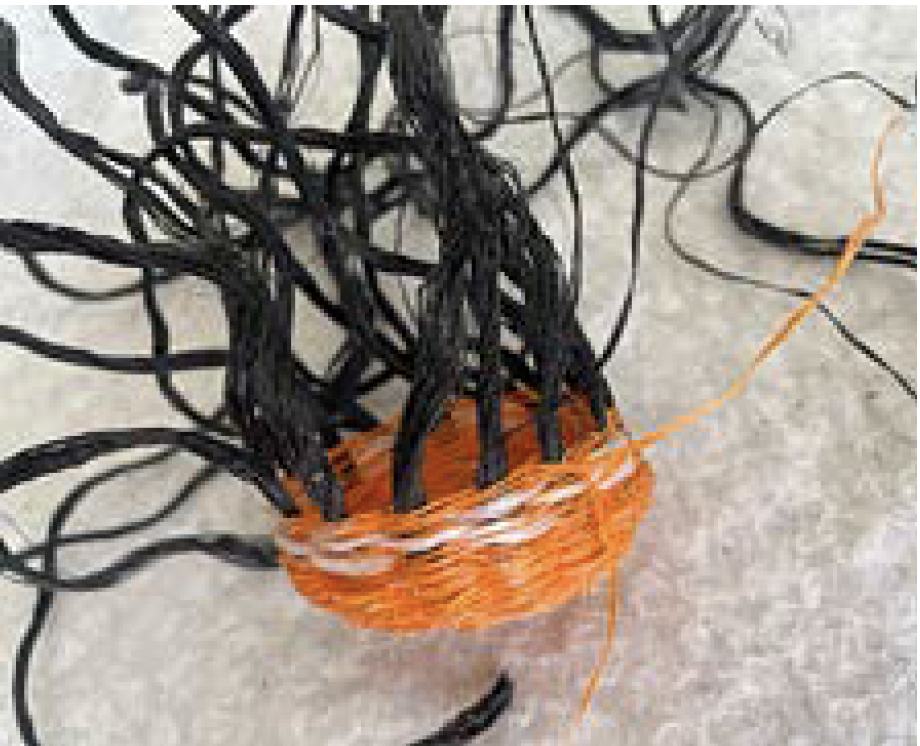
Anja Kath Lande explored traditional ecological knowledge to find sustainable uses for spruce that could help control its spread. The spruce root weaving practices of the Tlingit people of southeast Alaska inspired her. Indigenous Arctic peoples used spruce roots for practical items and ornaments, making dense, finely woven containers that could serve as water cups or cooking vessels. Root harvesting was traditionally done with care to avoid damaging tree growth. Lande harvested spruce roots and learned the ancient method. Living by the seashore, she also collected polypropylene ropes washed up on the beach. She then led a workshop for the OOC project, teaching spruce root weaving and using these ropes as practice material for beginners. This workshop initiated the revitalisation of root-binding craft with the help of modern materials. It also reflects on the sustainable use of crafting materials and human-nature interactions.
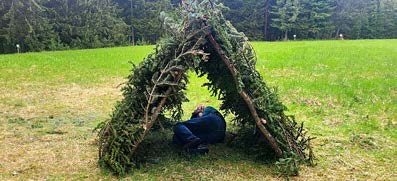
Two art workshops were held for school pupils during the second OOC residency. These sessions introduced 14-year-old students to tackle environmental issues through art. The pupils were divided into groups and tasked with creating art pieces, reflecting their connection to the more-than-human world. Some pupils were enthusiastic about experimenting with natural materials, while others wanted to play and chill in nature. Presenting their artworks to the group sparked new insights as the pupils observed how each group approached the same task uniquely.