
Text: Wence Sørmo
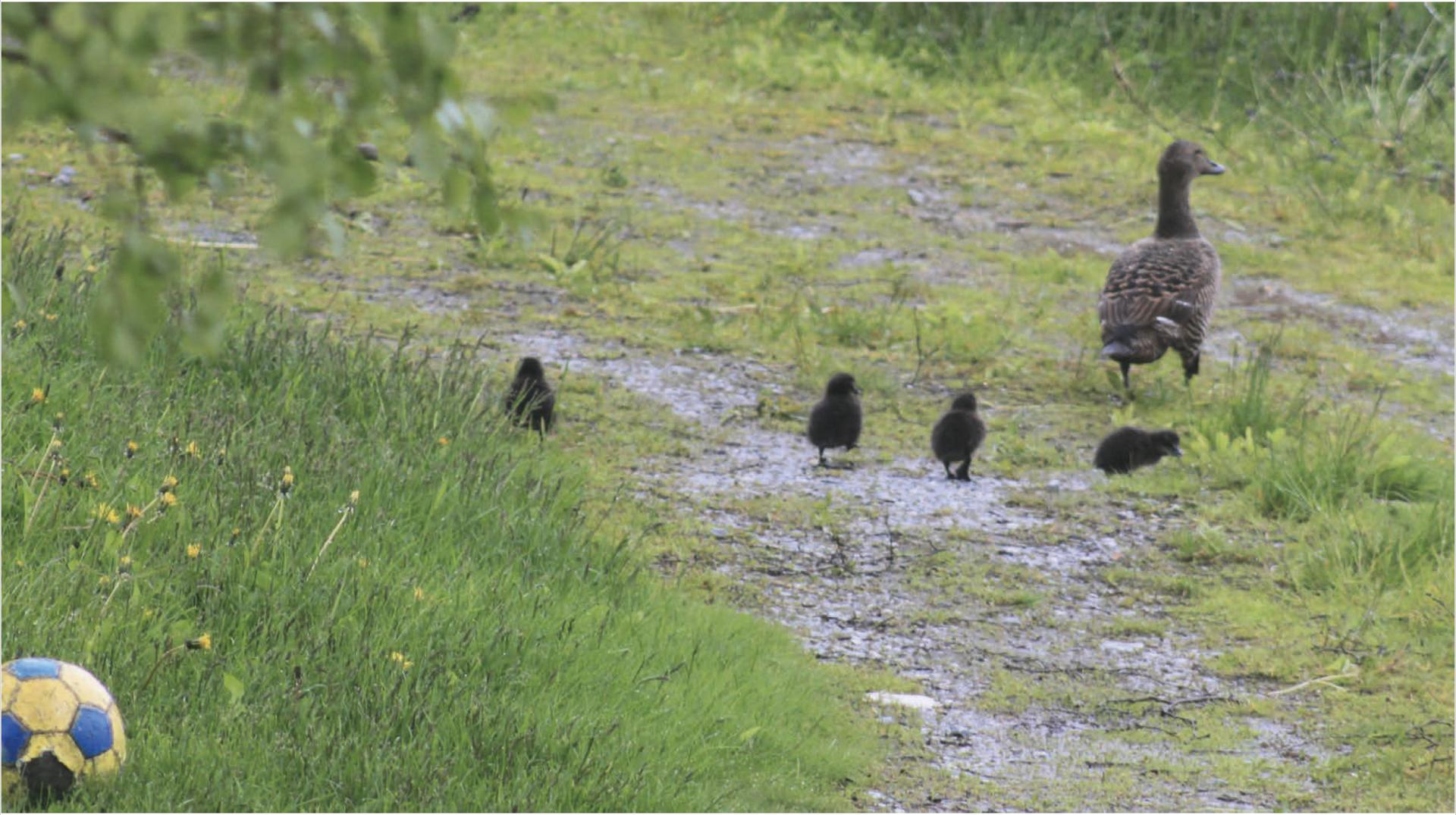
Cover photo: Figure 5. The hatching succeeded. Photo: Svein Morten Eilertsen.
As an associate professor of science didactics, I teach science at Nord University, Campus Nesna, Norway. I seek to give my primary school teacher students a more holistic understanding of the natural sciences, which are often fragmented and divided into subjects such as physics, chemistry, biology, physiology, geo-sciences, cell biology, genetics and technology.
This essay presents my process and reflections on making wooden eggs to help the vulnerable eider duck, which is an important species for the local cultural heritage in Helgeland.
Introduction
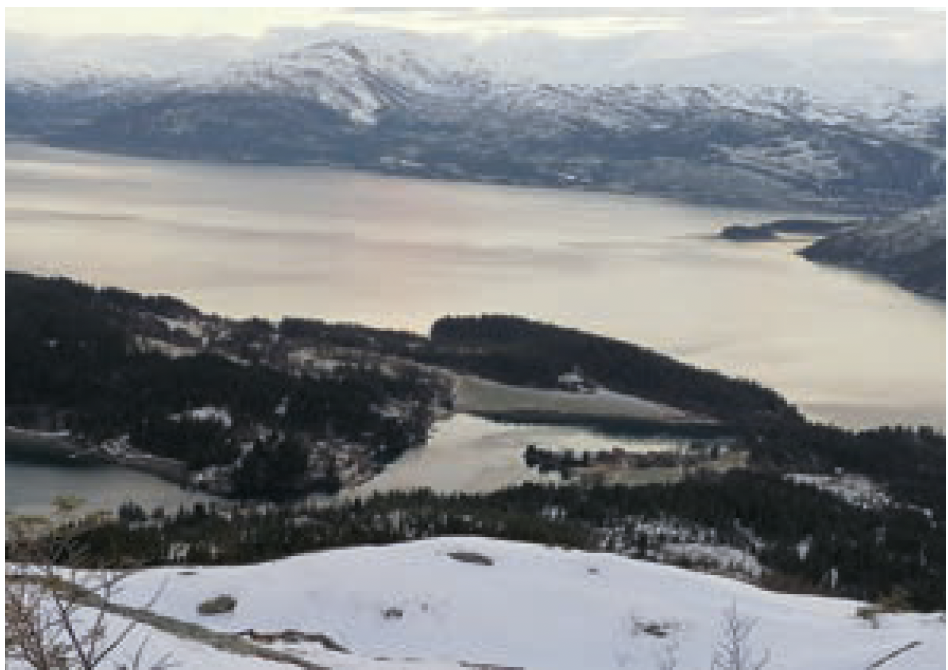
The farm is located at the outlet of a small fjord, called Straumen (the Stream), that leads out into a larger fjord, Ranfjorden (Figure 1). I have always been interested in nature and what happens in nature through the different seasons. Growing up on a farm, I was involved early in activities related to work in the field and in the daily farming chores. My fascination for birds, plants and animal life comes from the fact that I was exposed at a young age to all kinds of nature and landscapes in my local area. Being outside was a natural part of everyday life and I was part of the taskscape. Ingold (1993) describes landscape as opposed to taskscape and explains what he puts in the term “dwellers”. Being “dwellers” includes all living organisms in the landscape and their activities that contribute to what he describes as “taskscape”, with its sounds, smells, movements and tracks, activities that can be sensed and perceived and which are important as part of the whole of the landscape. My childhood experiences is the reason why I chose to study science (comparative physiology), and became aware of how little I knew about my fellow dwellers. I chose to focus on physiological adaptations of different animals to cope with the large seasonal changes in light, temperature and food supply throughout the year in the Arctic. Nevertheless, I still seek more knowledge about how plants, birds and animals — large and small, feel about themselves, with each other and how they adapt to different seasons and climatic changes.
The Eider Duck
The eider duck is considered a domestic animal along the coast of Helgeland in Northern Norway, and for centuries people have guarded nesting eider ducks, collected the down to clean and make duvets, and sampled eggs to eat. The eider is a large duck that is still quite common at the Helgeland coast, but the size of the population has fallen by 80% in 40 years and the population is vulnerable (Pedersen, Follestad, Gjershaug, & Nilsen, 2016). The reason for the decline is said to be that the sea has become warmer, there are more predators like mink, foxes, otters and sea eagles, more disturbance from boat traffic, cats, dogs and people traveling in nature during the vulnerable breeding period (Hanssen & Erikstad, 2012), -a more active and disruptive taskscape from the point of view of eider ducks.
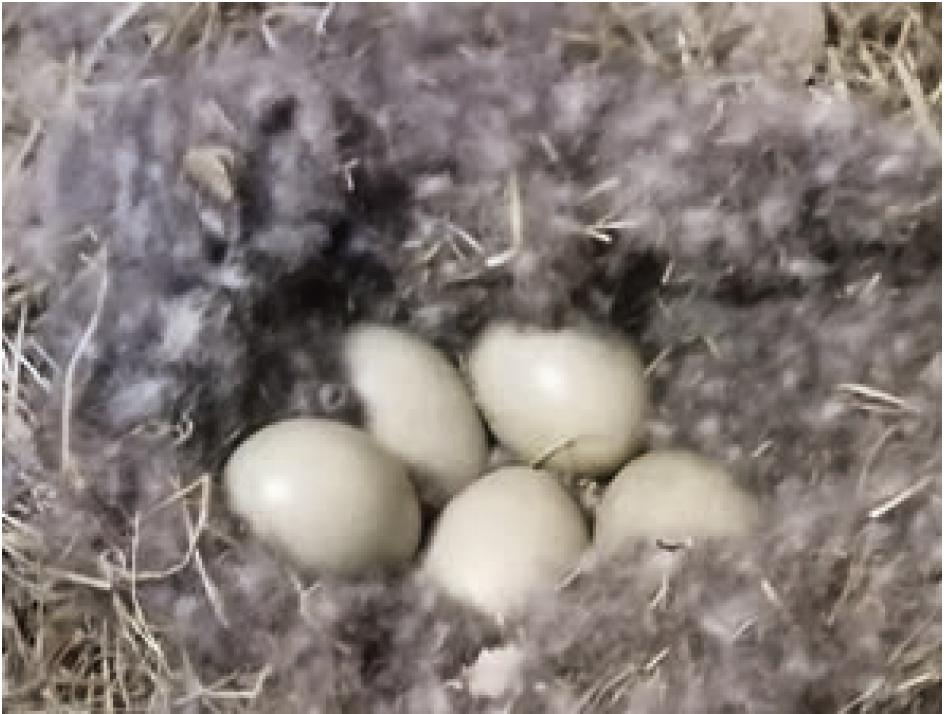
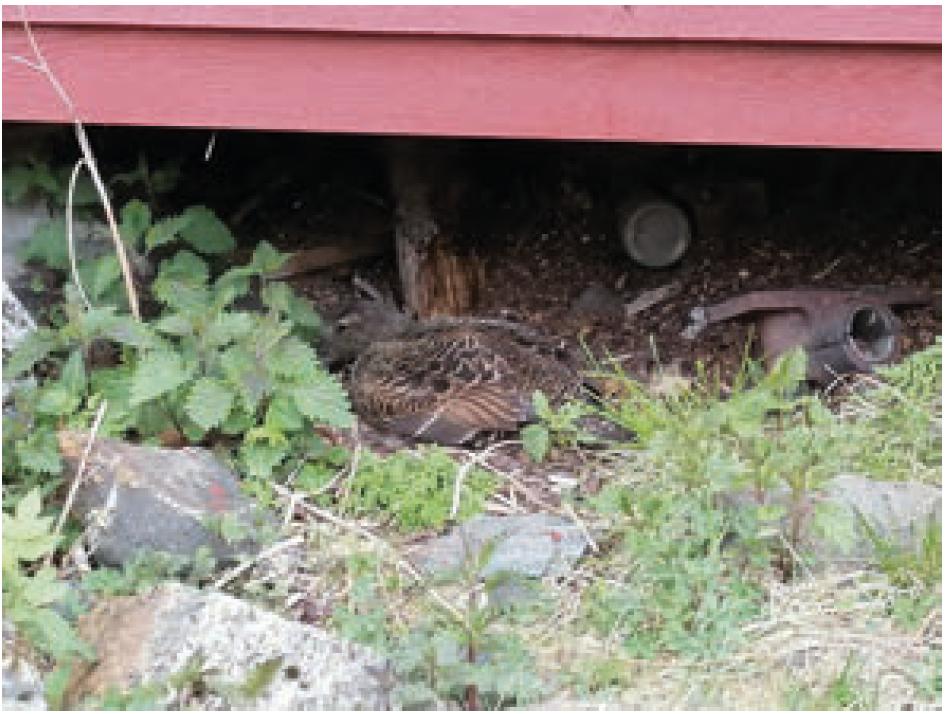
The male eider duck is colourful, white, black, pink and green, and is always involved in picking out the nesting space in collaboration with his wife. It is a show to watch when the eider pairs come steaming ashore in early May, all the way up to the yard to look for the most perfect nesting place (Figure 2). The camouflage-coloured female lays 5-6 eggs over a period of one week, before she begins to incubate the eggs (Figure 2 and 3).
The Down
In Straumen, a couple of generations ago, it was considered a high status to have many nesting eider ducks, and the farm owners made it easy for bird to thrive. Nesting houses were built in the form of small roofs along houses and barn walls and small pits were dug out in advance in safe places where the people wanted eider ducks to nest. The cat was on a leash for 2 months in early summer and it was not common to have a dog on an eider duck farm. The farmers set traps for predators or hunted predators (both mammals and birds) that disturbed or threatened the nesting eider duck.
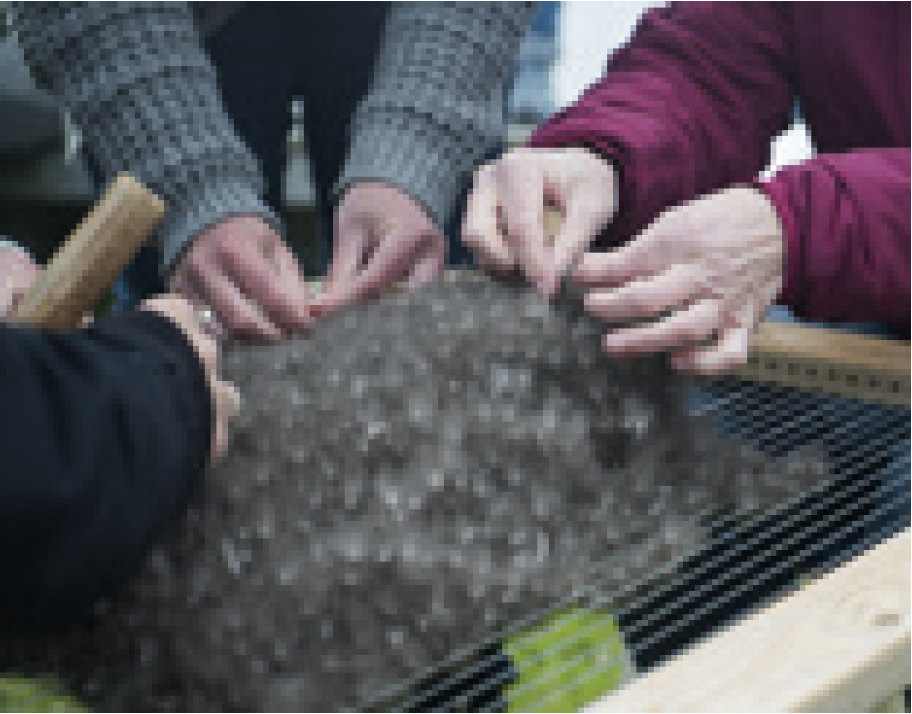
The down was harvested after the eider duck had left the nest with the young ducks after 23-25 days of incubation. During the incubation period, the female eider duck was “tame” and the people of the farm could touch her plumage and lift her off the nest to look at the eggs. The female farmers collaborated on cleaning the down after each season. This was a dusty and laborious work, but also a social activity to which they looked forward (Elstad, 2004), (Figure 4).
The eider down has unique properties that are not found in goose down or similar synthetic materials like extraordinary cohesion, elasticity, resilience, “breathability” and temperature-regulating effect (thermal effect) so that down clothing and duvets can be used in the summer time without getting too hot (Carlsen, 2013). The result of the hard work of herding the birds and taking care of the down was the lightest and warmest down duvets for your own use or to sell. Down from 60-70 eider duck nests was needed to make a single duvet (approx. 900-1000 g down). Today, the price of a double duvet of eider duck down is more than 40,000 NKR.
As a co-dweller with nesting eider ducks, I feel responsible for helping the birds to succeed in the breeding season (Figure 5).
Background
Last season only 10 birds nested on my farm (Figure 2), but 5 of these were robbed by magpies, crows or gulls, and one eider duck female was killed and eaten by an otter while an- other was scared away by a fox (who ate up the eggs). Finally, there were only 3 eider ducks that were able to incubate all their eggs and hatch ducklings. These ducks were those which lived most closely to us and our daily family and farming-activities, to avoid predators (Figure 5). At sea, other dangers are waiting; great black-backed seagulls, herons and otters threaten, but the eider duck females are good at cooperating (even those who have not been able to hatch ducklings themselves) to keep predator birds away. Eider ducks remember the misdeeds committed by predators and will avoid nesting at the places she has previously been robbed, so even a robbery influences the population size for generations (Hanssen & Erikstad, 2012).
My contribution as a dweller will hopefully help maintain the taskscape that has been present on my farm for centuries. I made copies of eider duck eggs from wood (1: 1 size) and painted them with an environmentally friendly paint. The eggs have a string attached to them with a long nail at the other end, so that the nail can be inserted deep into the nest after I have removed the birds’ first egg. Then there will always be an “egg” in the nest when the female returns to lay more eggs during the vulnerable week in between her leaving the nest after laying a new egg. Predators are unable to damage the wooden eggs or run away with them. If the egg disappears, the female eider duck thinks she has been robbed and leaves the nest. When the female has finished laying all her eggs, I will replace the wooden eggs with her original ones so that she can start the incubation period where she rarely leaves the nest to drink water.
The Artwork
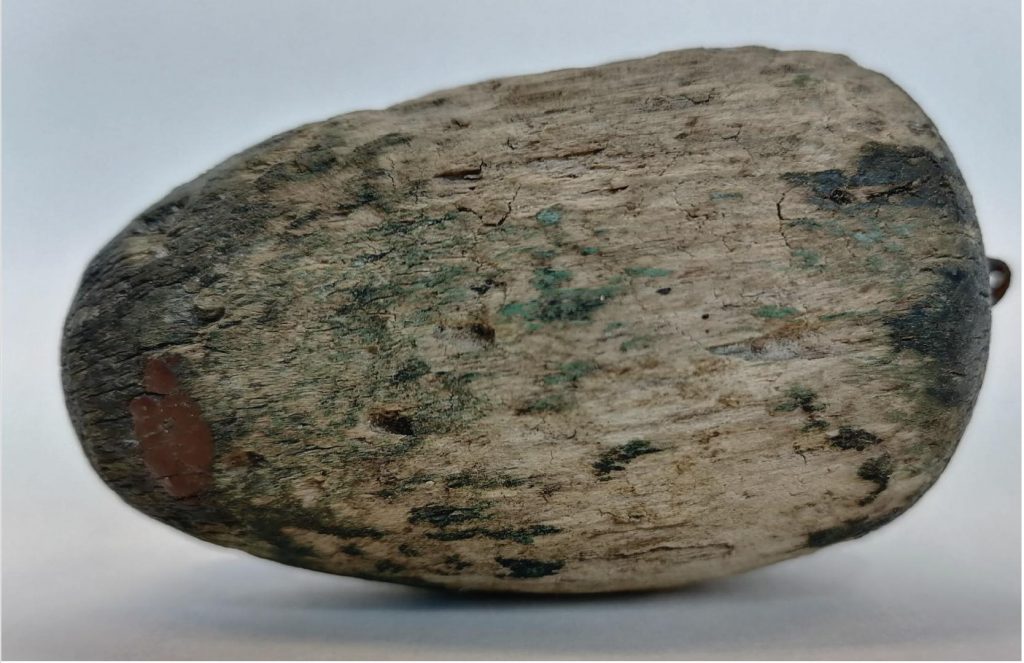
The idea for the artwork and making of eider duck eggs emerged when I discovered that I only had one old and worn out artificial eider-duck egg left (Figure 6).
I had the lathe in my workshop at the farm where I also found the pieces of wood. I asked my father to help me make some new eggs.
He showed me how to hold the chisel and adjust the lathe (Figure 7). It was important to have a short distance between the tool rest and the piece of wood, and I had to adjust the rest as I removed layers from the wood. It was challenging to shape the eggs, especially at the narrow end, since the distance from the rest to the wood got larger and the chisel could accidentally slip and gouge chunks of wood out. I had to be focused using the lathe and use sharp tools. The carving at the end of the shaping process was the best part. I was sitting outside the workshop in the bright spring sun with my eggs and a sharp knife, carving out small pieces of wood to make the eggs smooth at both ends. Eider duck eggs are green, but the colour gets darker as the female gets older. I found a colour between the extremes so the eggs could be accepted both by old and young females.
Reflections
The process of making new wooden eggs demonstrates the necessity of repeating the taskscapes of different generations living in the same landscape at different times (Figures 6-8). The eider ducks are the same and have the same needs as they did 74 years ago when my family moved to this coastal farm in Helgeland. People also have the same basic needs, but have changed their ways of living by making life more easy and comfortable for themselves, at the expense of other species. It feels somehow good to help a fellow dweller, but I worry about the future for sea birds with all the pollution and plastic in the oceans, the plans for wind-mills off shore to produce more and more energy, the imbalance in nature caused by man and the climatic changes that are happening so fast that many species will struggle to adjust their way of living. What can I do in my timeline? I can try to make life easier for the eider ducks that decide to dwell here and help them by taking care of their precious eggs for a few days while their nests are unguarded and vulnerable for predators (Figure 9).
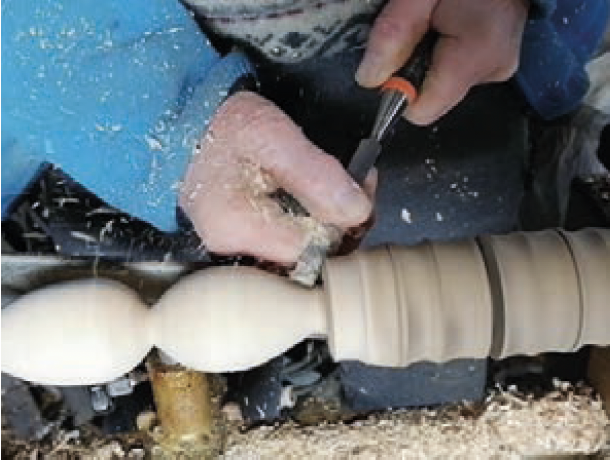
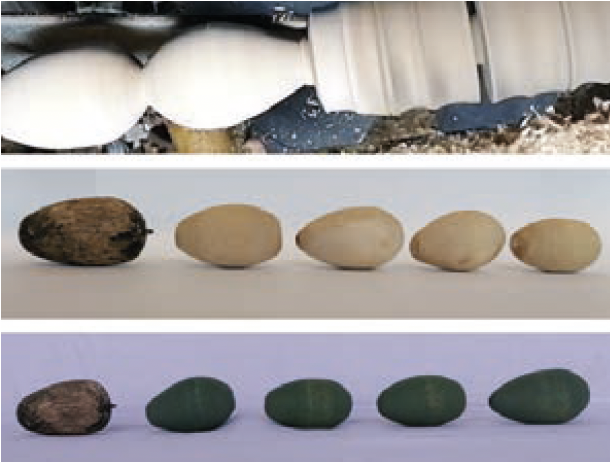
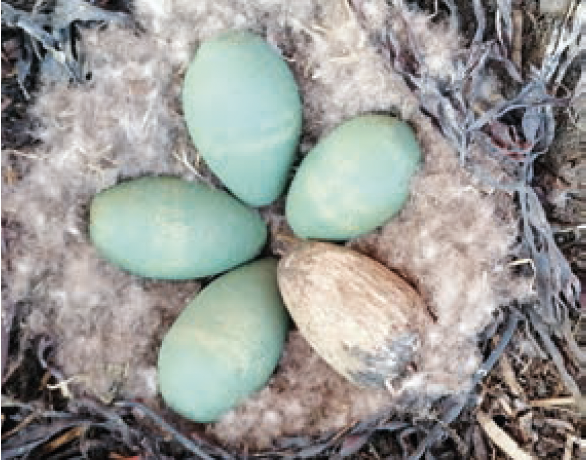
Photo: Wenche Sørmo.
Through my knowledge about the species and my taskscape tradition of caring for the eider ducks during their breeding season, together with my skills designing and crafting wooden eggs, I can contribute to pass on the local cultural heritage to my teacher students, daughters and neighbours. At the same time, I harvest a valuable natural product that in the long run can be used in a locally produced down duvet that can be passed on to the next generation.
References
Carlsen, T. H. (2013). Nordisk ærfugldun. Kunnskapsutveksling mellom Norge, Island, Grønland og Færøyene. Bioforsk Report. Vol.8 Nr. 108 2013.
Elstad, Å. (2004). Kystkvinner i Norge. Kom forlag: Tangen. ISBN 82 92496 149
Hanssen & Erikstad (2012). The long-term consequences of egg predation, Behavioral Ecology, published online November 21, 2012, doi: 10.1093/beheco/ars198.
Ingold, T. (1993). The temporality of landscape. World Archaeology Vol. 25, No. 2, Conceptions of Time and Ancient Society (Oct., 1993), pp. 152-174 Taylor & Francis, Ltd.
Klausen, A. K. (2013). I ærfuglens rike. Stamsund: Orkana Akademisk.
Pedersen, H.C., Follestad, A., Gjershaug, J.O. & Nilsen, E. (2016). Statusoversikt for jaktbart småvilt, NINA Rapport 1178. 258 p., Trondheim, ISBN: 978-82-426-2803-9