The workshops were designed to foster cross-cultural connections and environmental dialogue through artistic expression. This initiative aimed to engage young people from Arctic and near-Arctic regions—namely northern Finland, Norway, and Sweden—using art as a way to connect them with their unique environments and cultural heritage. The primary goal of this collaboration was to create a space where young people could express their perspectives on the Arctic through visual art, specifically hand-drawn postcards. These postcards served as a platform for pupils to reflect on their environment, exploring themes such as climate change, cultural traditions, and daily life in the Arctic.
Text: Annamari Manninen, University of Lapland, FInland and Sara Rylander, Umeå University, Sweden
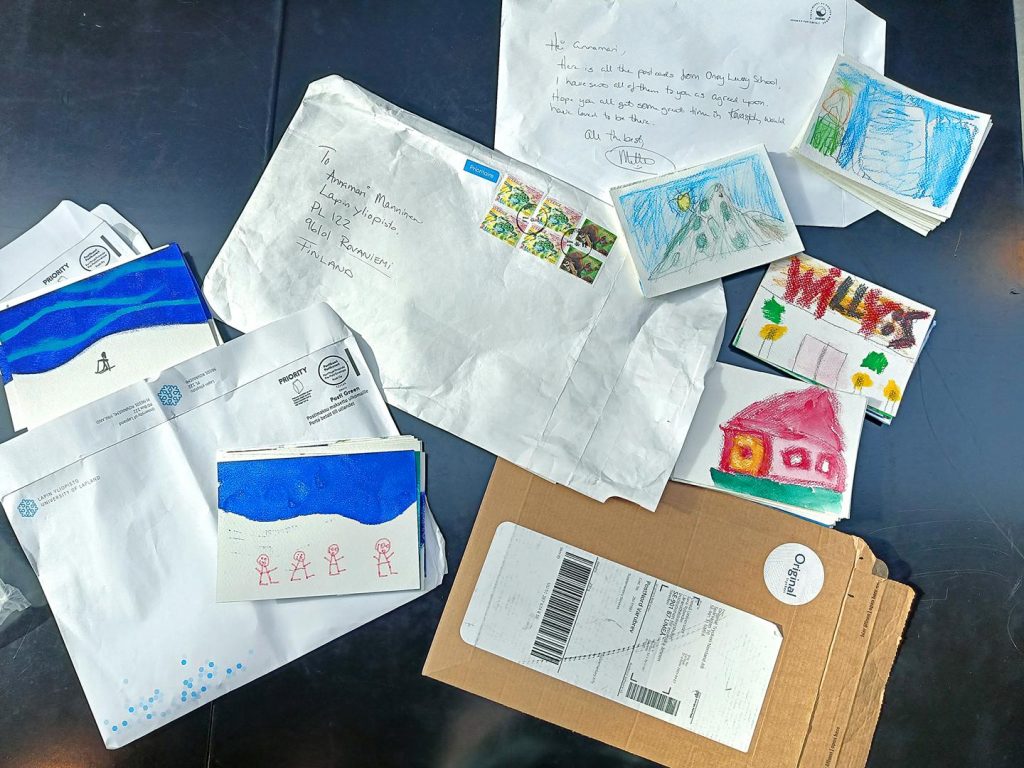
Cover photo: Postcards in the process of posting and sharing them. Photo: Annamari Manninen, 2024.
Info
Workshop team:
Sara Rylander, Umeå University, Sweden
Mette Gårdvik, Nord universitet, Norway
Karin Stoll, Nord universitet, Norway
Wenche Sørmo, Nord universitet, Norway
Annamari Manninen, University of Lapland, Finland
Anniina Pennanen, University of Lapland, Finland
Virve Pietilä, University of Lapland, Finland
Kuutti Terävä, University of Lapland, Finland
Participants: Pupils aged 7-12 years
Place: Elementary schools in Sweden, Norway and Finland
Time of the workshop: Spring 2024
In the workshops Pupils aged 7 to 12 reflected on Arctic life, culture, and climate, fostering cross-border dialogue and re-enforcing local identities. The workshops and collaboration were part of the Sustainability Portraits initiative to develop art projects in the local identities in Northern ecoculture, via children and youth well-being and collaboration. The topic was centred around the challenges and beauty of Arctic life, as well as the importance of sharing these experiences with others, and creating a collective voice across borders.
By allowing children to depict their thoughts and experiences, the project sought to promote an understanding of the shared yet diverse realities of life in the Arctic and near the Arctic. The aims of the workshops were to draw the attention to the positive and sustainable features of their surroundings and lifestyle and promote positive local identities by sharing the pictures.
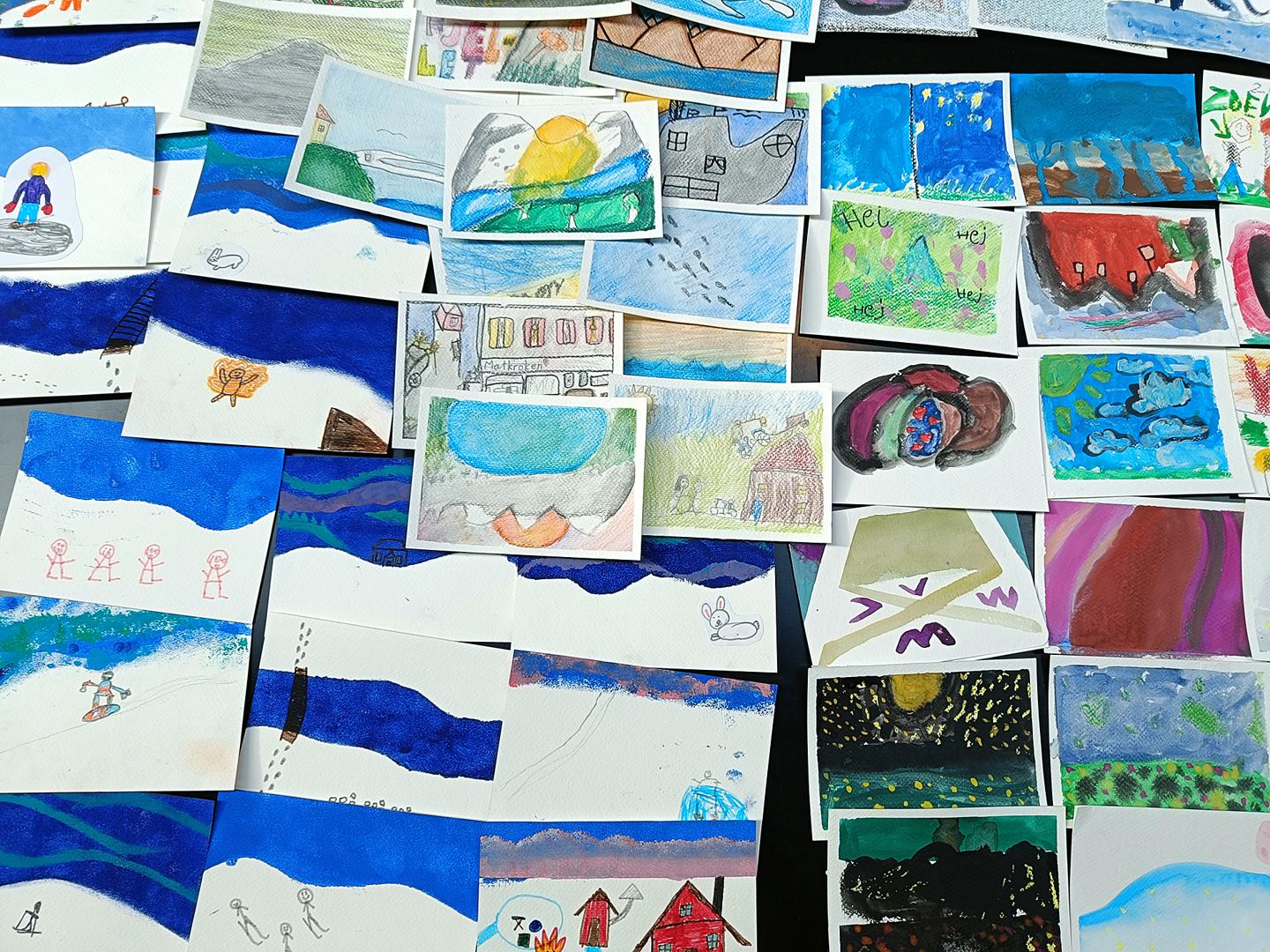
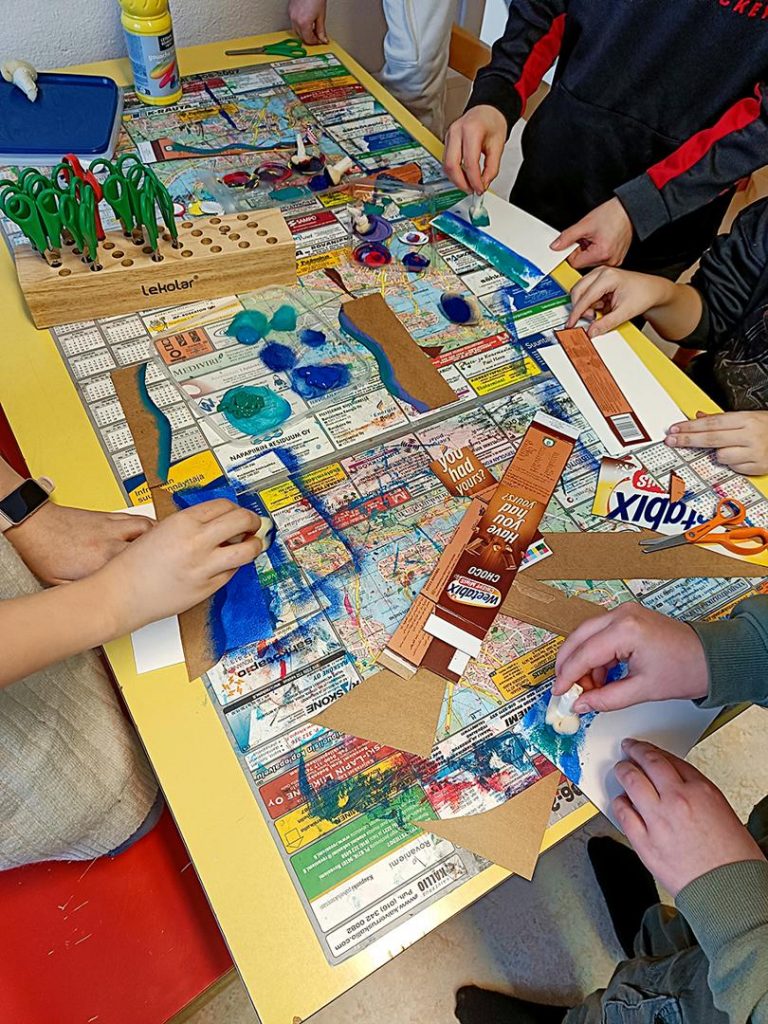
In practice, the participants, pupils aged 7 to 12 years old, engaged in the process of creating postcards that they sent to the other schools in the neighbouring countries. The postcards were created using basic materials like watercolour paper, pencils, gouache and watercolour. The pupils were encouraged to think what they would like to share about their home place and life to peers in the neighbouring countries. From the start, it was clear that the images created were aimed to be sent and seen. Looking at, analysing and interpreting drawings in postcards was then the second part of the learning experience.
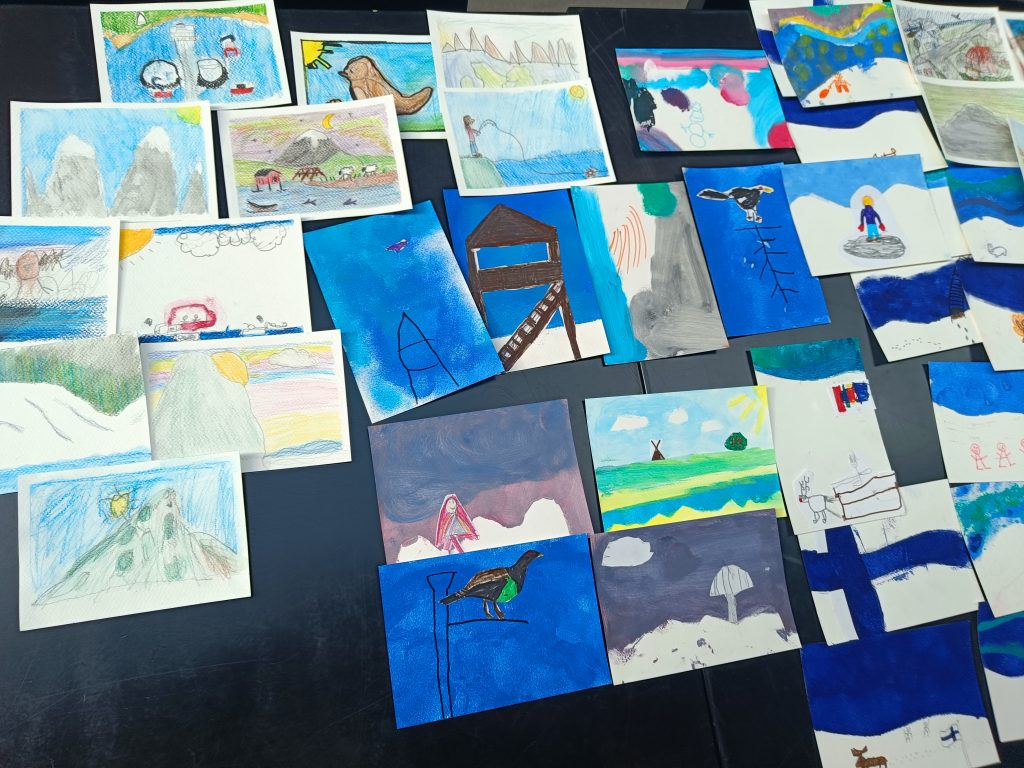
The idea behind this project worked well because it encouraged creative freedom while fostering collaboration. Each postcard acted as a narrative piece, allowing the participants to communicate with one another across borders. We asked the pupils to share something special from their closest surroundings. By focusing on the act of exchanging postcards, the project created a tangible connection between participants, transforming the simple act of mailing a postcard into a meaningful gesture of sharing one’s personal story.
The feedback from the participants was positive. The children enjoyed the creative process and felt empowered to share their thoughts. One of the key lesson learned from these workshops was the power of art as a tool for environmental education. It demonstrated how creative expression can break down barriers and foster understanding across different cultures. The Greetings from the Arctic collaboration suggests that similar methods could be used in other educational settings, where art-based and cross-country projects could enhance learning, particularly in transdisciplinary contexts. The workshops highlighted how a simple activity like creating postcards could open up conversations about important topics while encouraging collaboration, creativity, and connection among young people.
The second phase of the collaboration took place at the Arctic Congress in Bodö, where the pupils’ postcards were exhibited as a collective installation and the art education students held a workshop with visitors, creating postcards using pre-made stamps and colours, further enhancing cultural exchange and environmental awareness through artistic expression.