
The learning of our shared New Genre Art Education field school in Karasjok is that we can create art together and through that, we create togetherness in between us as people, but also between us and our environment, in this case, the river. We learned that the portraits show us all as building cultural, social, environmental, and economic sustainability in a framework of equality, social justice, and freedom.
Text: Peter Berliner and Elena de Casas, Association Siunissaq, Greenland
Info
In Karasjok, in the Sámi region of Norway, the key local partners for the workshop were the Sámi Centre for Contemporary Art (Sámi Dáiddaguovddáš) and the Karasjok School. Besides the University of Lapland, the event was also supported by Umeå University in Sweden, Nord University in Norway, and the University of Greenland. External partners included the multidisciplinary arts association Piste from Rovaniemi and the artist and social psychology association Siunissaq from Greenland.
We make portraits to engage the viewer with the appearance, the personality, or the mood of the portrayed subject. This engagement is achieved through the composition, which brings forward an interpretation in the picture.
In Karasjok, the young participants in our workshop took portraits of each other in places of trees, of sculptures, of buildings, and of melting snow. The portraits became portraits of me and us in our environment. Then we printed the portraits on poster paper and sat together at a long table in the afternoon light of Karasjok and invited everybody to write what they appreciated about the portrayed person.
We soon noticed that the young participants engage in writing appreciative comments to each other. They told us that they felt relaxed doing it even though it was a new experience both to read and listen to the appreciative words about oneself and others, and to avoid negative descriptions, derogatory teasing, and imposed feelings of inferiority and insecurity. Through that we, step by step, challenge and dissolved discourses of colonialism, violence, and neoliberal competition of positioning. It may be a long process, but it starts here and now.
In a loop of reflection, these portraits were exhibited in its context. They were exhibited at the community event at the end of the seminar, on the wall, side by side, like a long unfolding banner, a portrait of a group, a generation on the move.
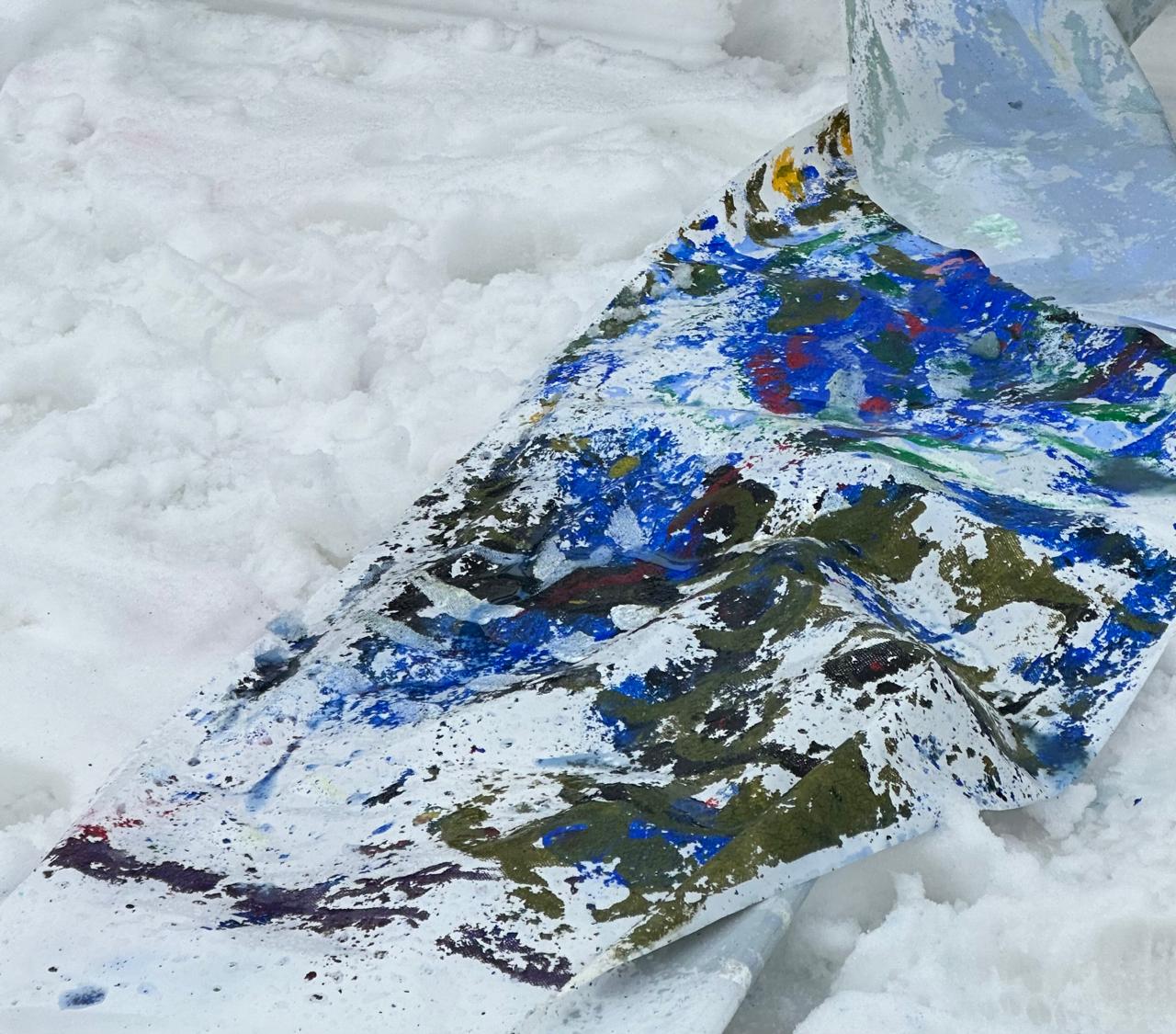
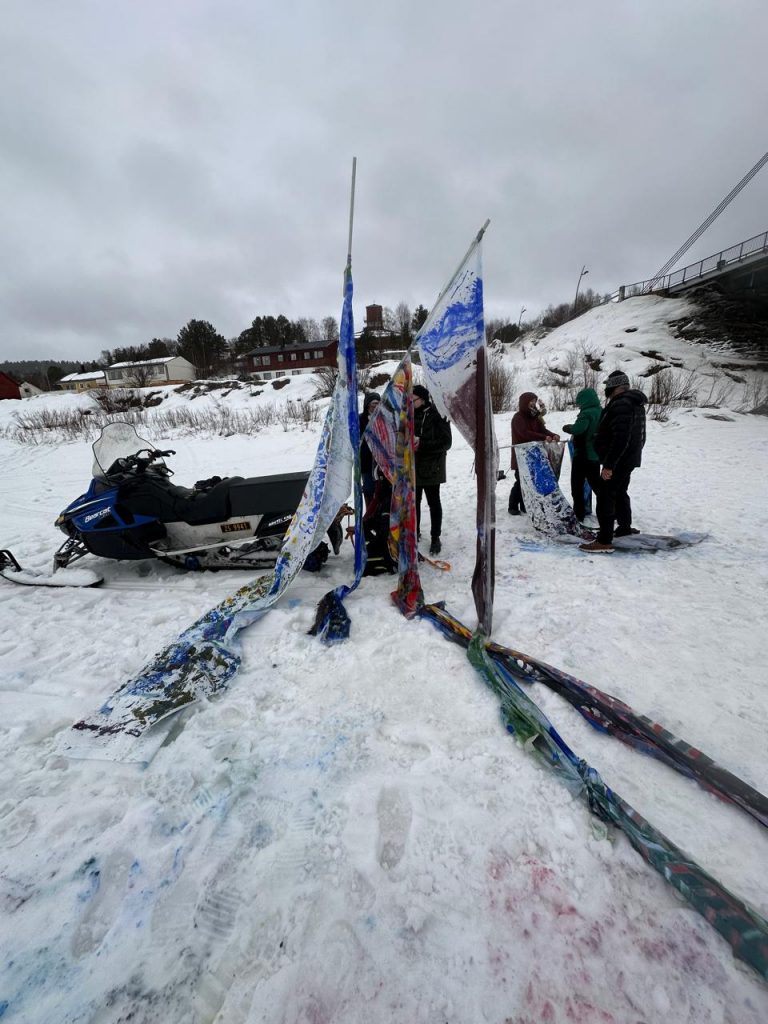
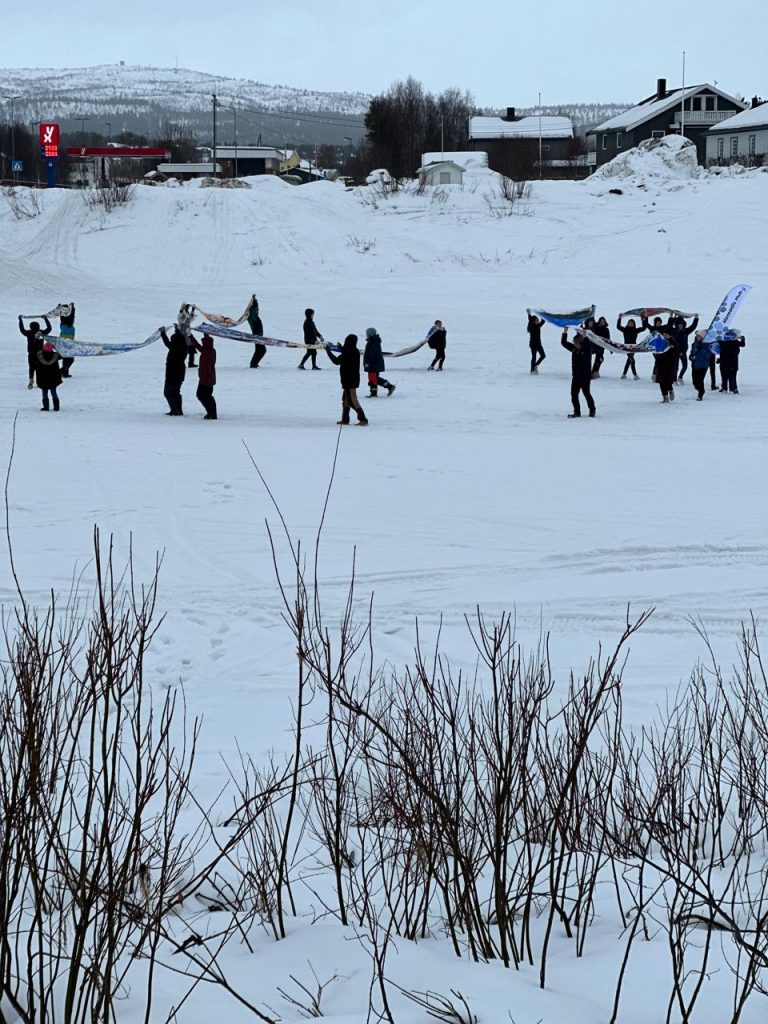
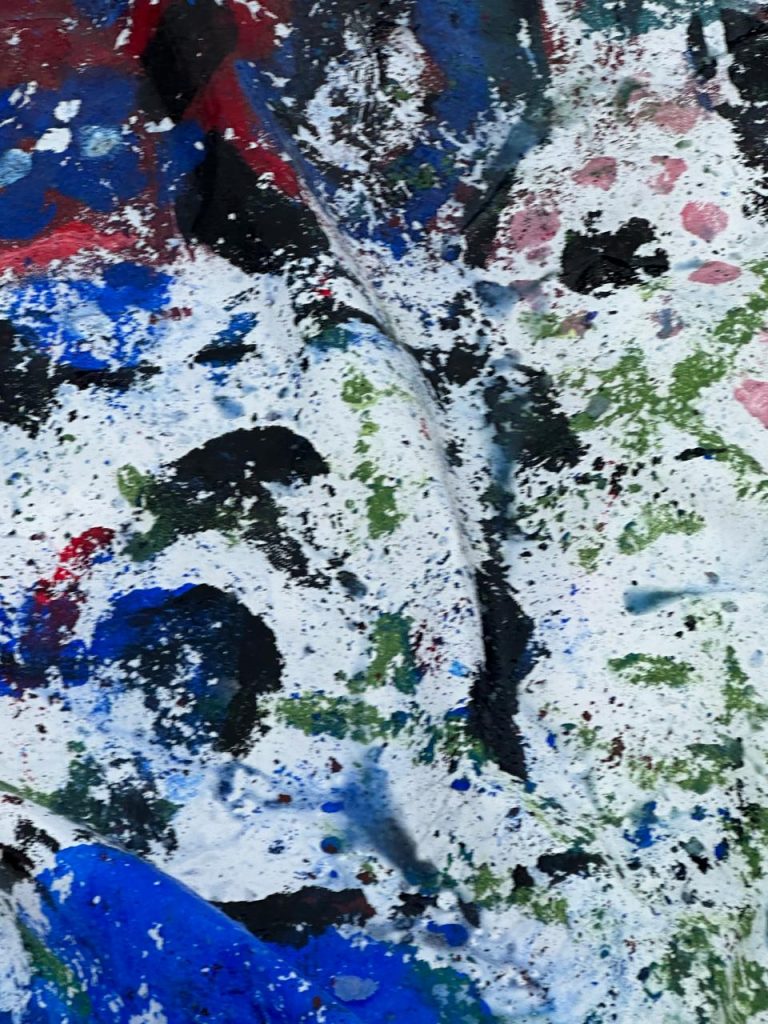
In another activity, on elongated pieces of canvas, banners, we all engaged in painting our impression of water, the river, the moving downstream, the colours of water. Then we waited for the colours to dry. The next day, we all stood on the frozen river to show the long banners. We carried them on our shoulders down the slippery riverbanks. Then we unfolded them in the fading light of the afternoon and the coming of night.
It rained a grey, drizzling rain, full of life. It drenched us to the bone. The snow melted rapidly. The chilly rain embraced us, and we danced with it with our banners held high above our heads. We were shadowy figures sinking knee-deep into the melting snow, making formations and moving around as black figures in a landscape of snow.
The colours of the paintings started to dissolve and drip. It made magnificent, coloured traces on the snow. The river turned into an abstract painting of blue, red, and green colours. We put the banners on plastic poles on a skidoo of the Sámi Contemporary art Centre and off they went on a speedy trip down the river. However, soaked by the rain, the banners dropped and followed the skidoo on the ground as huge spirit of water, making stunningly trails of colours behind it in the dimming of the day light.
It was a moment of beauty, of joy, of laughter, of surprise, and of moving, being on the move. It is a portrait of us, jointly painted by the river and us. As the day passed, and we rolled the banners and started our short journey back to the Sámi Contemporary Art Centre.
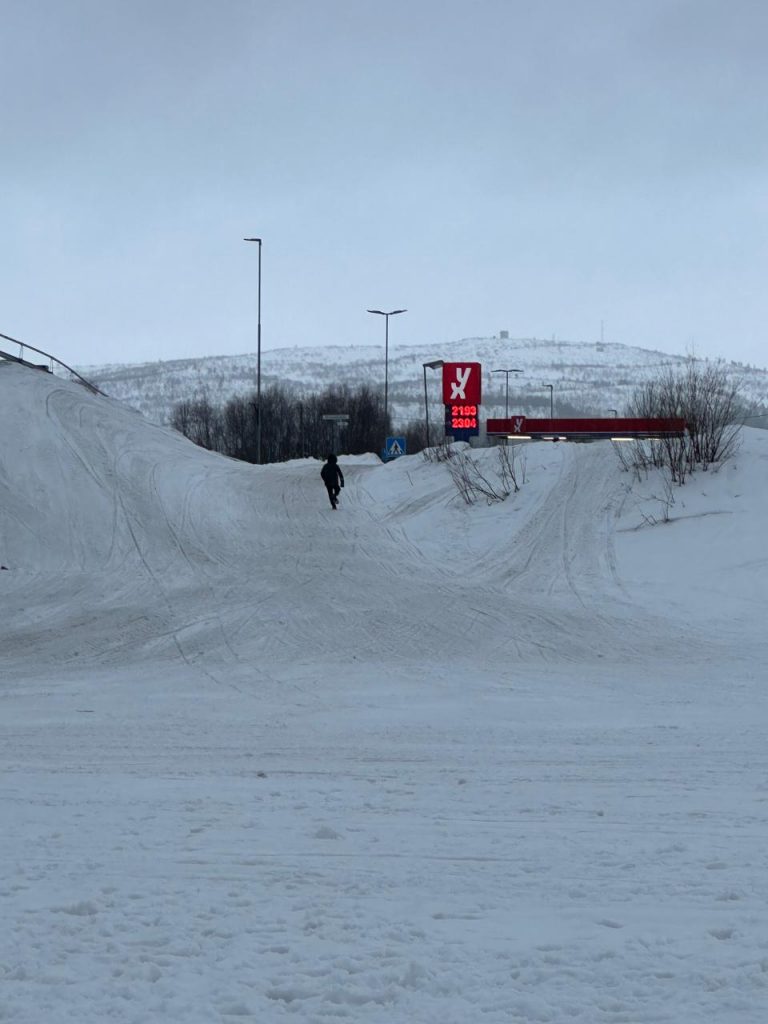
In that very moment, we noticed one of the young participants crossing the river and climbing up the riverbank beside the highway bridge, up to the gas station with its bright red light of gasoline under the dark Arctic sky. Up there, he turned around and waved to us from a far distance and disappeared alongside the highway, into the coming of the night. We remember that we, in that moment, wondered if the memory of his view of a creative moment on the frozen river would stay with him onwards in life.