
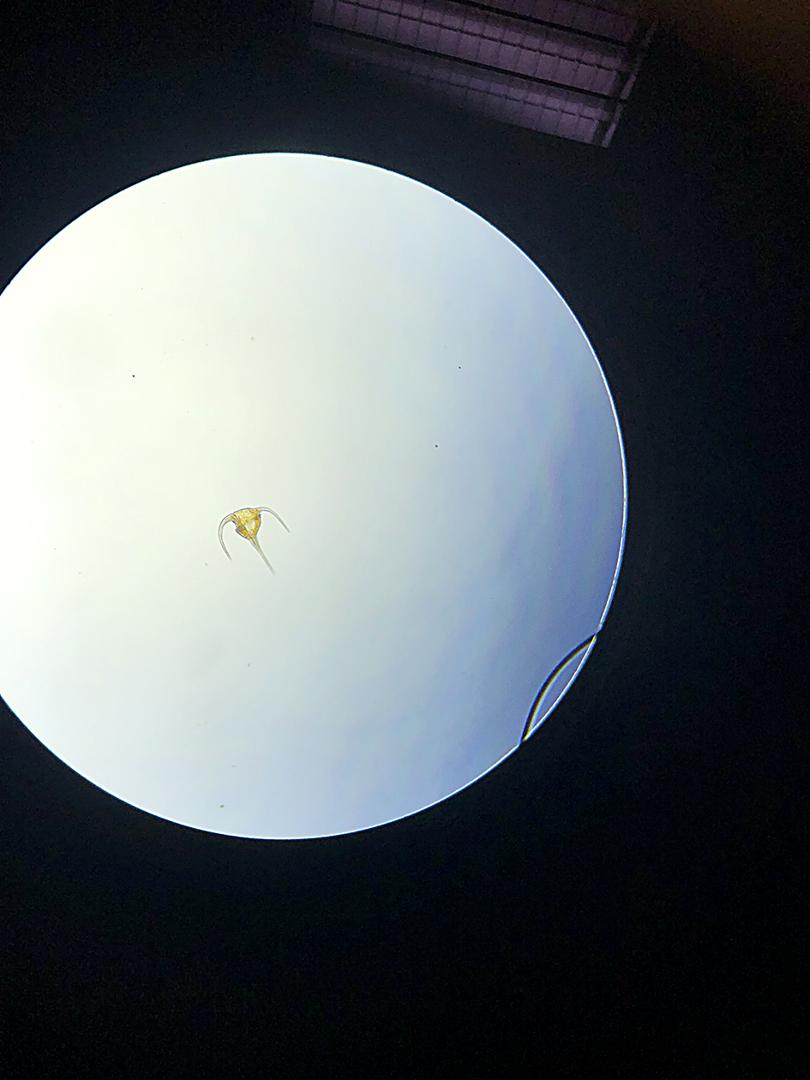
This essay explores the possibilities and challenges of art-science integration in facilitating collaborative sustainability action in local settings with a spotlight on plankton. Planktonic organisms are very small, but some of the most important organisms in the oceans’ food chain. Planktonic organisms are invisible to us and are therefore abstract. We wanted the participants to become familiarized with plankton by studying them in microscopes, then drawing them and creating large examples on the beach using community art.
Text: Wenche Sørmo, Karin Stoll and Mette Gårdvik, Nord University, Norway
Cover photo: Students collected their own samples of planktonic organisms from their local environment and gained experience in how to make microscopical preparations from the samples. Photo: Mette Gårdvik, 2023.
Info
The Workshop team consisted of Wenche Sørmo, Karin Stoll and Mette Gårdvik at Nord University, Faculty of Education and Arts. Participants were teacher students from Ilisimatusarfik, Nuuk, Greenland, Nord University, Nesna Campus, and from the University of Lapland, Rovaniemi, Finland. The workshop was in Nuuk at the teacher education faculty and the local beach in the town centre and was arranged in May 2023.
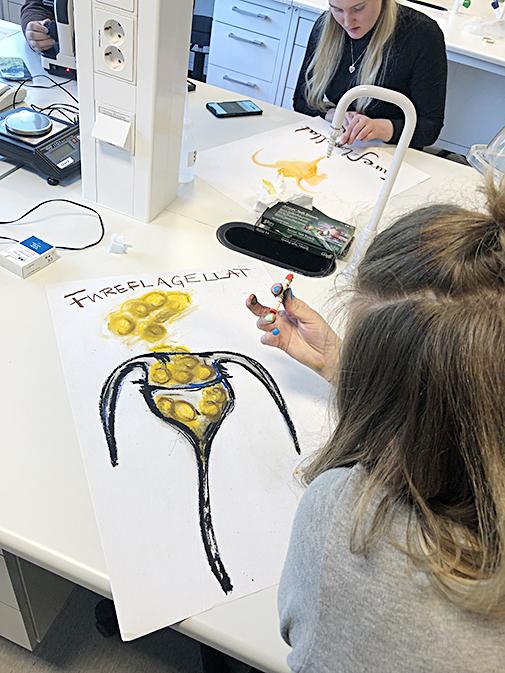
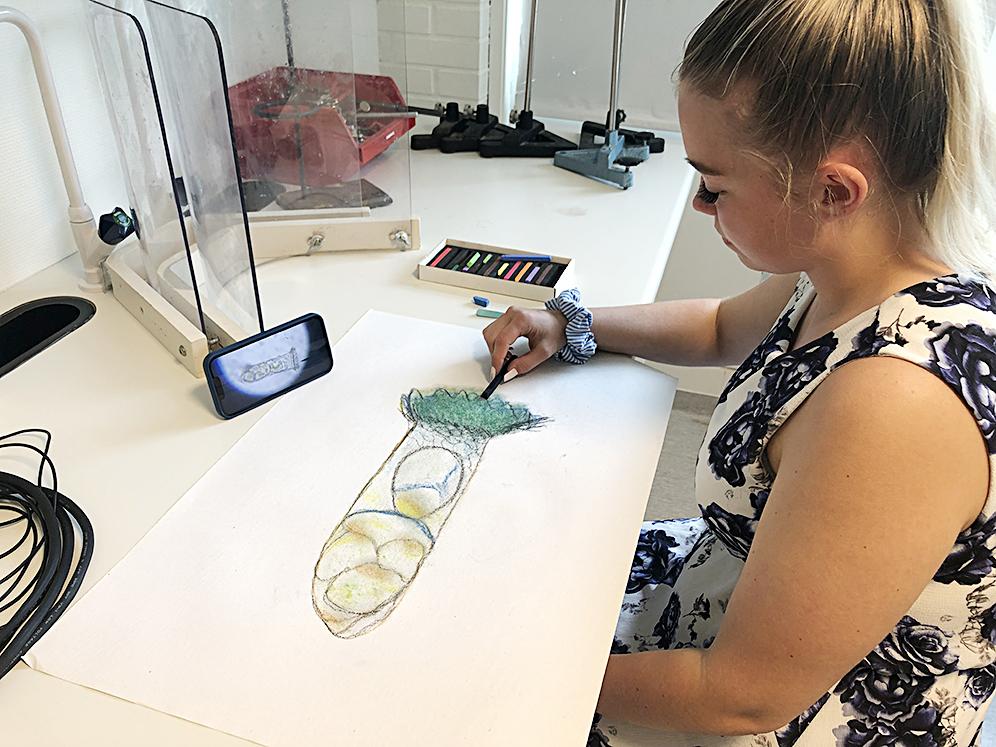
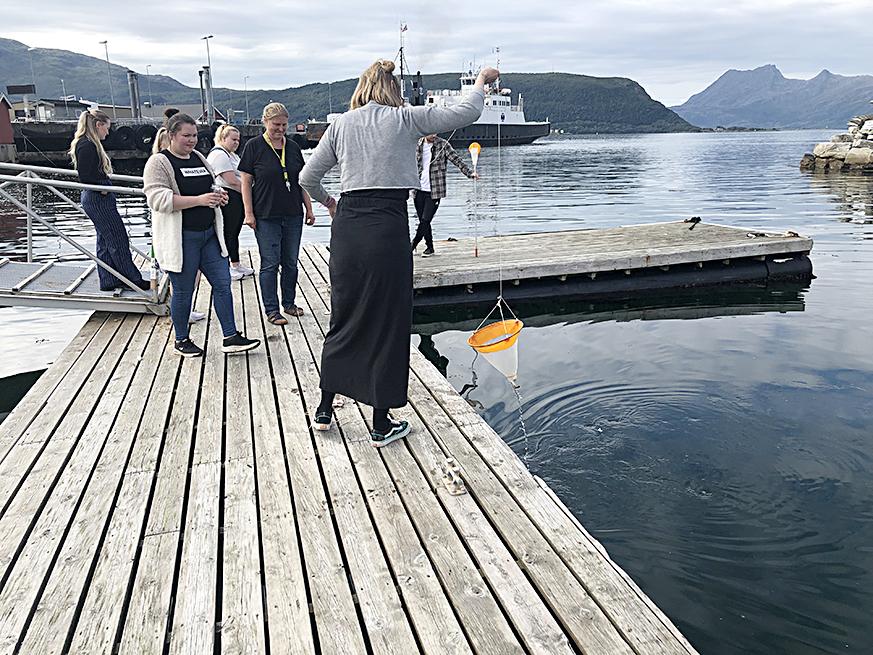
Photos: Students collected their own samples of planktonic organisms from their local environment and gained experience in how to make microscopical preparations from the samples. Photos: Mette Gårdvik, 2023.
Sustainability challenges are simultaneously scientific and cultural. Through the integration of the arts in action-orientated education for sustainable development, arts play a vital role in social transformation, mobilizing for social change, strengthening affective ties between people and places, and developing emotional binds that motivate action (Trott et al., 2020).
The goal of this community art workshop was to learn about the importance of planktonic organisms in the Arctic Sea, which have a huge importance for human settlements in Arctic coastal communities.
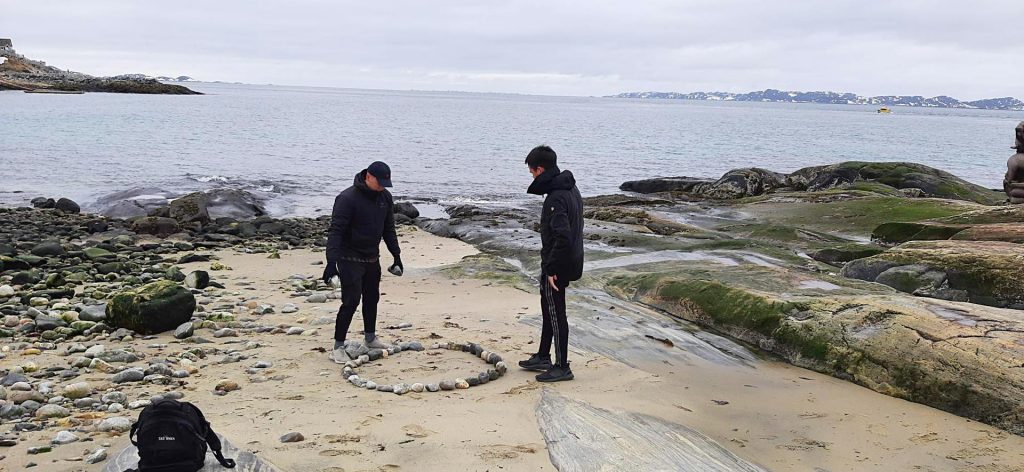
Activities involved harvesting plankton, exploring microscope samples, and recreating their shapes and colours in large formats to make the invisible organisms visible to the community through drawings and Land Art on the local beach. Arranging for the participants to express themselves visually in an artistic setting and lifting plankton from an invisible microscopic object to a large and colourful pastel drawing, creates interaction and motivation to understand connections in nature in their regions. The project provides room for multidisciplinary approach methods, research-based learning and contact with the local environment using community art to show sustainable portraits of the planktonic organisms.
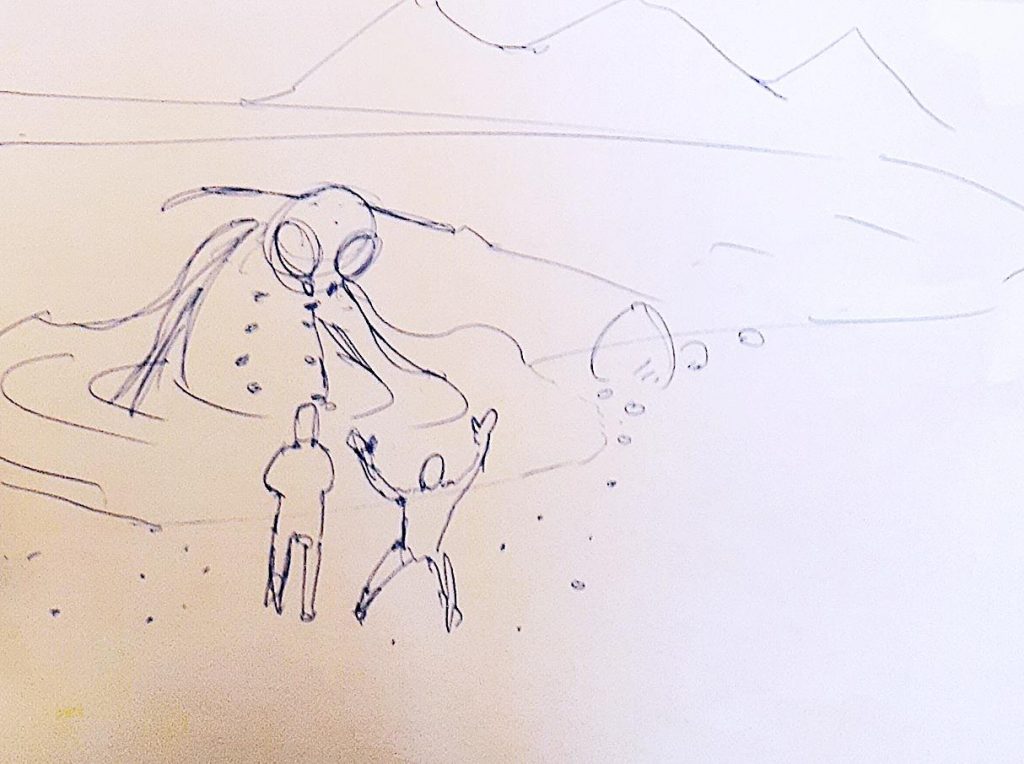
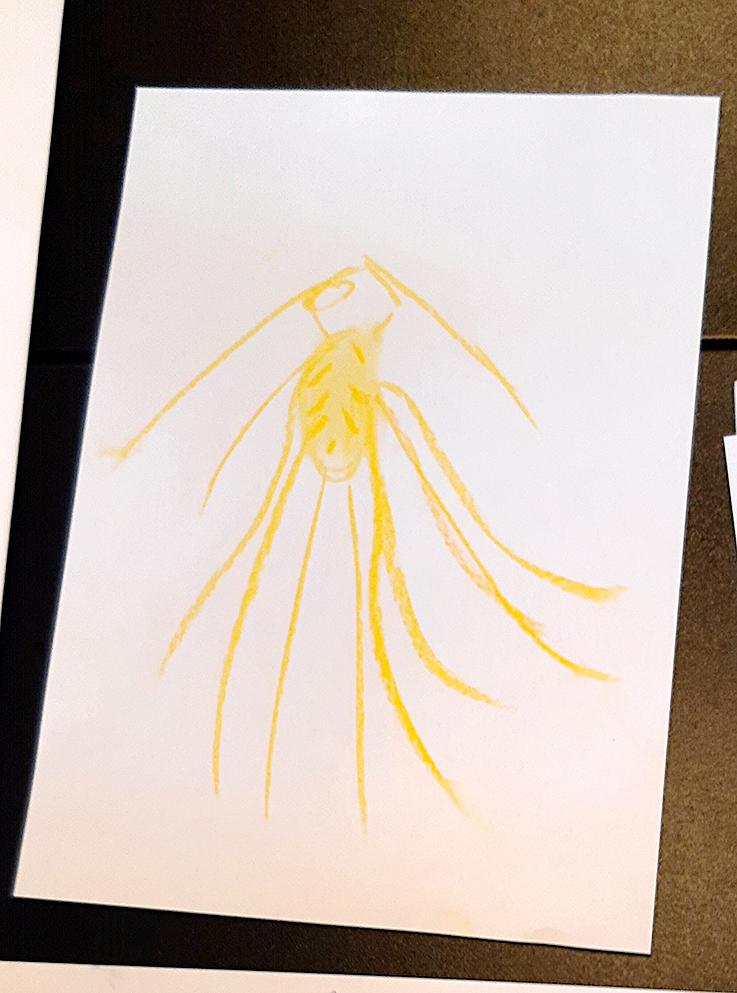
Figures 5–6. The drawings were exhibited, and the oceans’ food chains were dramatized to get to know the importance of the tiny planktons. Photos: Wenche Sørmo, 2023.
Visual expressions like drawing and Land Art are about making traces and about communication including visualization, reflection, explanation, description, and observation (Frisch, 2011). Artistic expressions contribute to learning in all subjects (Cromley et al.,2019; Skjelbred, 2021) and help us to understand complex concepts and subject matter (Fan, 2015; Wu & Rau, 2019).
The participants’ creative work shows how learning takes place in the movement between the subjects. The working methods promote in-depth learning not only cognitively but with the entire sensory apparatus. Using exploratory and practical aesthetic methods, participants become acquainted with plankton from their regions.
The teaching project stimulated the participants’ curiosity and gave them experience and knowledge about the ocean as an ecosystem. It contributed to developing positive attitudes to the ocean and a better understanding of its ecological relationships.
References
Cromley, J. G., Du, Y. & Dane, A. P. (2019). Drawing-to-learn: Does meta-analysis show differences between technology-based drawing and paper-and-pencil drawing? Journal of science education and technology, 29(2), 216–229. https://doi.org/10.1007/s10956-019-09807-6
Fan, J. E. (2015). Drawing to learn: How producing graphical representations enhances scientific thinking. Translational issues in psychological science, 1(2), 170–181. https://doi.org/10.1037/tps0000037
Frisch, N. S. (2011). Ways of talking about drawing practices. Sociocultural views: Gombrich and visually controlled drawing. FormAkademisk, 4(2). https://doi.org/10.7577/formakademisk.199
Skjeldbred, B. H. (2021). “Det ekstra laget” – for en helhetlig undervisning. Observasjonstegning og forestillingstegning i skolen – hva står på spill. FormAkademisk, 14(1). https://doi.org/10.7577/faormakademisk.3823.
Trott, C.D., Even, T.L. & Frame, S.M. (2020). Merging the arts and sciences for collaborative sustainability action: a methodological framework. Sustain Sci 15, 1067–1085. https://doi.org/10.1007/s11625-020-00798-7
Wu, S. P. W. & Rau, M. A. (2019). How students learn content in science, technology, engineering, and mathematics (STEM) through drawing activities. Educational psychology review, 31(1), 87–120. https://doi.org/10.1007/s10648-019-09467-3