This piece examines the utility of an individual social artist mapping their ‘Landscape of Practice’, proposing this exercise as a beneficial activity for individuals working in new genre Arctic art and a tool for mapping routes towards new collaborations and ways of working.
Text: Siún Carden, UHI Shetland, University of the Highlands and Islands, Scotland, UK
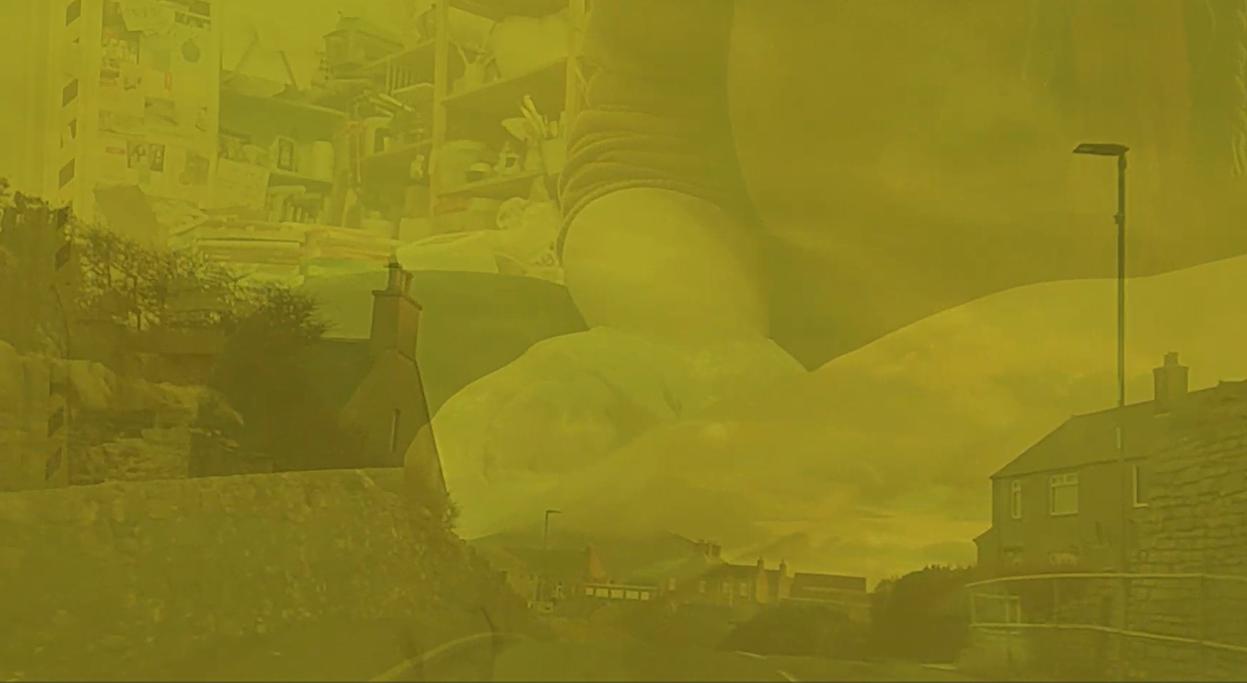
Cover photo: Figure 2. Still from film made by Kerrianne Flett (2023) on her island in Orkney. Flett describes her film as ‘a moving representation of the colour wheel…inspired by Sophie Hope’s… ‘Colour wheel of practice-research’ (Hope, 2016).’
Info
MA Art and Social Practice ‘Communities of Practice’ module, UHI Shetland. This module takes place through fortnightly videoconference seminars across a whole academic year and independent coursework including the final Landscape of Practice submission.
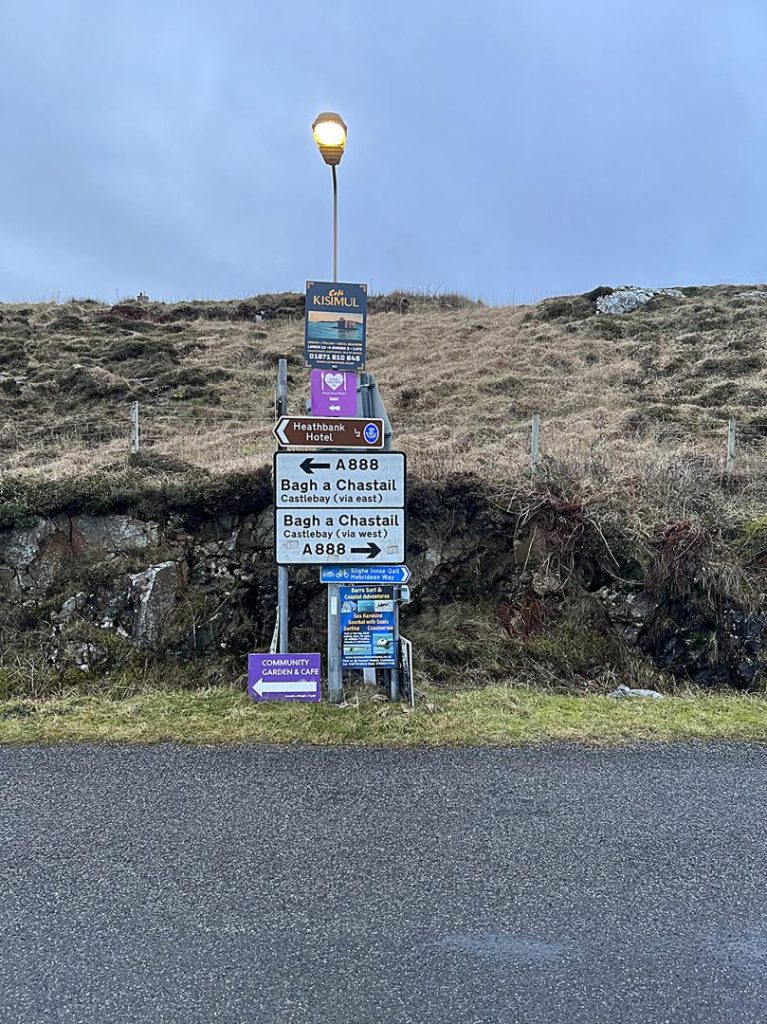
A Landscape of Practice (Wenger- Trayner et al 2014) is the combination of multiple Communities of Practice, Social Learning Spaces (Wenger-Trayner & Wenger-Trayner, 2020) and other modes of situated learning through which a person travels as they gain knowledge and skills, move between identities and participate in different social contexts.
Mapping this landscape is one way in which social art practitioners and students can analyse and represent their knowledge and aspirations, using situated learning theory plus creative approaches. This example is relevant to New Genre Arctic Art education because it enables a dispersed cohort, including participants in island and rural places, to engage with their contexts while benefitting from a cohort of peers. This activity aims to encourage students to apply theoretical ideas to their own experience, pay attention to situated learning opportunities and act more like a Community of Practice with each other.
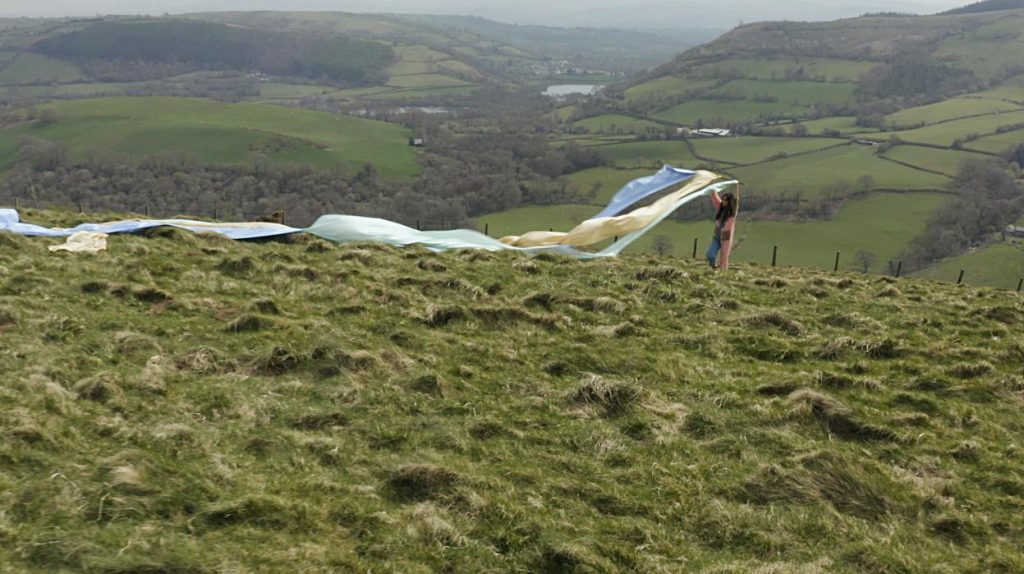
Work must be submitted digitally. Students are advised to include some writing. However writing does not need to be in essay format and materials and techniques used vary, reflecting elements of students’ own creative practice. The clarity and analytical sophistication with which students represent their Landscape of Practice is more important than the ‘map’ as a standalone piece of creative work. Approaches are informed by the unique qualities of each landscape, and feedback within the seminar group.
Submissions have included paper puzzles, digital games, collages, photographs of textile and sculptural pieces, many genres and formats of writing, photographic and film content, geographical maps and diagrammatic forms using a variety of overarching metaphors to express relationships between different elements of the landscape. Where non-textual material is central to the ‘map’, a written element often acts as a ‘key’. In other cases, there is no such division.
The nonprescriptive format results in thoughtful work which social artists from varied backgrounds can use to think through challenges and dilemmas in their creative and professional practice. The ‘practice’ in ‘Communities of Practice’ and ‘Landscape of Practice’ (ibid.) does not refer to art practice, but the broadest conceptualization of human practices. Students are encouraged to include activities, skills and networks which they may not have considered connected to their identities as social artists. Holistic thinking generates new ideas for future work, consolidates an evolving sense of professional identity and enables students to better communicate their ‘knowledgeability’ (Wenger-Trayner et al. 2014) to collaborators, participants and employers. Sharing maps-in-progress in seminars helps a dispersed cohort connect.

In forums and survey, participants emphasize the importance of this assignment in under-standing themselves as social art practitioners. This is important for students who feel a division between a ‘personal’ art practice and a ‘social’ one. While many become engrossed in the ’mapping’ process, feedback also reflects the difficulty of the task. The submitted ’map’ is a snapshot of an ongoing journey through an evolving landscape, but students and alumni mention it in relation to their work long afterwards.
Through individual maps students discover areas of shared interest. This could be developed into an exercise exploring routes towards collaborative work. By bringing areas of practice beyond the obviously artistic or professional into the conversation, this mapping process shakes up expectations about what experience is relevant or valuable, building inclusive and ambitious connections.
References
Amin, A. & Roberts, J. (2008) ‘Knowing in action: Beyond communities of practice’, Research Policy, 37(2), 353-369. Available at: https://doi.org/10.1016/j.respol.2007.11.003.
Hope, S. (2016) ‘Bursting paradigms: a colour wheel of practice-research’, Cultural Trends, 25(2), 74–86. Available at: https://doi.org/10.1080/09548963.2016.1171511.
Lave, J. & Wenger, E. (1991) Situated learning: legitimate peripheral participation. Cambridge University Press.
Wenger, E. (1998) Communities of practice: learning, meaning and identity. Cambridge University Press.
Wenger-Trayner, E. & Wenger-Trayner, B. (2020) Learning to make a difference: Value creation in social learning spaces. Cambridge University Press.
Wenger-Trayner, E., Fenton-O’Creevy, M., Hutchinson, S., Kubiak C., & Wenger-Trayner, B. (Eds.) (2014) Learning in landscapes of practice: Boundaries, identity, and knowledgeability in practice-based learning. Routledge.