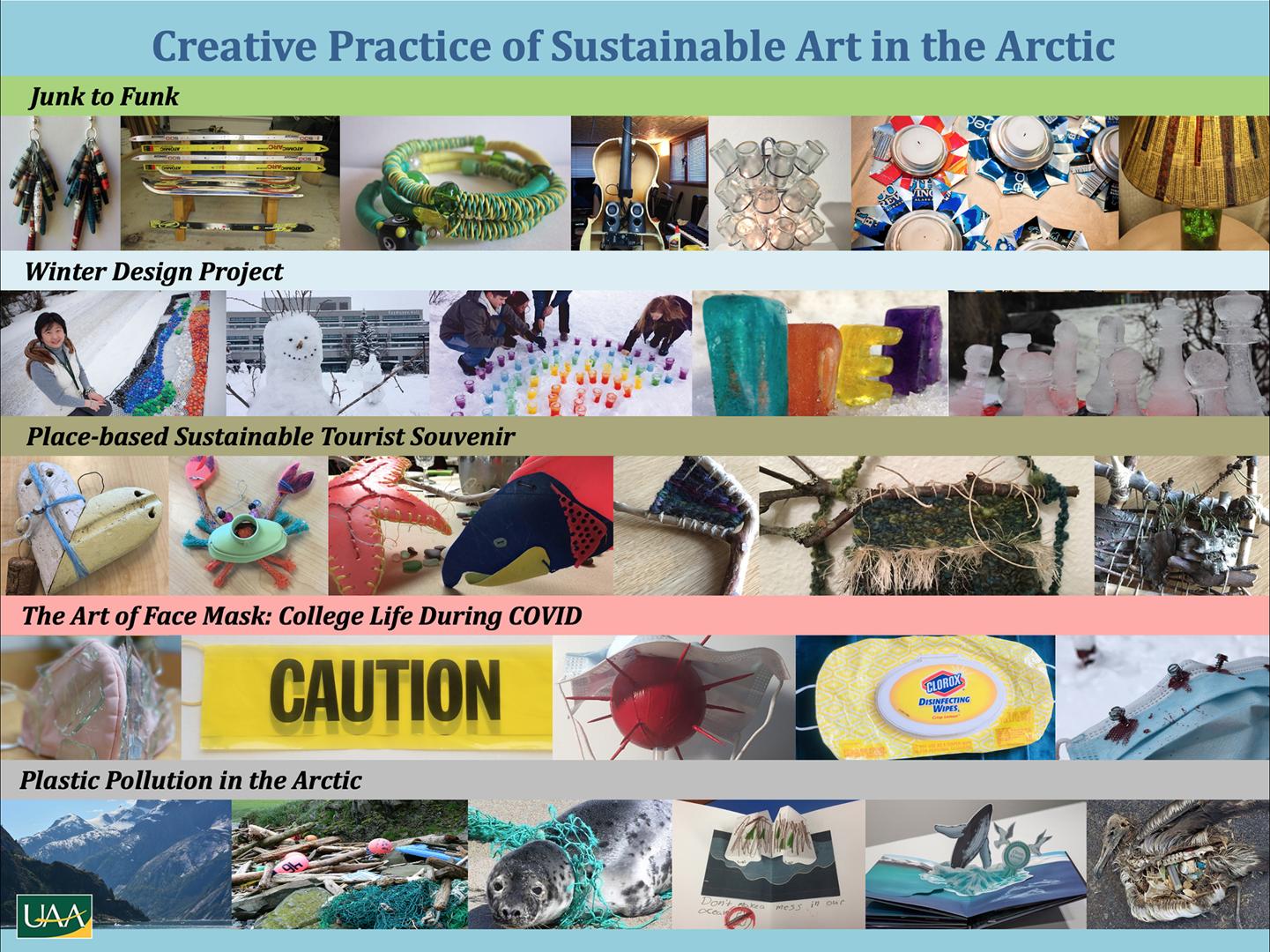
The goals of the projects illustrated in this visual essay aim at participatory engagement. All participants must have direct involvement, engagement, observation, reflection, and results through art making. During my 21-year tenure at UAA, I’ve taught nearly 4,500 students, both art and non-art majors. My teaching engages all students in hands-on learning experiences to address challenging issues and global significance. Projects highlighted here follow the footprint of the New Genre Arctic Art Education Initiative, which focuses on the community, environment, sustainability, difficult dialogue, resilience, innovation, and creativity.
Text: Herminia Din, University of Alaska Anchorage, USA
Cover photo: Figure 1. Creative Practice of Sustainable Art in the Arctic: A summary of different projects initiated in the context of New Genre Arctic Art Education. Photos: Herminia Din, 2008-2024.
Info
This reflective essay focuses on how art can be a bridge and connector and validates integrated and
collaborative practices with other disciplines are essential methodology. Please visit my ePortfolio to learn more about these projects: https://alaska.digication.com/herminiadin/home
Grounded in educational theory and practice, I believe hands-on and participatory learning allows students to apply their skill sets in practical settings. The most meaningful outcome of these projects is engaging students in a strong foundation of “best practice” and reinforcing the benefits of collaborative effort directly related to artistic expression and applying art as an agent of change.
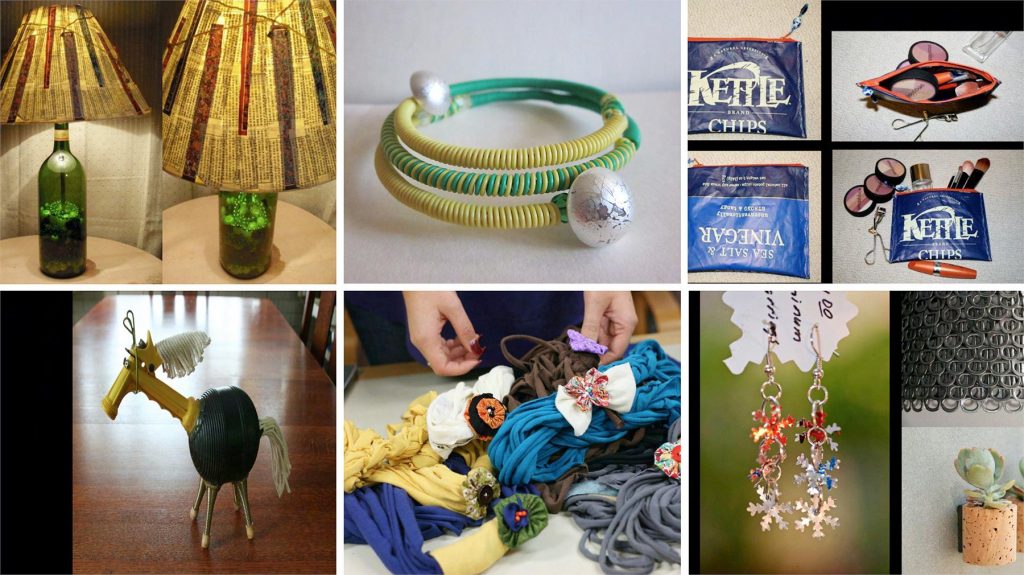
Junk to Funk – a community-based art series that uses recycled materials to design artistically inspired functional artwork, began in motion in 2008. I firmly believe everyone (students of all majors) can be creative in producing original art using recycled materials so that one piece of “junk” – conceptualized with creativity – can become a fun, imaginative, and functional upcycled object.
In 2013, I partnered with the UAA/APU Books of the Year program and curated nine art exhibits with senior art students using each year’s theme as a stimulus for an art exhibit. These exhibits catalyzed discussing complex issues such as Building Community Resilience, Negotiating Identity in America, Responding to Climate Change, and Shaping One’s Reality, locally and internationally. Art exhibits can be an influential medium by making the invisible “visible” especially art can translate scientific data, facts, environmental concerns, inequalities, and social injustices into high-impact pedagogical practice.
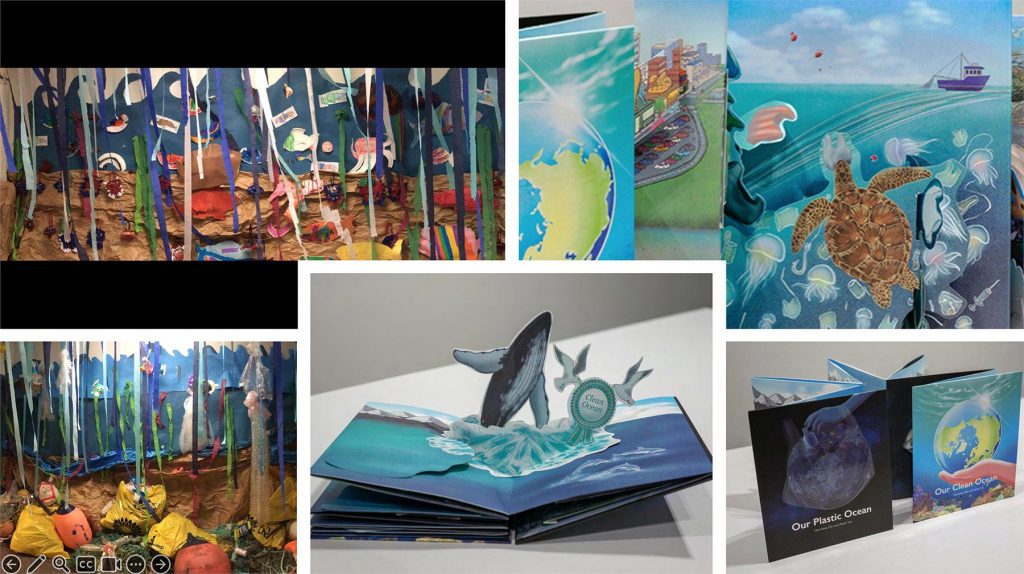
When the international community became increasingly aware of the growing crisis of plastic pollution in the Arctic, I began investigating plastic pollution in the Arctic. An informed and educated community is fundamental in establishing resiliency. Published in 2019, Our Plastic Ocean, Our Clean Ocean, a reversible pop-up book, explains not only how our ocean plastic pollution crisis came to be but why we must find solutions as quickly as possible. The illustrations and pop-ups in the Our Plastic Ocean part make clear the connection between a polluting act and the widespread harm it causes. The Our Clean Ocean part guides the reader in ways to reduce plastic consumption to keep the ocean clean and healthy.
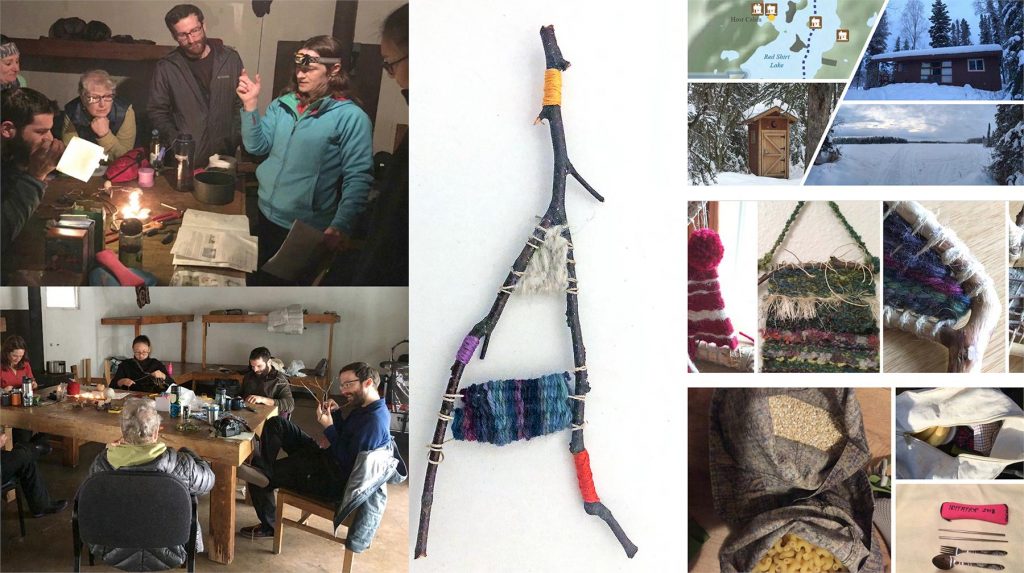
In 2018, I had a cross-disciplinary opportunity to collaborate with colleagues from UAA’s Outdoor Leadership and Environmental Studies programs to co-design a sustainable tourism module that included (1) citizen-engaged environmental observation, (2) place-based sustainable art, and (3) eco-friendly outdoor recreation program reimagined. This project focused on creating a place-based art called Tourist Memento that brought visitors closer to places through positive memories and creative artmaking using local materials. It aims to raise awareness about the sensitivity of the Arctic environment and the speed with which it is changing.
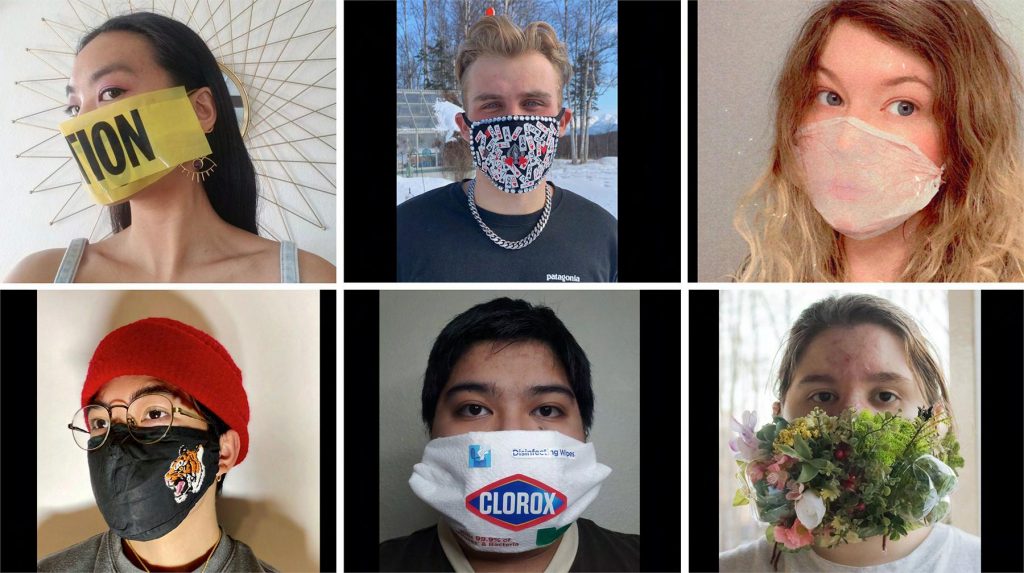
When COVID-19 started in early 2020, I felt an urgent need to use facemasks as an artistic form of individual expression in response to the pandemic. Via distance delivery, I began working with students to co-curate an online exhibit titled The Art of Face Masks Seawolf Style. After three years, six semesters, ten classes, 120 student artists of all majors, and 144 artistic facemasks, personal stories about frustration and endurance were reflected, human endurance expressed, and these artworks represented a collective memory of time and place and how we rose to handle chaos and uncertainty.
Inspired by colleagues through the ASAD Network, my teaching, community engagement, and creative efforts indeed followed the new Arctic Art Education Initiative that used art as a universal medium to serve as a catalyst in building an understanding of human issues and to encourage artistic expression in a wide range of mediums that is relevant in today’s world.