
The second trip to Kárášjohka and Vuohčču took place during the first weeks of September 2025. This time, we arrived with more knowledge than before, yet holding communal art workshops and having discussions with the participants once again taught both me and the main partners of this project a great deal.
Even after careful planning, we knew our plans might change during the trip and processes. Therefore, we came prepared with multiple ideas for what to create in both places. One of the main realizations from this trip was how important the communal element is in our art projects, and how much joy and sense of recognition it can bring to the participants.
We spent two days in Kárášjohka, where we used our time to plan and discuss the upcoming workshops. On the second day, we held a workshop that included discussions, planning, and creating street art near the city hall in the very center of Kárášjohka. It was a long day of instructing and collaborating with a middle school class, and the results were incredible.
The main goal in Kárášjohka was to work in pairs or small groups to create street art that reflects what the participants wish to preserve for the future in their hometown. We used durable street art paint, which should remain for a long time, and we hope that one day, when the students have grown up, they’ll be able to look back and reconnect with their younger selves. Beyond this personal perspective, the public location of the artwork also plays an important role. It will present the views of young people on what they believe is worth preserving or protecting — a message directed at the adult population of Kárášjohka.
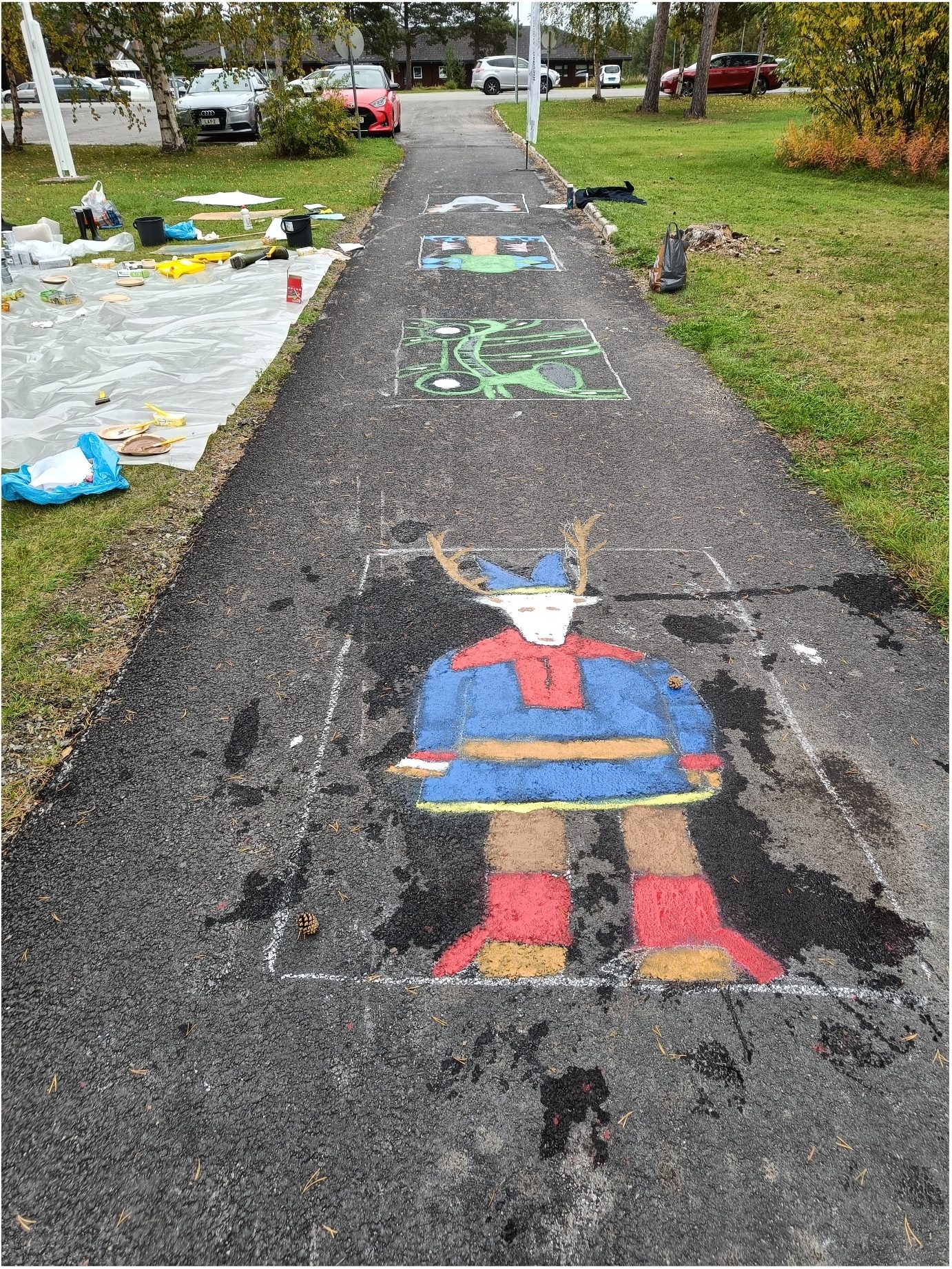
After our two days in Kárášjohka, we traveled to the village of Vuohčču and began preparing for the next two days. There, we collaborated with the local school and a group of adults to create street artwork in the school’s parking lot. Based on our previous visit and discussions with the people of Vuohčču, we were inspired by the idea of transforming the empty-feeling parking lot into something meaningful.
In our most recent discussion with the adults of Vuohčču, we talked about the trees near the school that hold communal importance. That conversation inspired us to create a bridge between generations by holding workshops centered around a shared theme: trees.
For the kindergarteners, the task was to create a “tree’s friend’s mask”, form a bond with a tree of their choosing, and use natural materials they found outdoors. School students, on the other hand, practiced painting trees on paper, which they later used as models for their street artwork.
On the second day, the students created street art in the school’s parking lot. And our role was to assist them, offer guidance, and talk with them about their chosen tree. This time, the focus was on what kind of personal “protector tree” they would like to create — and what meaningful things that tree would protect for them. After a long day of hard work, the students had created a forest made up of their individual trees.
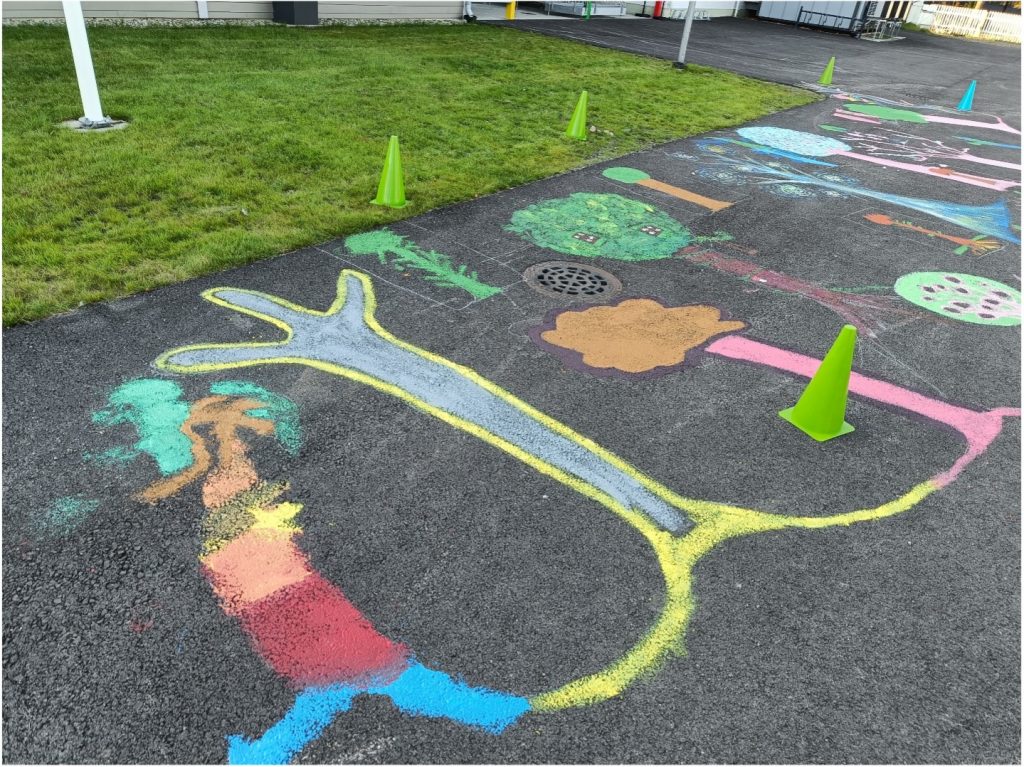
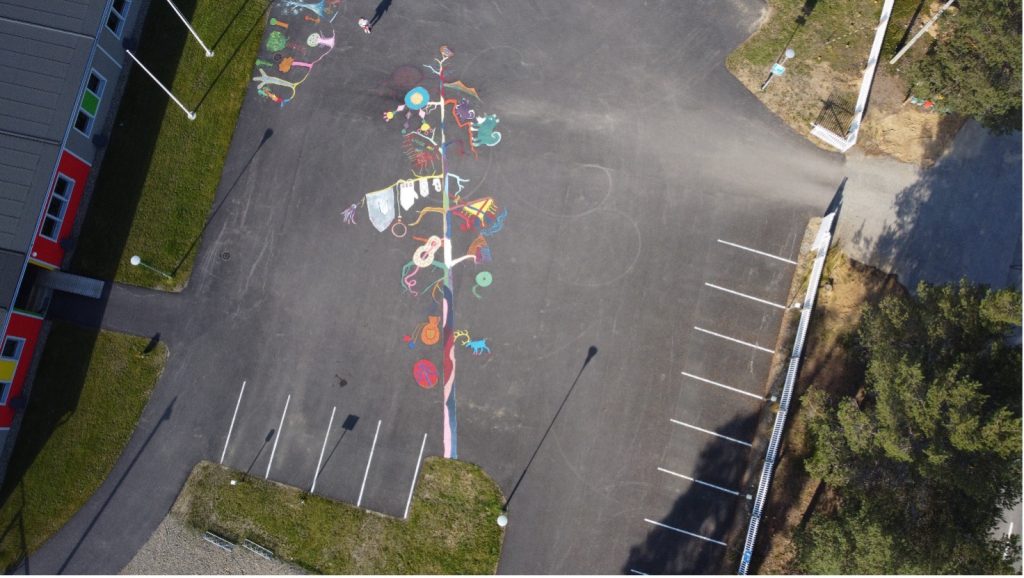
With the adults in Vuohčču, our team had even bigger plans: to create a street artwork that would represent the shadow of a specific tree near the parking lot — a tree considered meaningful by the community. The piece and items painted to it aimed to reflect what local adults feel is important to them and to Vuohčču as a whole.
As a future art teacher, it was incredibly valuable for me to witness how much joy these artworks brought to the community. Even after long days of work, I always knew that the effort was worth it. This project has taught me a lot about how communal art can be a powerful way to bring people together, build connections, and make the local environment more suitable and friendly for its residents.
-Kasper (Rievdan project student from the faculty of Arts and Design of Lapland University)