Entrepreneurship is about embracing opportunities; social entrepreneurship is about embracing opportunities to do good.
Finnish youth want to act for impact.
Entrepreneurship is about embracing opportunities; social entrepreneurship is about embracing opportunities to do good.
Finnish youth want to act for impact.
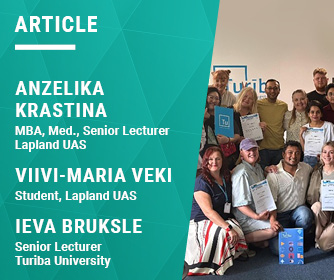
Innovation of social and sustainable businesses can be best done in multidisplinary and multicultural collaborative work. This was proven when students and teachers gathered in Riga, Latvia, for the Nordplus summer course “Sustainable Mindset in Entrepreneurship” in August 2025.
Hosted by Turiba University, the program offered participants a chance to explore climate-conscious business ideas through expert-led sessions, company visits, and intercultural teamwork.
Lapland’s Smart Specialisation Strategy is based on region’s unique strengths, developed in collaboration with local stakeholders.
International RDI activities are essential in creating solutions that protect sustainable development and strengthen connections to working life. One of the newest networks is Vanguard Initiative, which emphasizes the importance of interregional collaboration linked to smart specialization across Europe.
In an era where traditional economics struggles to address unprecedented social, environmental, and economic challenges, there is a growing search for innovative and inclusive business models. Developing social start-ups is not yet widely practiced at Lapland UAS.
Recognizing this, 20 students from various countries participated in a workshop designed to help them better understand how to create sustainable business ideas with positive social impact.
The unique economic structure of Lapland, characterized by its sparse population, needs targeted development efforts.
The objectives of the HEI4S3-RM project were: internal process and capability assessment, project participant and stakeholder activation and knowledge transfer as well as securing entrepreneurial aspect for future innovators with selected actions based on the project results.
Engineers of the future will increasingly work with and in green transition. As the world is changing, they need more and more communication and collaboration skills, as well as language skills. The aim of the ECO-GT project is to react and respond to the above mentioned challenges by improving not only engineers´ practical work life skills but adapting local educators´ curricula to meet the needs.

The most significant risk facing businesses is the failure to adapt to climate change.
Can a small start-up business really tackle big challenges such as climate change?The answers to this question were found during theNordplus Intensive Summer School organized in August 2024 in Riga, Latvia.
The urgency of addressing the professional media presence of artists is undeniable. As society becomes increasingly reliant on digital technology for communication, commerce, and culture, artists must equip themselves with the skills and knowledge necessary to thrive in the digital age.
By embracing initiatives like PMP, artists can collaborate effectively, seizing the opportunities afforded by digital media to enrich their artistic practice and expand their reach in an ever-evolving landscape.
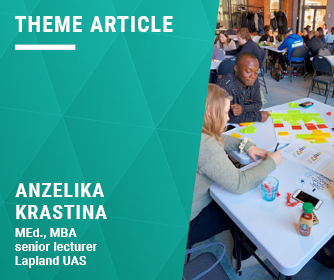
The aim of this article is to assess the impact of newly developed method for teaching sustainable entrepreneurship at higher education (HE) institutions that aims to encourage climate action by young people and aspiring entrepreneurs.
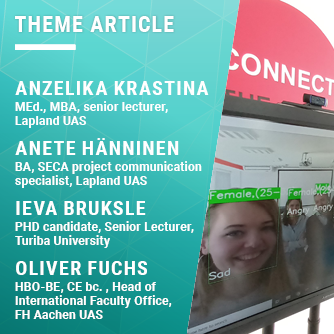
This article highlights the emerging need to develop educational programs to train professionals capable of designing sustainable business models and create sustainable entrepreneurship by taking advantage of new technologies. SECA project partners have undertaken a new initiative to foster AI and VR enabled innovative sustainable entrepreneurship education development.
Digital tourism technology has potential to create new opportunities for growth and development and it motivates tourism companies to adopt innovative technologies in their products and services.
The changes in the operating environment challenge the tourism industry. What are the working practices in the world that is volatile, uncertain, complex and ambiguous (VUCA)?
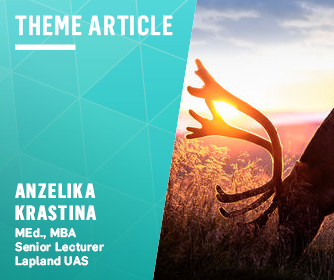
Indigenous people often have a deep connection to the land and natural resources. A practical example of a sustainable and circular indigenous community business is Angeli reindeer farm and tourism company in Inari.
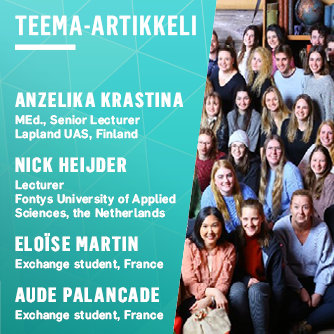
Strategic partnership does not just happen, it can be advanced and strengthened through practical collaborative joint actions. An example is Erasmus+ intensive blended study program jointly created and implemented by Lapland UAS, Finland, Fontys UAS, the Netherlands and FH Aachen UAS, Germany.
This special issue of our online Lumen journal discusses an international Lapland UAS and the significance of internationalisation in our region, both in national and global networks.
Suomeksi
Finland has good opportunities to respond to changes in tourism: we have worked hard to promote sustainable travel and digitalisation in the sector, and Finland also attracts international travellers as a destination offering unique nature and culture experiences.
Suomeksi
Lapland is a central region in the Arctic and a logistics hub in the Barents region. Lapland is a diverse region, with its various strengths helping the whole region to develop. However, post-pandemic growth threatens to remain at halfway without appropriate competence.
Suomeksi
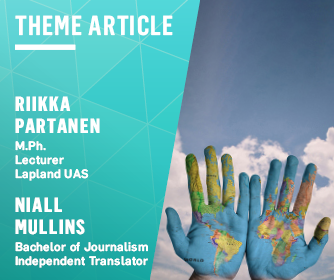
More university graduates are leaving Finland than are immigrating. It would be important to successfully brand in-service training in international competence so that Finnish and local companies understand its significance and necessity for Finnish working life.
Around European rural areas, many companies are in a situation where finding new forms of earning is necessary to enable them to make a living and develop their operations.
Local actors are key players in creating and implementing green growth and green innovations. The Green growth activities require a strong territorial approach that is supported and boosted by best practices from other regions. The GRUDE project focuses on arctic bioenergy, blue economy and sustainable societies.