Anzelika Krastina, MBA, M.Ed., Senior Lecturer, Lapland University of Applied Sciences
Viivi-Maria Veki, Master student in Digital Health Care and Health Promotion
Ieva Bruksle, PHD candidate, Senior Lecturer, Turiba University
Keywords: sustainable, social, entrepreneurship, international collaboration, SDGs
Innovation of social and sustainable businesses can be best done in multidisplinary and multicultural collaborative work. This was proven when students and teachers gathered in Riga, Latvia, for the Nordplus summer course “Sustainable Mindset in Entrepreneurship” from August 11th to 21st, 2025. Hosted by Turiba University, the program offered participants a chance to explore climate-conscious business ideas through expert-led sessions, company visits, and intercultural teamwork — all guided by the UN’s Goal 13: Climate Action.
Joint summer school – a collaborative cross-border effort
The “Sustainable Mindset in Entrepreneurship” course is a collaboration between five universities: Turiba University (Latvia), the Business University of Lithuania, Lapland University of Applied Sciences, Laurea University of Applied Sciences and the University of Turku (Finland). The course includes innovative learning and pedagogical solutions to be piloted with the participation of multidisciplinary and multicultural student groups. From August 11th to 21st, 2025, students and experts from all partner universities gathered in Riga, Latvia, for the implementation phase of Nordplus summer course “Sustainable Mindset in Entrepreneurship”.
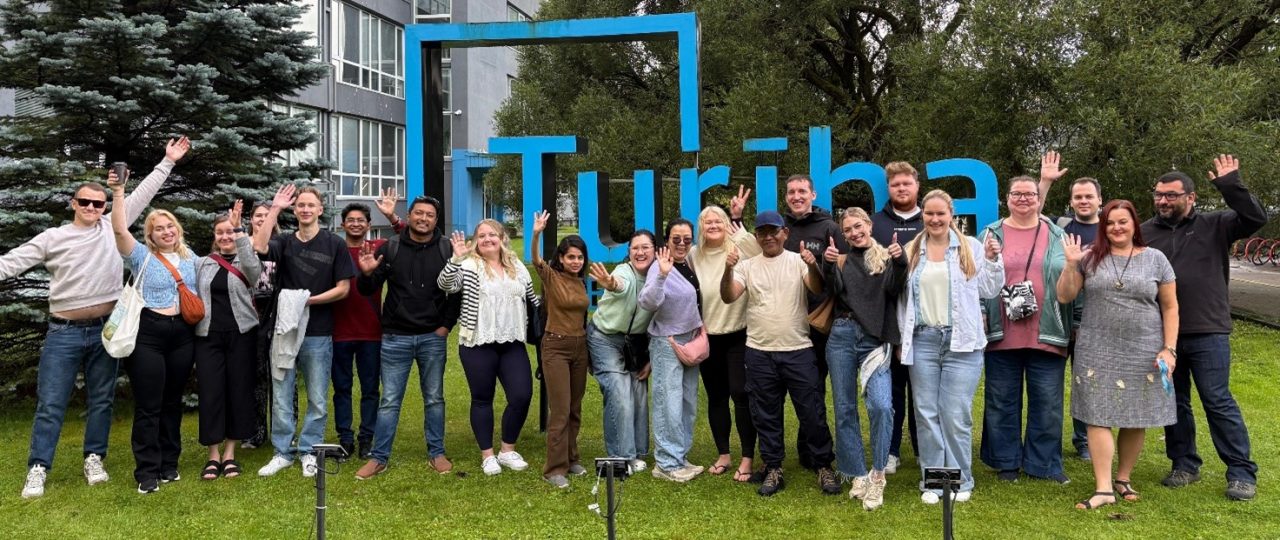
Picture 1. Sustainable Mindset in Entrepreneurship students and teachers.
One of the key messages echoed throughout the course was that sustainability must be more than just a trend — it needs to be a mindset embedded in every stage of business development. In the opening lecture, the teachers highlighted the urgency of climate action and the need for innovative cross-border cooperation to address complex global challenges.
Course content was closely tied to the UN’s Sustainable Development Goals (SDGs), with a particular focus on Goal 13: Climate Action. Participants engaged with practical tools and frameworks such as the Digital Handbook on How to Innovate Sustainable Start-Ups and Businesses for Climate Action (SECA) (Krastina et al. 2023). Lectures covered diverse topics from analytical and creative thinking to legal design, with sessions delivered by experts from Latvia, Finland and Lithuania.
Beyond classroom learning, students visited local companies recognized for their sustainable business practices. These site visits provided valuable real-world insight into how theory can be translated into action. Entrepreneurs shared their own journeys — some of which began during student years — offering inspiration and encouragement to the next generation of changemakers.
Throughout the course, student teams developed their own social and sustainable product or business ideas, each addressing specific SDGs. These were presented in a final pitch session via video format, showcasing creative and forward-thinking approaches to real-world issues.
But the course was not only about academics. Participants immersed themselves in Latvian culture through organized excursions to landmarks such as Rundāle Palace and Bauska Castle, as well as guided tours of Riga’s Old Town. Sports and recreational activities helped students connect outside of class, while an intercultural evening — featuring food, music, and presentations from the students’ home countries — celebrated the diversity of the group.
By the end of the ten-day learning journey, students left not only with new knowledge and practical skills, but also with lasting friendships, cross-cultural understanding and a renewed sense of purpose in tackling the pressing sustainability challenges of our time.
Piloting and co-creation of learning material
The course was co-designed and implemented in cooperation with the project “Advancing Social Entrepreneurship in Lapland” also called RYHTI project (Rakenteet yhteiskunnalliselle yrittäjyydelle Lappiin – RYHTI), implemented at Lapland UAS together with Lapland University and Vocational College Lappia. It aims to create education tools to foster social entrepreneurship and is co-funded by European Commission European Social Fund Plus (RYHTI 2025).
Social entrepreneurship is considered a rather novel concept (García et al., 2022), but it plays a crucial role today by challenging the “business as usual” mindset and prioritising social and environmental value alongside profit. In a world facing deep inequalities and climate crises, it drives systemic change through innovative, purpose-driven solutions. Research shows that social entrepreneurship contributes directly to sustainable development by redefining success beyond traditional business goals (Diaz-Saracha et al., 2022). Moreover, social enterprises are key enablers of more inclusive and sustainable economies, supporting the transition towards an inclusive, green, and digital future (Billimoria, 2025). There is a growing need for education in social entrepreneurship to equip future innovators with the skills and mindset required to address complex social and environmental challenges (Diaz-Saracha et al., 2022)
To encourage more innovative solutions to social challenges among various stakeholder groups, RYHTI expert team has worked on the development of easy to access and easy to apply social entrepreneurship learning material that is shared on the Open Moodle platform for the use of everyone interested in the topic. Using this material students could independently learn the basic theory of social entrepreneurship as well as give their feedback for the pilot material provided. This feedback was of great relevance for further education, material development and advancement of social entrepreneurship. This way students acted not only as learners, but also co-creators of the learning materials for the future learners.
In the survey gathered after the material piloting, 92% of students responded that they have no or very little knowledge on social entrepreneurship. 100% of students felt that it was easy to follow the learning material on sustainable social entrepreneurship provided in Open Moodle. One student commented: “The materials we used were fantastic and super easy to follow. Overall, it was a really fulfilling experience!”. Another student acknowledged: “The material is very clear to understand, I learned a lot of new things”. Referring to the tasks of these modules students found them educational and relevant. One student admits: “It was educational and there was a lot of new experience and knowledge that I can take away from this project”. One more students reflects on the tasks: “They were challenging enough to keep me engaged, but not too difficult to complete.”
Workbooks were used to structure the learning process of the course and as a core feedback received from the students is reflected in the statement of the feedback: “The workbook templates were very helpful in organizing my thoughts and guiding my work step by step. They made the assignments more manageable and allowed me to focus on applying the concepts effectively. Using them enhanced my understanding and made my learning experience more structured and practical.”. For the improvement students suggested that there could be more practical examples and interactive activities incorporated in the learning material.
The most valuable feedback was the reflection of actual improvement of their knowledge during the course. One student emphasizes the actual meaning of social and sustainable entrepreneurship learnt during the course: “I learned that social and sustainable entrepreneurship is about creating value for both society and the environment, not just profit”, while another student states:” I realize that businesses can tackle global challenges while remaining economically viable. It has inspired me to think more critically about the impact of business decisions and to consider how I can contribute to solutions that benefit both society and the environment.”
Analysis of student experiences and feedback, seeing the actual value for students greatly encouraged also the teachers and experts on further development of social and sustainable entrepreneurship education in all partner institutions, but especially in the RYHTI project that will ensure social and sustainable entrepreneurship training in the package of 10 ECTS at the end of the project in spring 2026, that will become available to all interested in the topic.
Conclusion
Jointly developed summer course Sustainable Mindset in Entrepreneurship in Riga successfully demonstrated how international, multidisciplinary collaboration can inspire innovative solutions for social and environmental challenges. By combining academic learning, practical experience, and cultural exchange, the programme empowered students to develop both sustainable business ideas and a deeper understanding of entrepreneurship as a force for positive change. The co-creation of learning materials within the RYHTI project further strengthened the educational impact, ensuring that students were not only learners but active contributors to future teaching resources. The experience highlighted that fostering a sustainable mindset requires more than knowledge — it calls for shared values, creativity, and collaboration across borders.
References:
Billimoria, J. (2025) Here’s how we harness the social economy for an inclusive, green and digital future. World Economic Forum. Available at: https://www.weforum.org/stories/2025/01/harnessing-social-economy-for-an-inclusive-green-and-digital-future/ Accessed on 21 October 2025.
Diaz-Saracha, G.M., Pinillos-Laffón, A., and Álvarez-González, L.I. (2022) ‘The role of social entrepreneurship in the attainment of sustainable development,’ Journal of Business Research, 153, pp. 307–316. Available at: https://www.sciencedirect.com/science/article/pii/S0148296322006725 .Accessed on21 October 2025.
García, M.D.M., Meneses, J.M.M. and Sandoval, K.V., 2022. Theoretical Review of Entrepreneur and Social Entrepreneurship Concepts. Journal of Administrative Science, 3(6), pp.19-26.
Krastina, A., Nawrath, L. and Bruksle, I., 2023. Sustainable Entrepreneurship for Climate Action: Digital Handbook on How to Innovate Sustainable Start-Ups and Businesses for Climate Action. Lapland University of Applied Sciences.
RYHTI project. vaikuttavalappi.fi . Accessed on 15.10.2025