Malla Alatalo, MA, Specialist, Responsibility in Business and Services, Lapland University of Applied Sciences
Pernilla Howard, MA, RDI coordinator, Wellbeing and health, Centria University of Applied Sciences
Jenny Kilpeläinen, M.Soc.Sc, Senior Lecturer in Tourism, Responsibility in Business and Services, Lapland University of Applied Sciences
Linda Lindroos, MA, RDI Specialist, Entrepreneurship and business, Centria University of Applied Sciences
Mirva Tapaninen, Master of Hospitality Management, Specialist, Responsibility in Business and Services, Lapland University of Applied Sciences
Teija Tekoniemi-Selkälä, M.Sc. (Econ), Senior Lecturer in Tourism, Responsibility in Business and Services, Lapland University of Applied Sciences

Key words: resilience, hospitality SMEs, tourism, digitalisation, leadership, networks, cooperation
Changing perspectives on resilience in tourism and hospitality
Over the past few decades, the way resilience has been understood in academic literature has changed significantly (Fabry & Zeghni 2019, 96; Amirzadeh, Sobhaninia & Sharifi 2022, 8). Traditionally, resilience was rooted in engineering and the physical sciences, where engineering resilience referred to a system’s capacity to resist shocks and rapidly return to its original state after disruption (Fabry & Zeghni 2019, 97–98; Amirzadeh et al. 2022, 4–5). However, as the tourism and hospitality sectors have been exposed to increasingly complex and recurrent disruptions, this relatively static understanding has become less adequate for explaining how these industries respond to change (Fabry & Zeghni 2019, 96; Pham, Coles, Ritchie & Wang 2021, 210–212).
In response to the limitations of engineering resilience, contemporary tourism research increasingly adopts social-ecological and evolutionary resilience perspectives (Fabry & Zeghni 2019, 97; Cheer & Lew 2017, 9). These perspectives recognise that tourism destinations and enterprises operate in constantly changing environments. Rather than if systems can or should return to a previous state following disruption, evolutionary resilience views socio-economic systems as being in continuous flux, where stability is neither permanent nor always desirable (Fabry & Zeghni 2019, 97–98; Cheer & Lew 2017, 9). Accordingly, resilience is understood as a dynamic capacity to learn, adapt, innovate and develop new pathways in response to ongoing uncertainty and change (Fabry & Zeghni 2019, 97). Similarly, the Arctic Resilience Interim Report conceptualizes resilience as a system’s ability not only to cope with and recover from disturbances but also to learn, adapt and transform when faced with changing conditions (Arctic Council 2013, 15–16). Together, these perspectives highlight resilience as an active and evolutionary process rather than merely returning to a previous state. This understanding is particularly relevant in northern, high-latitude and geographically remote regions, where environmental, social and economic transformations interact across tightly connected social-ecological systems and may create compounding effects on communities, ecosystems and regional economies (Arctic Council 2016, 14–18; Koivurova & Kähkönen 2018, 2–5.)
Williams, You and Joshua (2020, 938-939) emphasize that resilience enables firms in remote tourism destinations to survive, adapt and remain viable despite persistent disruptions. Northern tourism SMEs face distinct vulnerabilities, including extreme seasonality, geographical isolation, fragile ecosystems and acute internal resource constraints (Pham et al. 2021, 210–211). Because small operators typically lack substantial financial reserves or organisational slack, their resilience relies heavily on local social capital, shared memory and close-knit community self-organisation (Williams et al. 2020, 939–941; Pham et al. 2021, 211–214). Williams et al. (2020, 949–950) suggest that the resilience of tourism SMEs in remote destinations is closely connected to the resilience of local stakeholder networks and the wider destination system, indicating that firm survival depends not only on individual capabilities but also on collective adaptive capacity.
Building on contemporary understandings of resilience and their relevance for Arctic tourism SMEs, this article examines how tourism businesses can strengthen their adaptive capacity in the face of ongoing change and uncertainty. Through case examples, it explores how resilience is fostered through cooperation and regional networks, digital technologies and leadership practices that support employee wellbeing. Together, these examples illustrate how tourism businesses can learn, adapt, and evolve while contributing to the resilience of their destinations and communities.
Building resilience together
Business resilience is built not only on a company’s own resources, but also on its relationships with other actors in the region. Research suggests that networks based on trust, cooperation and mutual benefit can enhance the adaptive capacity of small tourism businesses and help them cope with disruptions. Through these networks, firms gain access to knowledge, expertise, labour, raw materials, financing and other resources that may otherwise be difficult to obtain independently (Williams et al. 2020, 957-951; Pham et al. 2021, 214-216). The importance of networks also extends beyond individual businesses: information exchange, mutual support, and the use of local resources among regional actors can strengthen the resilience of the tourism destination (Hoffmann et al. 2023, 7-10).
Against this background, the examples of local sourcing, cooperation with other service providers and recommending nearby attractions can be seen as practices that connect a business to a wider regional network and reflect mechanisms identified in research as potentially strengthening resilience (Hoffmann et al. 2023, 7–10; Pham et al. 2021, 214-216.)
Multilevel cooperation in scattered hotel
Hotel Puu-Juuka is an impressive example of multi-level cooperation between businesses. Puu-Juuka is a historic wooden neighbourhood dating from the late nineteenth and early twentieth centuries. The neighbourhood is exceptional, as only a handful of well-preserved wooden residential areas representing Finland’s pre-war architectural heritage remain today. It is also nationally recognised as a site of significant cultural heritage value.
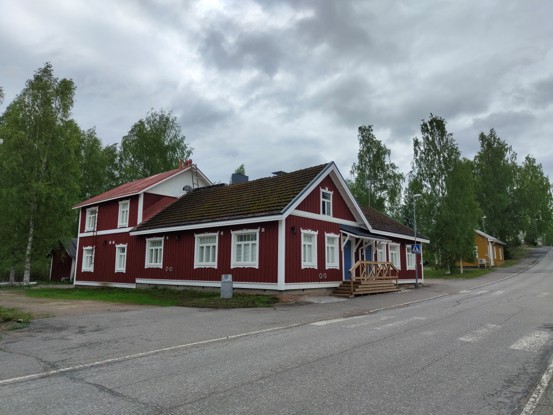
Figure 1. Hotel Puu-Juuka. Photo: Malla Alatalo (2026)
By the turn of the twenty-first century, the area had become increasingly quiet as residents moved to larger cities. Since then, various public, private, and community-led initiatives have sought to keep the neighborhood vibrant. However, the real transformative change came when four entrepreneurs with roots in Juuka joined forces, bought several vacant wooden houses, renovated them while respecting the spirit, architectural style, and traditional building methods of the original structures, and transformed them into a boutique hotel. (Puu-Juuka 2025.)
Today, Hotel Puu-Juuka consists of 16 separate buildings located throughout the small wooden neighbourhood, all within walking distance of one another and the Jukola building, where breakfast is served. Besides the hotel, there are several other services and businesses in the Puu-Juuka neighbourhood. (Puu-Juuka 2025.) This is a major asset for visitors, who can experience not only accommodation in a historic setting but also enjoy meals, snacks, and drinks in cafés and restaurants, participate in events, and make use of nature and wellbeing services. Furthermore, the availability of other services is also extremely important for the hotel, and they benefit from each other. For example, a conference package might include a meal at a local lunch café, and for the evening program, the hotel could offer a sauna package provided by a business partner. In Puu-Juuka, this kind of cooperation seems not only practical but, in fact, necessary. Operating in such an idyllic yet undoubtedly small and remote location with limited resources, the key is to share a common vision of the place and work together towards its success, not as competitors but as allies.
Revitalising a historic building through local collaboration
Set in the historic surroundings of Wehmaa Manor in Juva, the Teahouse of Wehmais has found a new home in a former horse stable built in the mid-19th century. Today, the old stable is a place for tea, food, and memorable experiences. Founded by Anna Grotenfelt-Paunonen in 2010, the teahouse also has a shop selling teas and delicacies, as well as an online store. (TeaHouse of Wehmais 2026.)
The character of the old building is an essential part of the experience. Its sturdy log structures and historic setting create a distinctive atmosphere, while the manor’s story and cultural heritage become part of a modern tourism service. In this way, the building is not simply preserved as a piece of history but continues to live and evolve through new use. (TeaHouse of Wehmais 2026.)
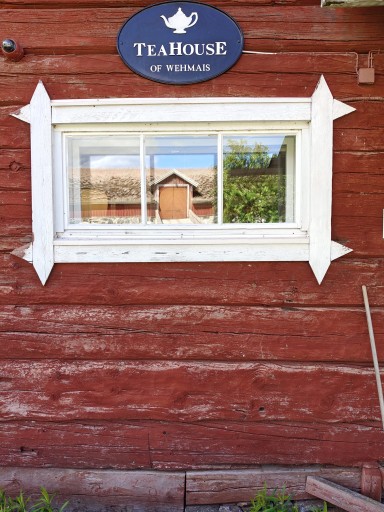
Figure 2. TeaHouse of Wehmais. Photo: Teija Tekoniemi-Selkälä (2026)
Local cooperation also plays an important role in the Teahouse of Wehmais. The company works closely with businesses and service providers in the surrounding area. Its kitchen uses ingredients from producers in the Saimaa region, including DO Saimaa products, and visitors are encouraged to discover nearby attractions, nature destinations and experiences. In 2023, the business joined forces with PihlasResort in Joroinen. By operating year-round, employing local people and offering summer jobs for young people in the area, the company also contributes to the vitality of the local community and economy. (TeaHouse of Wehmais 2026.) Synergies with other regional organisations enable places such as Teahouse of Wehmais to expand their offerings beyond restaurant services and provide more holistic experiences, including cultural events. Joroinen Music Festival is an annual lied and chamber music festival whose programme is held across Central Savo in beautiful manor houses and churches.(Joroinen Music Festival 2026). Teahouse of Wehmais has been among the festival’s idyllic venues. Such collaboration increases the visibility of the venue and may attract new visitors who discover the place through the festival and its events.
Digitalisation reshaping hospitality
Digital transformation has fundamentally reshaped the tourism industry. The pace of change has accelerated with the emergence of AI. In hospitality SMEs employees manage a wide range of responsibilities, often while responding to changing situations and customer needs. By adopting digital solutions, tourism SMEs can enhance their resilience, improve operational efficiency, and better adapt to changing customer needs and external disruptions. (European Union 2024).
Smart Travel Assistant
In one INSPIRES funded project, Hygge Host has developed and launched a smart travel assistant which takes care of customer service on the website and WhatsApp. An AI-powered travel assistant guides visitors through the website, helping them find information and start planning their holiday that reflects their individual needs 24/7.
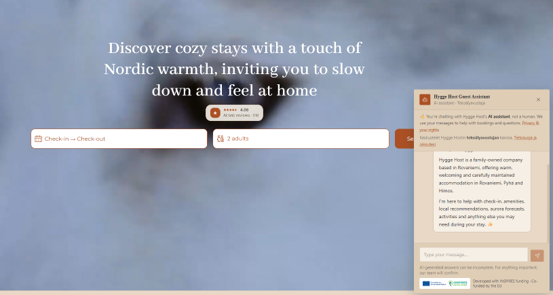
Figure 3. Hygge Host AI Smart Travel Assistant on the company website. Photo: Jenny Kilpeläinen (2026)
The wellbeing benefits of AI do not necessarily come from major technological changes. They can emerge from small improvements in everyday work. At Hygge Host, the travel assistant serves as a practical tool for managing routine customer inquiries and service tasks. By reducing the time employees spend on repetitive duties, the solution frees resources for more meaningful work activities, while also supporting workplace wellbeing through decreased workload and stress.
Simplifying Data for Resilient Tourism Growth
The Simplifying Data for Resilient Tourism Growth project, implemented under the INSPIRES initiative and led by Flowhouse Oy, addressed a common challenge in the tourism sector: while large amounts of data are available, turning that data into meaningful insights for decision-making remains difficult.
The project aimed to develop the OneScreen Destination Intelligence Tool, a solution that brings together fragmented tourism data into a single, easy-to-understand view. By presenting information through three key indicators, current performance, historical development, and future outlook, the tool helps tourism businesses and destinations make more informed, data-driven decisions.
As a result, the project created an AI-powered decision-support tool that enables tourism SMEs to identify demand trends, reduce uncertainty in investment planning, and strengthen sustainable business practices. The project also produced a scalable model and replication playbook, making it possible for other destinations to adopt similar approaches and thereby supporting the digital transformation, sustainability, and resilience of the European tourism sector.
Leadership and employee wellbeing
Previous research increasingly recognizes the interconnection between leadership, employee wellbeing, and organizational resilience in tourism and hospitality contexts. Studies suggest that empathetic leadership, open communication, fair treatment, and employee engagement foster psychological safety, trust, and commitment among employees (Wowor & Dewi 2022, 39–40).
Leading for Resilience
The Hostel Café Koti project, funded through the INSPIRES programme, strengthened the company’s resilience by focusing on people, leadership, and organizational learning rather than technology alone. Through leadership coaching, staff engagement activities, and the piloting of a digital learning environment, the project enhanced the organization’s ability to adapt to change, maintain service quality, and support employee wellbeing in a highly seasonal tourism business.
The project supported a newly appointed supervisor through coaching and mentoring, helping to build leadership capacity and improve the organisation’s ability to manage change, prioritize tasks, and maintain service quality in a dynamic tourism environment.
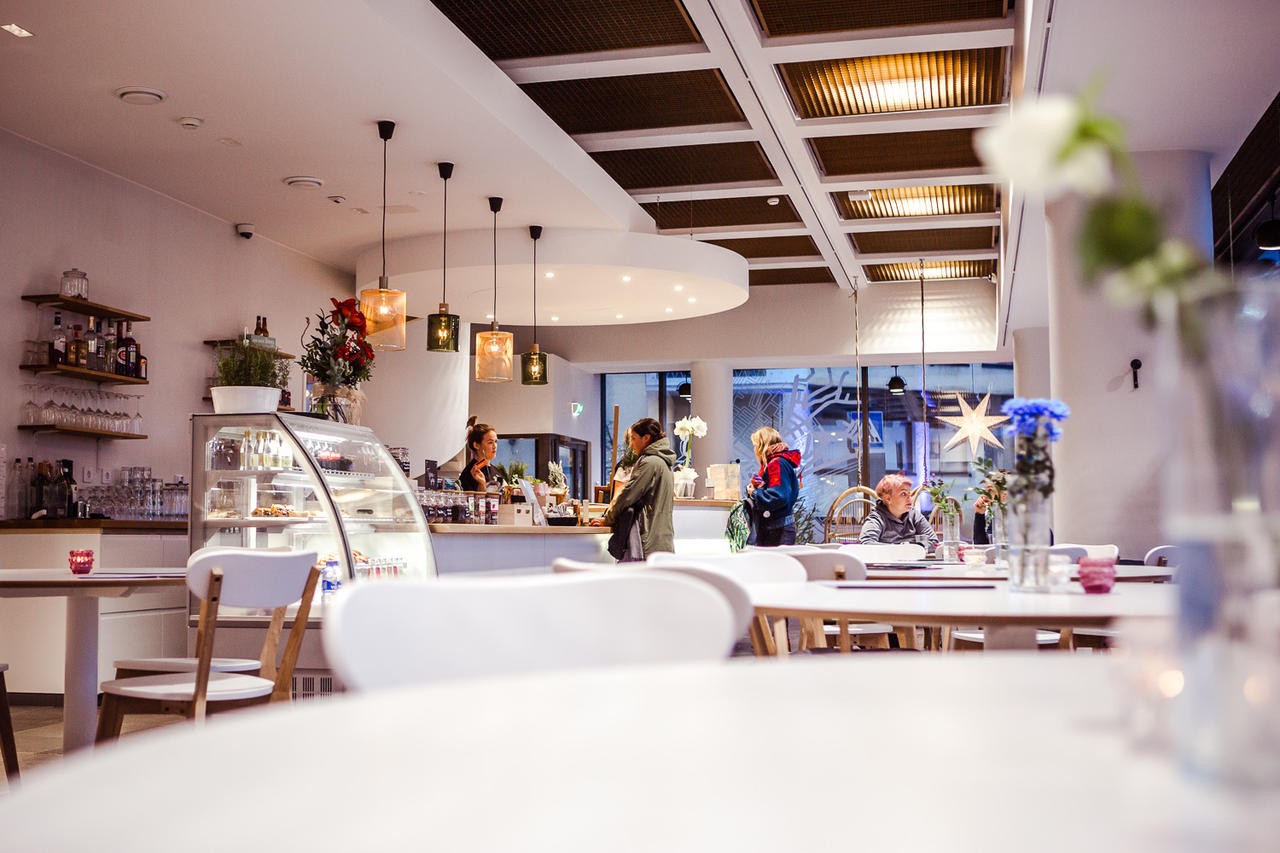
Figure 4. Hostel Café Koti. Photo: Jani Kärppä (2021)
As a result, the project enhanced both individual and collective resilience within the organization. Stronger leadership practices increased psychological safety, improved employee wellbeing, and greater staff engagement contribute to the company’s ability to respond to seasonal fluctuations, workforce challenges, and unexpected changes. The piloting of a digital learning environment also laid the foundation for continuous competence development and knowledge sharing, improving the organization’s capacity to adapt and thrive in the future. In this case, resilience is built through empowered employees, participatory leadership, and a strong workplace community.
Conclusions
The cases presented in this article demonstrate that resilience in tourism and hospitality is not simply the ability to withstand disruptions or return to previous ways of operating. Rather, resilience emerges from the capacity of businesses, employees, and regional actors to learn, share and apply knowledge, build relationships, and actively shape change. This reflects the understanding of Arctic resilience presented in the Arctic Resilience Action Framework (ARAF 2016, 2-4, 16; Koivurova & Kähkönen 2018, 7-9), which emphasises people’s ability to understand social and ecological interactions and to participate meaningfully in adaptive or transformative change. From this perspective, resilience is an ongoing process of learning, adaptation, and renewal rather than a fixed characteristic of an individual business (Arctic Council 2016, 2-4, 16; Koivurova & Kähkönen 2018, 7-9).
The three perspectives examined in this article, cooperation and networks, digitalisation, leadership and employee wellbeing, illustrate how this capacity can be strengthened in practice. The Puu-Juuka and TeaHouse of Wehmais cases demonstrate how trust-based cooperation, local sourcing, shared resources, and regional networks can strengthen both individual businesses and the surrounding destination. The Hygge Host and Flowhouse cases show how digitalisation and AI can support resilience by improving access to and use of information, reducing routine workload, and enabling more informed decision-making in changing conditions. The Hostel Café Koti case highlights the human and organisational dimensions: participatory leadership, psychological safety, employee wellbeing, continuous learning, and knowledge sharing strengthen an organisation’s ability to respond and adapt to change. Together, these perspectives show that resilience is simultaneously relational, knowledge-based, technological, and human.
For tourism SMEs in Arctic and other sparsely populated regions, building resilience therefore requires more than preparing for individual crises. It calls for long-term investment in networks and partnerships, the ability to use knowledge and digital solutions, and leadership that supports learning, participation, and employee wellbeing. The cases also illustrate both adaptive and transformative changes: businesses strengthen their ability to respond to uncertainty while new partnerships, digital solutions, uses of cultural heritage, and ways of organising work can reshape how services and regional value are created. Resilience is therefore built not only through the resources of individual businesses, but through their capacity to learn, cooperate and transform together, enabling businesses and communities to actively shape more sustainable and viable futures.
This article was written as a collaboration between the INSPIRES and ReArchtive North projects.
INSPIRES (Initiatives for Sustainable Innovative Practices, Resilience, and Empowerment in Tourism SMEs) is an EU co-funded project that aims to strengthen the competitiveness, resilience, and sustainability of tourism SMEs across Europe. The project supports businesses in their digital and green transition by providing training, practical tools, networking opportunities, and financial support for innovative development initiatives. In 6 European countries, 60 SME driven sustainability projects have been funded in 2026. Through collaboration between tourism stakeholders, INSPIRES promotes more sustainable, inclusive, and resilient tourism ecosystems that are better equipped to address future challenges. (Inspires 2026.)
ReArchtive North (Innovative strategies for the re-use and re-activation of the architectural heritage in Northern peripheral areas) is an Interreg Aurora co-funded project supporting municipalities, small communities, and tourism and cultural actors in sparsely populated areas of Lapland, Ostrobothnia, and Norrbotten. The project develops tools, methods, business models, and an online platform to promote the sustainable reuse of historic and existing buildings for purposes such as tourism, housing, business, cultural activities, and community services. By sharing best practices and enabling new uses for underutilised buildings, the project aims to preserve cultural heritage, strengthen local vitality, and increase the attractiveness and sustainable development of northern Sweden and Finland. (ReArchtive North, 2026.)
References
Alatalo, M. 2026. Hotel Puu-Juuka. Author’s own photograph.
Amirzadeh, M., Sobhaninia, S. & Sharifi, A. 2022. Urban resilience: A vague or an evolutionary concept? Sustainable Cities and Society 81, 103853. Accessed 3.10.2026. Available at https://doi.org/10.1016/j.scs.2022.103853.
Arctic Council. 2013. Arctic Resilience Interim Report 2013. Stockholm Environment Institute and Stockholm Resilience Centre. Accessed 11.10.2026. Available at: https://www.sei.org/publications/arctic-resilience-interim-report-2013/.
Arctic Council. 2016. Arctic Resilience Report. Stockholm: Arctic Council, Stockholm Environment Institute and Stockholm Resilience Centre. Accessed 9.10.2026. Available at: https://www.sei.org/publications/arctic-resilience-report/.
Cheer, J. M. & Lew, A. A. 2017. Understanding tourism resilience: Adapting to social, political, and economic change. In Butler, R. W. (ed.) Tourism, resilience and sustainability: Adapting to social, political and economic change. Abingdon: Routledge, 3–17.
European Union. 2024. Supporting SMEs in the Twin Transition of Tourism. EU Tourism Platform. Accessed 3.10.2026. Available at https://tourism-platform.ec.europa.eu.
Fabry, N. & Zeghni, S. 2019. Resilience, tourist destinations and governance: An analytical framework. In Cholat, F., Gwiazdzinski, L., Tritz, C. & Tuppen, J. (eds.) Tourismes et adaptations. Chambéry: Elya Editions, 96–108. Accessed 3.10.2026. Available at https://hal.science/hal-02070497v1.
Flowhouse. 2026. Front Page. Accessed 3.10.2026. Available at https://flowhouse.fi/en/front-page.
Hoffmann, S., Deppisch, T., Fontanari, M. & Traskevich, A. 2023. Creating cooperative value for destination resilience. Tourism Management Perspectives 48, 101160. Accessed 3.10.2026. Available at https://doi.org/10.1016/j.tmp.2023.101160.
Hostel Cafe Koti. 2026. Accessed 3.10.2026. Available at https://hostelcafekoti.fi/en.
Hygge Host. 2026. Accessed 3.10.2026. Available at https://hyggehost.fi.
Initiatives for Sustainable Innovative Practices, Resilience, and Empowerment in Tourism SMEs (INSPIRES) project. 2026. Accessed 3.10.2026. Available at https://inspires-tourism.eu/.
Innovative Strategies for the Re-use and Re-activation of the Architectural Heritage in Northern Peripheral Areas (ReArchtive North). 2026. Accessed 3.10.2026. Available at https://www.rearchtivenorth.com/.
Joroinen Music Festival. 2026. Accessed 7.10.2026. Available at https://joroinenmusicfestival.fi/en/joroinen-music-festival/
Kilpeläinen, Jenny. 2026. Hygge Host AI Smart Travel Assistant on the company website. Author’s own photograph.
Kärppä, J. 2021. Hostel Café Koti. Accessed 4.10.2026. Author’s own photograph.
Koivurova, T. & Kähkönen, J. 2018. Pre-Study for the Arctic Resilience Forum 2018. Rovaniemi: Arctic Centre, University of Lapland. Accessed 7.10.2026. Available at https://lauda.ulapland.fi/handle/10024/63410.
Pham, L. D. Q., Coles, T., Ritchie, B. W. & Wang, J. 2021. Building business resilience to external shocks: Conceptualising the role of social networks to small tourism & hospitality businesses. Journal of Hospitality and Tourism Management 48, 210–219. Accessed 3.10.2026. Available at https://doi.org/10.1016/j.jhtm.2021.06.012.
Puu-Juuka. 2025. Story. Accessed 3.10.2026. Available at https://puujuuka.fi/tarina/.
TeaHouse of Wehmais. 2026. Story. Accessed 3.10.2026. Available at https://www.teahouse.fi/tarina.
Tekoniemi-Selkälä, T. 2026. TeaHouse of Wehmais. Author’s own photograph.
Williams, C., You, J. & Joshua, K. 2020. Small business resilience in a remote tourist destination: Exploring close relationship capabilities on the Island of St Helena. Journal of Sustainable Tourism 28(7), 937–955. Accessed 3.10.2026. Available at https://doi.org/10.1080/09669582.2020.1712409.
Wowor, J. V. & Dewi, Y. E. P. 2022. The influence of psychological safety towards employee engagement using organizational support as intervening variable. Andalas Management Review 6(2), 32–42. Accessed 3.10.2026. Available at https://doi.org/10.25077/amar.6.2.48-58.2022.