Anu Harju-Myllyaho, M.Soc.Sc., RDI Manager, School of Northern Well-being and Services, Lapland University of Applied Sciences
Keywords: safety, security, tourism, regional development
Introduction – Building resilience through tourism safety development in Lapland
Tourism is a fast-growing, dynamic industry. Last summer Sky scanner reported over 150 000 commercial flights on the air at the same time, which is a record. (Helsingin Sanomat Visio 2026). Lapland tourism is growing rapidly as well, contributing to the region’s livelihoods and employment. (Harju-Myllyaho 2026; Hakkarainen 2017) and acting as a driving force for reginal economic development. The growth has also brought along challenges caused by the growing number of tourists, which has an impact on safety in the region.
Different actors in Lapland have proactively developed tourism safety through various initiatives, collaboration and projects. (e.g. Iivari 2011; Iivari & Niemisalo 2013). In this viewpoint article I look at the different phases of tourism safety development in Lapland and highlight some of the projects, networks and other initiatives through the years. I scrutinize tourism as an industry, but also as a phenomenon that has an impact on local communities, whether they are involved in the industry or not. The review demonstrates the impact of long-term development efforts and the strengthening of expertise, capabilities, and capacities in ways that become embedded in the operations of businesses, organizations, and regions. It also demonstrates the need for continuous development in the future.
The special features of Lapland tourism call for developing safety
Looking back, we can see that the idea of Lapland tourism sparked decades ago and the development of international tourism as we now know began in the 1980s, when the first charter flights started from Britain to Lapland. (Haanpää, Hakkarainen, Harju-Myllyaho 2024, 42). From this on, also tourism programs were offered in Lapland in addition to accommodation. Over forty years ago, in 1985, Santa’s village and office were opened at the Arctic Circle (Haanpää, Hakkarainen & Harju-Myllyaho 2024; Yle 2026a.)
For a long time, most of the tourists in Rovaniemi were Finnish, but the Concorde flights started the international travelling. At the turn of the millennium, the majority of international tourists were still German, whereas in the 2010s, the leading countries per overnights were China and Russia. Now, most of the tourists come from European countries and Britain (Yle 2026b.) It should be noted though, that there are different destinations in Lapland, with their own attractions and target groups.
Over the last years tourism in Lapland has grown rapidly. The growth seized for a while during Covid-19 but continued right after the borders opened. Furthermore, other crises have taken place, but the industry has proven to be resilient and bounced back soon enough. (Harju-Myllyaho 2026; Satokangas et al. 2025.) Tourism is prone to crises and disturbances, and thus, it is important to manage risks and invest in safety. (Iivari & Niemisalo 2013). Tourism in Lapland is built especially into nature and from the companies’ viewpoint it is essential to notice the possible risks that come along with the obvious natural attractions. (e.g. Satokangas et al. 2025). As the number of tourists grows, questions of management and governance, safety and collaboration become crucial. (e.g. Iivari 2017). The Lappish environment is challenging, because it combines the wide geographical area of the rescue departments, low resources and long distances. The weather conditions are equally challenging and there are wide wilderness areas. (Ollila & Raasakka 2024.) One of the events concerning tourism safety was a fire in a hotel in Ruka in 1990, which alerted the county and ministry officials to scrutinize fire safety a little more carefully (see e.g. Helsingin Sanomat 1990).
Tourism safety is a sector-specific application of the general concept of safety and security. Broadly understood, it encompasses both the perspectives of safety (pehmeä turvallisuus, skydd, schutz) and security (kova turvallisuus, sicherheit, säkerhet). Security is generally considered to include issues that fall within the responsibility of the state, such as economic security and cybersecurity. Safety, in turn, refers to aspects related to the everyday safety of individuals, such as fire safety and occupational safety. (Iivari 2017.) In addition, terms such as risk management and crisis management are close to safety. The difference between the two is that while risk management aims to prevent the unwanted accident or situation, crisis management steps in when the accident has happened. (Iivari 2011).
A committed network ensures the continuity of the development work
Tourism safety specialists Pekka Iivari and Niko Niemisalo write that the purpose of the tourism safety network is to systematically answer the needs of the operating environment. The active network is important to tourism professionals as well as other actors, and it is especially essential that the different participants benefit from the network. (Iivari & Niemisalo 2013.) Over the years, the themes of the network have focused on many different areas, but the core is always in the network that can meet complex challenges better than a single actor. The network has taken up international activities as well. (Iivari & Niemisalo 2013).
As said, safety development has been a part of tourism progress to answer the needs of the businesses and the local environment, when the number of tourists has grown and tourism has become increasingly international. Tourism has been noted to be prone to crises and changes (Iivari & Niemisalo 2013; Helameri et al. 2023). Whereas the network acts as an element that creates continuity to tourism safety, the various projects have been able to meet the needs of the operating environment supporting resilience for businesses, local officials and communities as well as education and research. Picture 1. presents some of the projects and initiatives related to tourism safety, which have been conducted in Lapland (e.g. Ollila & Raasakka 2024). Parallel to the project timeline, one could scrutinize tourism development and growth in the region as well as the many local and global events that have created demand for safety.
Arctic Rescue Guide project, which running 2016–2017 was answering the need to create a training program that would increase and standardize the knowhow and readiness of tourism workers’ concerning safety (Lapin ammattikorkeakoulu 2026a). Arctic rescue guide -training has for long been an essential part of the tourism businesses’ resources and the educational institutions’ contents in the region. This was preceded by tourism safety pass trainings and safety plans that we made in collaboration with municipalities, for example the safety plan of Rovaniemi municipality from 2013. The aim of the plan was to maintain and develop safety for locals, workers, customers and environment. (Rovaniemen kaupunki 2013.) The activity of the safety network was established with a project called Lapland tourism safety system – safety norms and continuation of network (Lapin matkailun turvallisuusjärjestelmä – turvallisuusnormisto ja verkoston pysyvyys). (Lapin ammattikorkeakoulu 2026b.) Meanwhile Lapland University Consortium established a safety RDI-team during 2015-2016. Since then, there have been many instances, social and environmental crises situations, that have required resilience.
At the turn of the 2020s, the World – and tourism – was shaken by Covid-19 pandemic. Tourism actors in Lapland reacted quickly by developing a Covid-19 risk management model. In response to the radically changed operating environment of businesses, public authorities also introduced development grants that could be applied for. With support from the European Social Fund, the Boost for Lapland Businesses (Vetoapua lappilaisille yrityksille) project was launched, among others. The project aided tourism companies and entrepreneurs in restoring and redesigning their operations. The project publication describes the Safe customer service path, which was based on the Covid-19 risk management model. (Sammalkangas et al. 2021.)
The different changes have shown that there is still a need for a proactive viewpoint and strengthening risk management. To support risk management in tourism businesses, the project Matrix has developed tools that enable companies to assess and improve their own risk management practices. The objective is to enhance companies’ resilience and strategic risk management capabilities. (Lapin ammattikorkeakoulu 2026c.)
Tourism safety initiatives encompass more than just specific projects and have an international dimension. International connections have been established across the industry, at the regional level, and within academic networks. Lapland has been involved in establishing the S3 thematic partnership on “Safety and digitalization for tourism.” Furthermore, the University of Applied Sciences is active in the UArctic thematic group on “Safety and Security” (Uarctic 2026).
International activities have also initiated new projects and research initiatives and supported the network’s operations. Between 2014 and 2016, projects such as COMBAT Human Trafficking were implemented, with Oxford Brookes University serving as the coordinator. The project page provides the following information about the content: “COMBAT (Combat Measures Against Human Trafficking in the Tourist Industry) is a project funded by the European Commission Directorate of Home Affairs under the Internal Security Fund’s targeted call for Trafficking in Human Beings. COMBAT seeks, in full alignment with the legal and policy framework, to involve all the relevant hospitality and tourism stakeholders in the design of a preventive and remedial training toolkit. This will offer unique, practical, step-by-step guidance for tourism businesses to combat THB (trafficking human beings)”. (Oxfrod Brookes University 2026.)
Another noteworthy project was conducted concurrently. The project was funded by the Finnish government and was focusing on the Arctic tourism, shipping and safety: “The Arctic region is central to Finland’s tourism, shipping, and security. Utilizing the region is not without risk. The project’s results will improve Finland’s ability to operate responsibly in the area and to benefit from the economic opportunities arising from its development.” (Finnish government 2026.) Today, Lapland is involved in project CLEAR – Crisis Leadership in the Arctic Response. The two-year project is strengthening crisis leadership in the rapidly changing Arctic through simulations, training and knowledge sharing. (Uarctic 2025.)
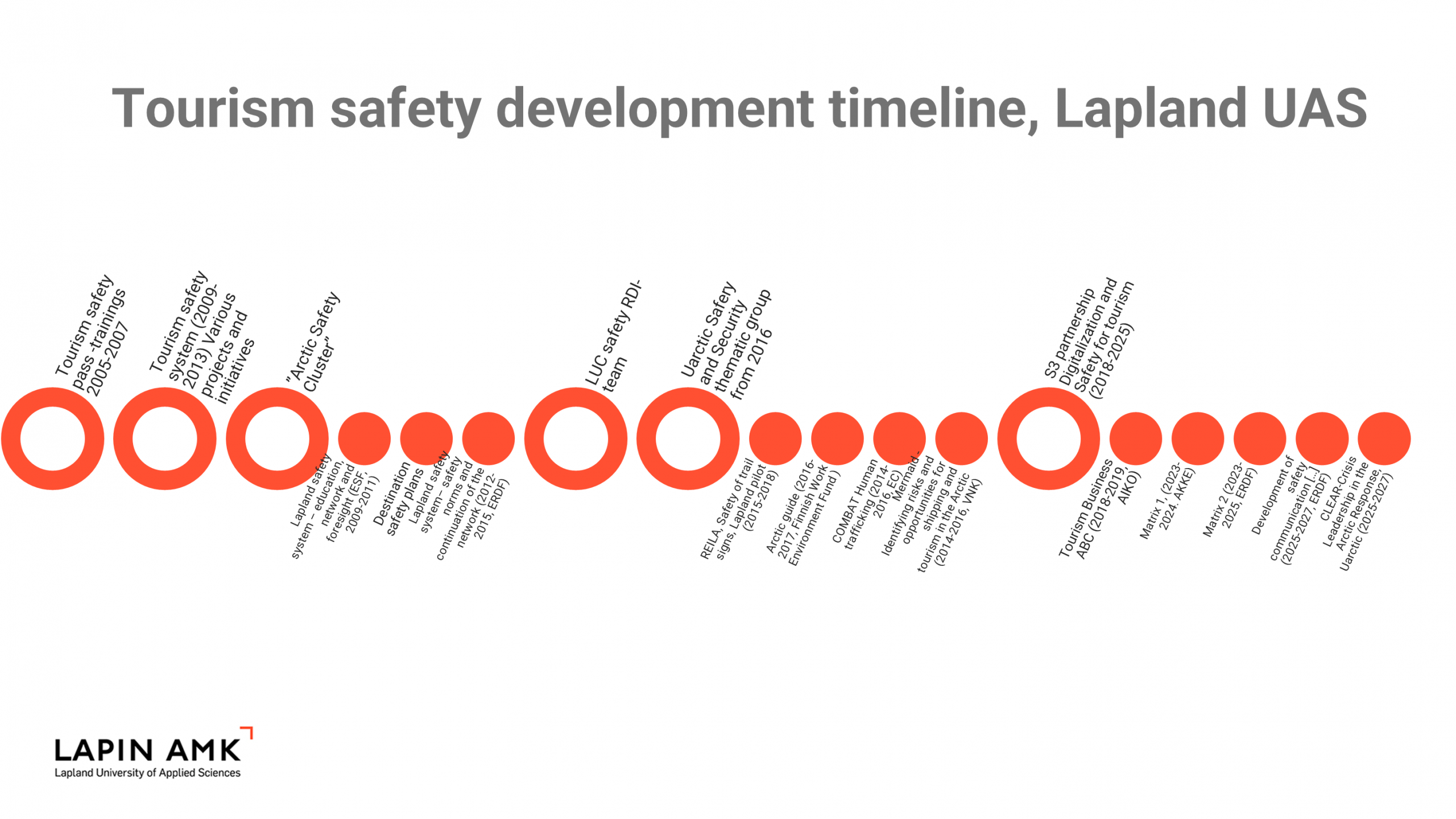
Picture 1. Tourism safety development on timeline.
Discussion – foresight and wide collaboration are the enablers of tourism safety in uncertain times
The dialogue concerning tourism safety becomes more important every day in Lapland, where tourism is expected to grow in the future. Rescue department specialist Riku Mäenpää (2026) emphasized the challenging situation in Lapland healthcare and rescue services as tourism continues to grow. During peak seasons, the number of people in Lapland tourism regions multiplies compared to the locals. However, public health service resources are generally planned and allocated according to the local population. Additional challenges are brought by long distances. This equation adds risks and can have an impact on the locals’ feeling of safety. We come to understand that tourism does not exist in a bubble, but is a phenomenon that has various impacts to the society as a whole.
Tourism brings livelihood and employment especially to sparsely populated regions, and that is why safety has been developed within a wide collaboration. The work has gradually spread across the region and different sectors to cover strategic viewpoints in addition to the operational. (Helameri et al. 2023). The safety work has been based on the regional strategies that have supported the work in the long run. Tourism safety should continue to be examined at both operational and strategic levels. Increasingly, however, attention should also be paid to local communities and the broader impacts that growing tourism may have on local safety and security conditions.
Through collaborative research and development efforts, emerging needs can be identified and future developments anticipated. Building a shared understanding, establishing common practices, and developing coordinated initiatives are essential when the number of people present in a destination multiplies in relation to the local population during peak seasons. In addition to the obvious implications for safety and security, this also affects the local acceptance of tourism, which is becoming an increasingly critical component of sustainable tourism development.
Thank you Niko Niemisalo for fact checking and information.
References
Finnish government 2026. Merenkulun ja matkailun riskien ja mahdollisuuksien identifiointi arktisella alueella (MERMAID). Retrieved 8.10.2026 from https://tietokayttoon.fi/-/merenkulun-ja-matkailun-riskien-ja-mahdollisuuksien-identifiointi-arktisella-alueella-mermaid-
Haanpää, M., Hakkarainen, M. & Harju-Myllyaho, A. 2024. Suburban heritage as tourist attraction? In (T. Äikäs & T. Matila eds.). Connecting with ambivalent heritage. London: Bloomsbury.
Hakkarainen, M. 2017. Matkailutyön ehdot syrjäisessä kylässä. Akateeminen väitöskirja Lapin yliopisto. Acta electronica Universitatis Lapponiensis 357.
Helameri, E., Iivari, P., Nisula, S. & Satokangas, P. 2023. Kohti turvallisempaa matkailuliiketoimintaa Strateginen riskienhallinta ja kriisijohtaminen Lapin matkailuyrityksissä. Pohjoisen tekijät – Lapin ammattikorkeakoulun julkaisuja 38/2023.
Helsingin Sanomat 1990. Paloturvallisuus kuntoon. Retrieved 8.10.2026 from https://www.hs.fi/paakirjoitukset/art-2000002991349.html. s
HS Visio 2026. Animaatio näyttää, miten lomalennot tukkivat maailman taivaan. Retrieved 8.10.2026 from https://www.hs.fi/visio/art-2000012171085.html
Iivari, P. 2011. Kriisinhallinta osana turvallisuusjohtamista matkailuyrityksessä. Sisäasiain ministeriön julkaisuja 8/11. Retrieved 4.10.2026 from https://julkaisut.valtioneuvosto.fi/server/api/core/bitstreams/ee66cc4f-8163-4cfa-b3eb-5e1c69705ae8/content
Iivari, P. 2017. Matkailun turvallisuus. In J. Edelheim & H. Ilola (eds.) Matkailututkimuksen avainkäsitteet. Rovaniemi: Lapland University Press.
Lapin ammattikorkeakoulu 2026a. Arctic rescue guide. Retrived 6.10.2026 from https://lapinamk.fi/hanke/arctic-rescue-guide-2/
Lapin ammattikorkeakoulu 2026b. Lapin matkailun turvallisuusjärjestelmä – turvallisuusnormisto ja verkoston pysyvyys. Retrieved 6.10.2026 from https://lapinamk.fi/hanke/lapin-matkailun-turvallisuusjarjestelma-turvallisuusnormisto-ja-verkoston-pysyvyys-2/
Lapin ammattikorkeakoulu 2026c. Lapin matkailuyritysten riskienhallinnan ja resilienssin kasvattaminen, Matrix 2. Viitattu 7.10.2026 osoitteessa https://lapinamk.fi/hanke/lapin-matkailuyritysten-riskienhallinnan-ja-resilienssin-kasvattaminen-matrix-2-2/
Ollila, S. & Raasakka, E. 2024. Lapin turvallisuusverkoston nykytila ja tulevaisuus. Pohjoisen tekijät – Lapin ammattikorkeakoulun julkaisuja 15/2024.
Oxford Brookes University 2026). COMBAT Human Trafficking. Viitattu 8.10.2026 osoitteessa https://www.brookes.ac.uk/research/units/obbs/projects/combat-human-trafficking.
Rovaniemen kaupunki 2013. Rovaniemen matkailualueen turvallisuussuunnitelma. Sopimus yhteisestä turvallisuustyöstä. Retrieved 4.10.2026 from https://www.rovaniemi.fi/loader.aspx?id=dbaf4097-3c1e-4bd4-aaee-706041fcfbf2
Sammalkangas, J., Ristonmaa, M., Nisula, S. & Kestilä, S. 2021. Vetoapua matkailun turvallisuuteen ja hyvinvointiin. Lapin ammattikorkeakoulun julkaisuja. Sarja D. Muut julkaisut 2/2021. Retrieved 4.10.2026 from https://www.theseus.fi/server/api/core/bitstreams/1993cae0-a6a8-4d29-adf0-d394e9aec34a/content
Uarctic 2025. Preparing Arctic Communities for Crisis – Project CLEAR. Retrieved 8.11.2026 from https://www.uarctic.org/news/2025/12/preparing-arctic-communities-for-crisis-project-clear/
Uarctic 2026. Arctic Safety and Security. Retrieved 8.10.2026 from https://www.uarctic.org/activities/thematic-networks/arctic-safety-and-security/
YLE 2026a. Ääntä nopeampi matkustajakone toi joukon lomailijoita Lappiin 80-luvulla – siitä alkoi nykyinen turismibuumi. Retrieved 8.10.2026 from https://yle.fi/a/74-20204074.
YLE 2026b. Näin Rovaniemelle tehtiin joulun Disneyland. Retrieved 8.10.2026 from https://yle.fi/a/74-20156515