Reeta Sipola, Master of Natural Resources, Specialist, Future Bioeconomy, Lapland University of Applied Sciences

Keywords: food security, natural resources, traditional knowledge, regulatory control, food administration, resilience
Resilience has become an increasingly important concept when discussing the future of Arctic regions. Broadly defined, resilience refers to the ability to adapt, recover and thrive in the face of change, uncertainty and disruption. In the Arctic context, resilience extends beyond infrastructure, economies and ecosystems. It is also deeply connected to people, communities, cultures and food systems.
Recent Arctic research has increasingly emphasized resilience as the capacity of communities to learn, share and apply knowledge, maintain cultural continuity, and actively shape adaptation and transformation in response to environmental and societal change. This perspective highlights the value of Indigenous and local knowledge, community capacity, co-production of knowledge and collaboration across sectors and governance levels. (Keskitalo 2026, Vural & Hall 2026, ICARP IV 2026).
Strengthening the governance of heritage foods and improving cooperation among food authorities are increasingly recognised as important elements in building resilient Arctic food systems. These themes are currently being explored through international cooperation initiatives, including the CHARGE project (Enhancing Institutional Capacity for Heritage Food Governance), led by Lapland University of Applied Sciences and funded by the Interreg Northern Periphery and Arctic (NPA) Programme.
Arctic Natural Resources and Food Security
The Arctic is home to a rich variety of natural food resources, including wild berries, herbs, mushrooms, fish, game and food traditions that have been developed over generations by Indigenous Peoples and local communities. These resources hold significant potential for sustainable business development, stronger local food production and improved regional food security.
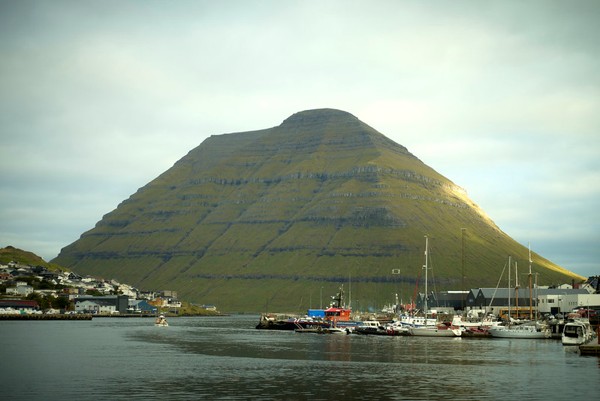
Image 1. Arctic communities have long thrived through their close relationship with nature, drawing resilience from local resources, knowledge and cooperation. Photo InterregNPA/AKHC Studio.
However, many traditional ingredients and food practices occupy an uncertain position within current regulatory frameworks. Similar products may be interpreted differently across countries, and sometimes even within the same regulatory area. This creates barriers for producers, complicates market access, and limits opportunities to develop new products based on local resources. It can also weaken communities’ ability to sustain and benefit from their own food heritage.
From a resilience perspective, the challenge is not merely regulatory. It also concerns the capacity of communities to maintain and develop their food systems under changing conditions. The better local actors can utilise their natural resources in a sustainable way, the stronger their ability to cope with future environmental, economic and societal challenges.
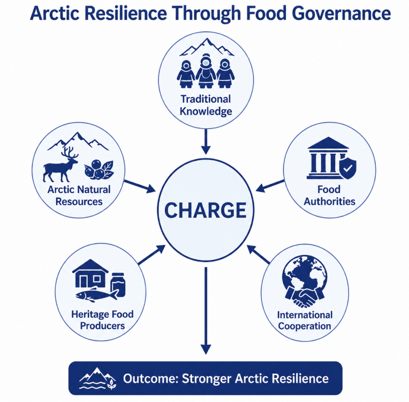
Image 2. CHARGE project goal is to build arctic food resilience with international cooperation. Image: ChatGPT
Cultural Heritage and local Knowledge Strengthen Resilience
Food cultures across the Arctic are rooted in local and Indigenous knowledge. Sámi, Inuit and other northern communities have developed sophisticated understandings of natural resources, harvesting practices, preservation methods and food preparation techniques through long-term interaction with their environments.
A central objective of the CHARGE project is to recognise, document and elevate this knowledge, much of which has traditionally been transmitted orally. The project brings together public authorities, researchers, educational institutions, business support organisations and Indigenous representatives from Finland, Norway, Ireland, Greenland and the Faroe Islands to build a shared understanding of how culturally significant foods can be assessed and supported within contemporary regulatory systems.
Research on resilience consistently highlights the importance of local knowledge in strengthening adaptive capacity. By valuing Indigenous and community-based expertise, Arctic regions can reinforce cultural continuity, social cohesion and community well-being, all of which are essential dimensions of resilience.
Building Capacity Through International Cooperation
The challenges facing Arctic regions do not stop at national borders. Climate change, food security, sustainable use of natural resources and the preservation of cultural heritage are shared concerns that require cooperation across countries and communities.
At the same time, the importance of Arctic cooperation has become increasingly evident in a world shaped by geopolitical uncertainty, disruptions in global supply chains and growing concerns over resource security. These developments have highlighted the value of strong regional networks and local capacities. For Arctic countries and communities, working together is not only a way to exchange knowledge and good practices but also a means of strengthening preparedness, safeguarding food systems and reinforcing the long-term resilience of the region.
An important aspect of strengthening Arctic food systems is improving institutional resilience and cooperation among food authorities. These themes are being addressed through initiatives such as the CHARGE project. The project aims to strengthen the capacity of food authorities and other stakeholders to work together in situations where regulations and their interpretations vary between countries and regions. Rather than seeking to harmonise legislation, CHARGE promotes dialogue, shared learning and mutual understanding among institutions facing similar challenges.
Practical tools such as digital platforms, regulatory guidance resources and transnational pilot activities can support authorities, producers and communities in navigating regulatory pathways related to heritage foods. Within the CHARGE project, these approaches will be tested through cooperation between participating regions together with food authorities. This approach creates opportunities for practical learning, regulatory reflection and the development of stronger professional networks across the Arctic and Northern Periphery.
By strengthening trust, institutional dialogue and practical cooperation, the project contributes to a more connected Arctic region where authorities and communities are better equipped to respond to future challenges together. Such collaboration enhances the ability of institutions to learn from one another, support local food systems and build long-term capacity for Arctic food governance.
Towards Stronger Arctic Food Resilience
Food is far more than a source of nutrition. Across the Arctic, it is closely tied to cultural identity, livelihoods, community well-being and long-term sustainability. It also plays an increasingly important role in discussions about regional preparedness and food security.
Strengthening Arctic resilience through food systems requires support for sustainable use of local and Indigenous food resources, small-scale entrepreneurship, capable public authorities and long-term international cooperation. The CHARGE project contributes to these objectives through cooperation between Arctic and Northern Periphery regions.
Building Arctic resilience is therefore not only about responding to future disruptions. It is also about recognising and unlocking the opportunities embedded in local natural resources, cultural heritage and transnational cooperation. By bringing these elements together, Arctic communities can strengthen both their food systems and their capacity to thrive in an increasingly complex world.
This article is written with the support of EU funding as a part of CHARGE project.
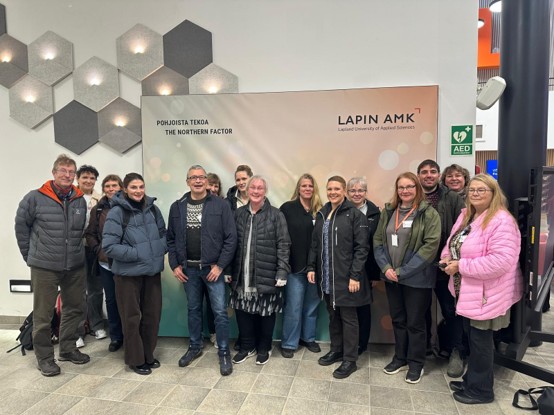
Image 3. The CHARGE project team team gathered in Rovaniemi for the project´s Kick-off –meeting in October 2026. Photo: Sanna Viljakainen.
References
Keskitalo, P. (2026). Rethinking Arctic resilience through community and Indigenous knowledge. University of Oulu. https://www.oulu.fi/en/blogs/exploring-resilience/rethinking-arctic-resilience-through-community-and-indigenous-knowledge
Vural, D., & Hall, J. (2026). Building resilient Arctic futures through Indigenous Knowledge and self-determination. PLOS Climate, 5(6). https://journals.plos.org/climate/article?id=10.1371/journal.pclm.0000943
ICARP IV Research Priority Team 3. (2026). Understanding the Dynamics and Resilience of Arctic Social-Ecological Systems to Foster Sustainable Futures. https://icarp.iasc.info/publications/publications-icarp-iv?download=27:icarp-iv-research-priority-team-3-final-report-understanding-the-dynamics-and-resilience-of-arctic-social-ecological-systems-to-foster-sustainable-futures